Does a HEPA Air Purifier Help? What It Can and Cannot Do
A HEPA air purifier helps with particle filtration: it captures airborne particles such as dust, pollen, pet dander, and PM2.5, and can noticeably reduce them in a room. But a HEPA purifier does not supply fresh air, does not remove gases or odors (unless it has a carbon stage), and is not a treatment or a guarantee against any illness. This guide explains what a HEPA purifier actually does, where it helps, and where you still need ventilation.
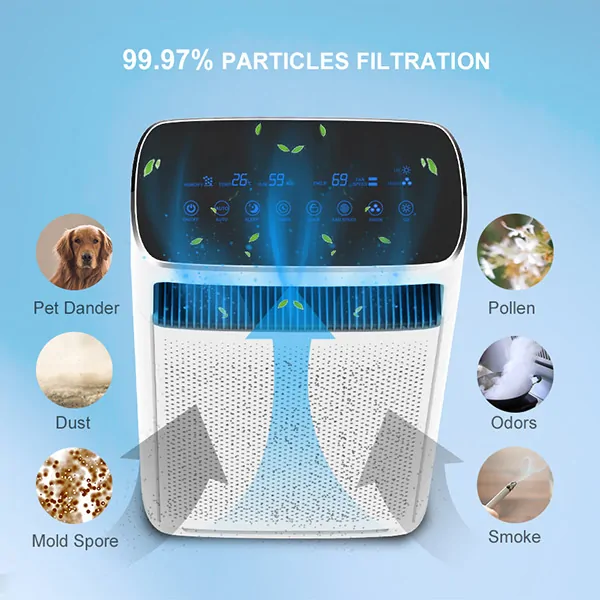
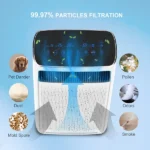
HEPA (High-Efficiency Particulate Air) is a standard for mechanical filter media that captures particles by interception, impaction, and diffusion — not by an electrostatic charge or chemical action. A true HEPA filter is rated to capture 99.97% of particles at the most penetrating size (0.3 microns) and effectively removes:
Dust and dust mites
Pollen
Pet dander
Mold spores (already airborne)
PM2.5 and fine smoke/soot particles
Some virus-carrying aerosols (as particles; see limits below)
A HEPA filter captures particles. That is its entire job. It does not capture gases, vapors, or odors by itself.
Where a HEPA Purifier Helps
A HEPA air purifier is most useful when the problem is particles in the air of an already-enclosed space:
Allergy season — pollen and dust indoors.
Pet households — dander.
Smoke or haze days — fine particulate infiltration from outside.
Rooms where someone is sensitive to airborne particles.
Supplement to ventilation on high-pollution days.
For a purifier to help a whole room, its clean air delivery rate (CADR) must match the room size, and it must run continuously — a small purifier doing one room a day does little.
What a HEPA Purifier Cannot Do
Be clear about the limits:
It does not bring in fresh air. A purifier recirculates and filters the air already in the room. It does not lower CO₂ or replace stale air.
It does not remove gases or odors (unless it also has an activated carbon stage). Cooking smells, VOCs, and chemical vapors need carbon or ventilation.
It does not control humidity or mold growth. It can capture spores that are airborne, but it does not stop the moisture that lets mold grow.
It is not a medical device and does not prevent illness. Filtering particles can reduce airborne particle load, but no purifier guarantees protection from viruses or disease. Avoid health claims.
A purifier is a particle-filtration tool, not a ventilation or health solution.
HEPA Purifier vs Ventilation
Need
HEPA purifier
Ventilation
Remove particles (dust, pollen, PM2.5)
Yes
Partly (if filtered supply)
Bring in fresh outdoor air
No
Yes
Reduce CO₂
No
Yes
Remove humidity/moisture
No
Yes
Remove gases and odors
No (needs carbon)
Yes (by dilution/exhaust)
The practical answer: most rooms need both. Ventilation (fresh air in, stale air out) is the foundation for healthy air; a HEPA purifier adds particle filtration for the air already indoors. On high-pollution days when you should not open windows, a purifier with a filtration ventilation system working together is the strongest combination — see our residential fresh air ventilation guide.
How to Choose a HEPA Purifier
Match CADR to room size. A rough rule is to look for a CADR high enough to cycle the room air several times per hour. Manufacturer room-size guidance is a starting point.
Check the filter type. True HEPA for particles; add carbon if odors/gases matter. “HEPA-type” or washable media is not the same as true HEPA.
Consider noise and running cost. A purifier only works if it runs; a quiet, low-power unit at the right speed is more useful in practice.
Replace filters on schedule. A clogged filter reduces airflow and performance — follow the manufacturer’s interval.
Frequently Asked Questions
Q: Does a HEPA air purifier really work? A: Yes for particles. A true HEPA purifier with adequate CADR for the room will measurably reduce airborne particles. It cannot do the jobs ventilation or carbon filters do.
Q: Can a HEPA purifier remove odors? A: By itself, no — HEPA captures particles, not gases. Only a purifier (or filter) with an activated carbon stage removes odors and VOCs.
Q: Does a HEPA purifier help with allergies? A: It can help with airborne allergens such as pollen, dust mites, and pet dander by reducing their concentration in the room air.
Q: Does an air purifier prevent COVID-19 or flu? A: No purifier can guarantee prevention of any illness. Reducing airborne particle load is one layer of protection, but ventilation, hygiene, and health measures are the real controls.
Q: Is a HEPA purifier the same as ventilation? A: No. A purifier filters the air already in the room; ventilation exchanges indoor and outdoor air. They do different jobs and work best together.
Q: How big a purifier do I need for a bedroom? A: Match the CADR to the room size, and prefer a unit you can run at a useful, quiet speed. Check the manufacturer’s room-size guidance for particles.
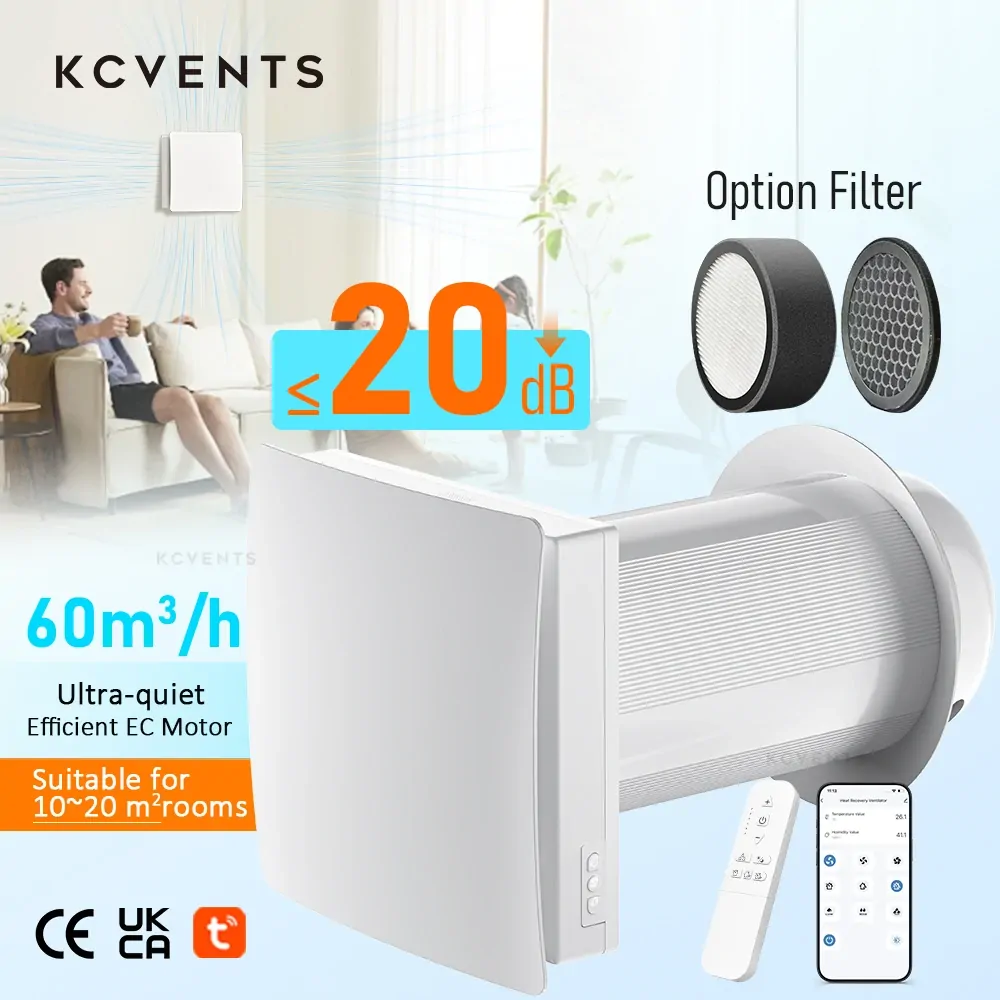
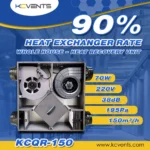
Cleaning the air in your space? KCvents manufactures wall-mounted HEPA ventilation fans, fresh air units, and ventilation systems that combine filtration with fresh-air supply for wholesale, OEM, and private-label projects. Request a quote with your room size and air-quality goal.
Newsletter Updates
Enter your email address below and subscribe to our newsletter