We use cookies to ensure that we give you the best experience on our website.
Bleiben Sie informiert mit KCVENTS Lüftungs- & HLK-Lösungen
Abonnieren Sie unseren Newsletter für die neuesten Einblicke in die Strömungstechnik, Neuigkeiten zu energieeffizienten ERV/HRV-Systemen und umweltfreundlichen HLK-Lösungen.
Erhalten Sie als Erster exklusive technische Leitfäden, Informationen zu kundenspezifischen OEM/ODM-Kapazitäten und Neuigkeiten zu weltweiten Messen direkt von KCVENTS.
Warum EC-Motor-Ventilatoren energieeffizienter sind (und wann sie sich amortisieren)
Wie EC-Motor-Ventilatoren weniger Energie verbrauchen und wann sich die höheren Anschaffungskosten bei kontinuierlicher oder bedarfsabhängiger Lüftung amortisieren.
Warum EC-Motor-Ventilatoren energieeffizienter sind (und wann sie sich amortisieren)
EC-Motor-Ventilatoren sind energieeffizienter, da sie bürstenlose DC-Motortechnologie mit elektronischer Drehzahlregelung nutzen und somit nur die für den Volumenstrom erforderliche Leistung aufnehmen – im Gegensatz zu AC-Ventilatoren, die im Betrieb nahezu die volle Leistung verbrauchen. Die Energieeinsparung ist dort am größten, wo ein Ventilator im Dauerbetrieb oder mit variablem Bedarf läuft, was genau dem Einsatzprofil der meisten Lüftungsventilatoren entspricht. Dieser Leitfaden erläutert die Funktionsweise, die Wirtschaftlichkeit und wann sich die Investition in einen EC-Ventilator lohnt.
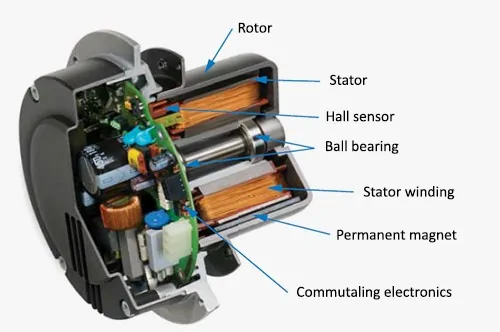
Ein EC-Ventilator (elektronisch kommutiert) ist ein bürstenloser DC-Motor mit integrierter elektronischer Steuerung. Drei Merkmale machen ihn energieeffizient:
Bürstenlose DC-Motortechnologie. DC-Motoren wandeln elektrische Leistung effizienter in mechanische Leistung um als die in AC-Ventilatoren eingesetzten Asynchronmotoren und weisen geringere thermische Verluste auf.
Präzise Drehzahlregelung. Der Mikroprozessor passt Drehzahl und Leistung des Ventilators stufenlos an, sodass der Ventilator stets nur den aktuell benötigten Volumenstrom fördert.
Effiziente Kommutierung. Die elektronische Steuerung schaltet die Motorspulen synchron zum Rotor – ohne mechanische Bürsten, die Energie verlieren oder verschleißen könnten.
Das praktische Ergebnis: Im Teillastbetrieb verbraucht ein EC-Ventilator nur einen Bruchteil der Leistung eines AC-Ventilators, und selbst bei Volllast ist er typischerweise effizienter.
Die Technologie hinter den Einsparungen
Ein AC-(Asynchron-)Motor läuft mit einer an die Netzfrequenz gekoppelten Drehzahl und nimmt im eingeschalteten Zustand eine annähernd konstante Leistung auf. Um seine Drehzahl in einem Kanal- oder Abluftsystem zu regeln, ist üblicherweise ein externer Frequenzumrichter erforderlich, was Kosten und Komplexität erhöht.
Ein EC-Motor integriert die Steuerung direkt im Motor:
Die AC-Netzspannung wird im Motor in Gleichstrom (DC) umgewandelt.
Ein Mikroprozessor steuert die Kommutierung elektronisch.
Die Drehzahl reagiert auf ein 0–10-V- oder PWM-Steuersignal oder einen internen Sensor (Feuchtigkeit, CO₂).
Diese Integration macht den EC-Ventilator zu einem sofort einsatzbereiten “smarten” Ventilator: Nach dem Anschluss eines Sensors oder Reglers steuert der Ventilator seine Drehzahl – und damit seinen Energieverbrauch – eigenständig.
Energieverbrauch: EC- vs. AC-Ventilatoren
Betriebspunkt
EC-Motor-Ventilator
AC-Motor-Ventilator
Volllast
Effizient
Basis
Teillast (z. B. 50%)
Verbraucht nur einen Bruchteil der Volllastleistung
Verbraucht nahezu die volle Leistung
Drehzahlregelung
Integrierte Elektronik
Erfordert externe Steuerung (oder feste Stufen)
Wärmeverlust
Niedrig
Höher
Ventilatorleistung über die Zeit
Folgt dem Bedarf
Folgt Ein/Aus-Zustand
Der Effizienzunterschied zeigt sich am deutlichsten in den kumulierten kWh über mehrere Monate – ein Ventilator, der den Großteil des Tages im Badezimmer auf niedriger Stufe läuft, oder ein kontinuierlich betriebenes Lüftungssystem sind genau die Anwendungen, in denen sich der EC-Ventilator rentiert.
Wo die Amortisation am größten ist
EC-Ventilatoren haben höhere Anschaffungskosten, weshalb sich die Investition bei langen Laufzeiten oder variablem Bedarf am schnellsten amortisiert:
Dauerlüftung — HRV-/ERV-Systeme, Frischluftgeräte im 24/7-Betrieb.
Bad- und Küchenentlüfter mit Feuchtigkeitssensoren — den Großteil des Tages auf niedriger Stufe, Leistungsspitzen nur bei Feuchteentwicklung.
Abluftsysteme für Grow-Rooms und Gewächshäuser — lange Betriebszeiten, bedarfsgerechter Volumenstrom.
Gewerbliche Lüftung — Bedarfsführung senkt sowohl den Energieverbrauch als auch Spitzenlasten.
Jeder Ventilator, der andernfalls stundenlang unter Volllast laufen würde — hier macht sich die EC-Einsparung sofort bemerkbar.
Wenn ein Ventilator nur selten und immer mit voller Drehzahl läuft (z. B. eine Nebenraum-Abluft für wenige Minuten täglich), ist ein AC-Ventilator günstiger und der EC-Aufpreis lässt sich kaum rechtfertigen.
Tipp: achten Sie beim Vergleich von Ventilatoren auf die Leistungsaufnahme bei der Drehzahl, die Sie tatsächlich nutzen, nicht nur auf den maximalen Nennluftstrom. Bei niedriger Drehzahl zeigt sich das wahre Einsparpotenzial eines EC-Ventilators.
Häufig gestellte Fragen
F: Wie viel Energie kann ein EC-Ventilator einsparen? A: Die Einsparung hängt von der Betriebszeit und dem Drehzahlprofil ab. Ventilatoren, die im Dauerbetrieb oder im Teillastbereich laufen, erzielen die größten relativen Einsparungen, da EC-Motoren unter Volllast effizient und im Teillastbetrieb deutlich effizienter als AC-Motoren sind.
F: Lohnt sich der höhere Preis für EC-Ventilatoren? A: In der Regel ja, insbesondere bei kontinuierlicher oder bedarfsabhängiger Lüftung, da sich die Energieeinsparung mit jeder Betriebsstunde summiert. Bei seltener Nutzung mit fester Drehzahl kann ein AC-Ventilator wirtschaftlicher sein.
F: Kann ich einen EC-Ventilator an einen Feuchte- oder CO₂-Sensor anschließen? A: Ja – das ist eine gängige Konfiguration. Die integrierte Steuerung des Ventilators reagiert auf das Sensorsignal und passt die Drehzahl automatisch an.
F: Haben EC-Ventilatoren eine längere Lebensdauer? A: Im Allgemeinen ja – da keine Bürsten verschleißen, der Betrieb kühler ist und Sanftanläufe erfolgen, wird der langfristige Verschleiß verringert.
F: Sind EC-Ventilatoren leiser? A: Bei reduzierter Drehzahl ja – da der Ventilator langsamer läuft, ist er leiser. Das ist ein praktischer Zusatznutzen der EC-Regelung.
Möchten Sie die Energiekosten Ihrer Lüftung senken? KCvents fertigt EC-Rohrventilatoren, EC-Abluftventilatoren und energieeffiziente Lüftungssysteme für Großhandel, OEM- und Private-Label-Projekte. Angebot anfordern mit Ihren Angaben zu Luftvolumenstrom, Betriebszeit und Anwendung.
Newsletter Updates
Enter your email address below and subscribe to our newsletter