We use cookies to ensure that we give you the best experience on our website.
Bleiben Sie informiert mit KCVENTS Lüftungs- & HLK-Lösungen
Abonnieren Sie unseren Newsletter für die neuesten Einblicke in die Strömungstechnik, Neuigkeiten zu energieeffizienten ERV/HRV-Systemen und umweltfreundlichen HLK-Lösungen.
Erhalten Sie als Erster exklusive technische Leitfäden, Informationen zu kundenspezifischen OEM/ODM-Kapazitäten und Neuigkeiten zu weltweiten Messen direkt von KCVENTS.
Umweltfreundliche Lüftung: Optionen für nachhaltiges Wohnen
Umweltfreundliche Lüftungsoptionen von freier Lüftung über EC-Ventilatoren bis hin zur Wärmerückgewinnung – und deren optimale Kombination.
Umweltfreundliche Lüftung: Optionen für nachhaltiges Wohnen
Umweltfreundliche Lüftung bedeutet, Frischluft mit minimalem Energieaufwand und geringster Umweltbelastung zuzuführen – durch natürliche Lüftung, wo es das Klima erlaubt, und hocheffiziente mechanische Lüftung (EC-Ventilatoren, Wärmerückgewinnung), wo dies nicht der Fall ist. Dieser Leitfaden stellt die realistischen Optionen vor, von der kostenlosen natürlichen Lüftung bis hin zu Wärmerückgewinnungssystemen, und zeigt, wie diese kombiniert werden können.
Lüftung ist notwendig, kann aber Energie verschwenden: Jeder Kubikmeter konditionierter Luft, der das Gebäude verlässt, transportiert Wärme oder Kälte nach draußen. Ein umweltfreundlicher Ansatz minimiert diese Verluste und gewährleistet gleichzeitig ein gesundes Raumklima.
Zwei Prinzipien bestimmen diesen Ansatz:
Nur so viel Luft bewegen wie nötig. Bedarfsgerechte Steuerung nutzen – Feuchtigkeit, CO₂, Präsenz –, damit Ventilatoren mit der niedrigsten effektiven Drehzahl laufen.
Rückgewinnen, was möglich ist. Die Wärmerückgewinnung entzieht der Abluft Energie, bevor sie nach außen abgeführt wird.
Laut der Europäischen Kommission entfallen rund 40% des Energieverbrauchs in der EU auf Gebäude, und rund 80% der in EU-Haushalten verbrauchten Energie wird für Heizung, Kühlung und Warmwasser aufgewendet. Quelle: Europäische Kommission, Richtlinie über die Gesamtenergieeffizienz von Gebäuden. Eine Lüftung, die diese Energie verschwendet, stellt einen echten Kostenfaktor dar, kein Detail.
Natürliche Lüftung
Die natürliche Lüftung nutzt Wind und den Kamineffekt zur Luftbewegung – bei praktisch null Betriebsenergie.
Ideal bei mildem Klima, kühlen Nächten und Räumen mit guter Querlüftung.
Grenzen: unvorhersehbar, ungefiltert (Pollen, Staub, PM2.5), laut und im Winter geht Wärme verloren.
Am besten eingesetzt als Ergänzung, nicht als alleinige Strategie bei extremem Klima oder belasteter Außenluft.
Energieeffiziente mechanische Lüftung
Wo natürliche Lüftung nicht ausreicht, ist effiziente mechanische Lüftung die umweltfreundliche Wahl:
Ventilatoren mit EC-Motor – Drehzahlregelung nach Bedarf, geringerer Energieverbrauch im Teillastbetrieb. Siehe unsere Leitfaden für EC-Motoren.
Bedarfsgerechte Steuerung – Feuchte- und CO₂-Sensoren erhöhen die Lüfterleistung nur bei Bedarf.
Auslegung mit niedrigem SFP-Wert – Auswahl von Ventilatoren mit niedriger spezifischer Ventilatorleistung (SFP), sodass die Förderung eines bestimmten Luftvolumenstroms weniger Energie erfordert.
Wärmerückgewinnung
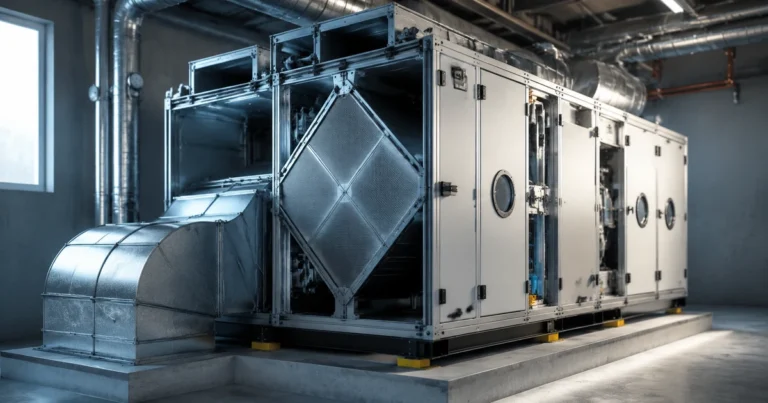
Die Wärmerückgewinnung ist der größte Hebel für umweltfreundliche Lüftung in klimatisierten Gebäuden. Ein Wärmerückgewinnungsgerät (HRV) oder Energierückgewinnungsgerät (ERV) überträgt Wärme (und bei ERV auch Feuchtigkeit) zwischen Abluft und Zuluft.
Im Winter erwärmt die ausströmende warme Luft die kalte Zuluft vor.
Im Sommer kühlt die klimatisierte Abluft die heiße Zuluft vor.
Ein ERV reduziert in feuchten Klimazonen zudem den Feuchtigkeitseintrag durch die Frischluft.
Wärmerückgewinnungssysteme gewinnen laut branchenüblichen technischen Referenzen typischerweise 60%–95% der Wärme aus der Abluft zurück; der Passivhaus-Standard fordert einen trockenen Wärmebereitstellungsgrad von mindestens 75%. Siehe unseren HRV vs. ERV Leitfaden Leitfaden zur Auswahl.
Wie die Optionen kombiniert werden
Jahreszeit / Bedingung
Empfohlener Ansatz
Mildes, kühles Wetter
Natürliche Lüftung (Fenster), mechanische Lüftung aus oder auf niedriger Stufe
Kalter Winter
Mechanische Lüftung mit HRV/ERV, Fenster geschlossen
Heißer, feuchter Sommer
Mechanische Lüftung mit HRV/ERV (ERV bevorzugt), Fenster geschlossen
Hohe Außenluftbelastung
Mechanische Lüftung mit Filtration, Fenster geschlossen
Nachtauskühlung (mild/trocken)
Natürliche Stoßlüftung, mechanische Lüftung aus
Dieser Mixed-Mode-Ansatz zeigt, wie nachhaltige Gebäudeplanung in der Praxis funktioniert: Nutzen Sie freie Außenluft, wenn sie tatsächlich energetisch kostenlos ist, und effiziente mechanische Systeme, wenn dies nicht der Fall ist.
Häufig gestellte Fragen
F: Ist natürliche Lüftung umweltfreundlich? A: Sie benötigt keine Betriebsenergie und ist daher in energetischer Hinsicht umweltfreundlich – bei extremen Wetterbedingungen verschwendet sie jedoch Heiz- bzw. Kühlenergie und führt ungefilterte Luft zu. Das umweltfreundlichste System nutzt natürliche Lüftung dort, wo sie funktioniert, und effiziente mechanische Lüftung dort, wo dies nicht der Fall ist.
F: Wie schont Wärmerückgewinnung die Umwelt? A: Durch die Rückgewinnung von Wärme aus der Abluft reduzieren HRV/ERV-Geräte die zur Konditionierung der Frischluft erforderliche Energie, was sowohl den Energieverbrauch als auch die Emissionen senkt.
F: Lohnen sich EC-Ventilatoren für eine umweltfreundliche Lüftung? A: Ja, bei Systemen mit Dauerbetrieb oder variablem Bedarf – EC-Ventilatoren verbrauchen nur die benötigte Energie, was das Kernstück energieeffizienter Lüftung darstellt.
F: Kann ich meine bestehende Lüftungsanlage umweltfreundlicher gestalten? A: Häufig ja: Rüsten Sie EC-Ventilatoren oder eine Bedarfssteuerung nach, halten Sie die Filter sauber (siehe Wartungsleitfaden) und ergänzen Sie eine Wärmerückgewinnung bei langen Laufzeiten der Anlage.
F: Welches ist das beste umweltfreundliche Lüftungssystem für ein Wohngebäude? A: Für ein klimatisiertes/beheiztes Gebäude ist ein balanciertes HRV/ERV-System mit EC-Ventilatoren und Bedarfssteuerung die energieeffizienteste Standardlösung. Für Wohngebäude in milden Klimazonen kann eine natürliche Lüftung mit effizienten Abluftventilatoren bereits genügen.
Planen Sie eine umweltfreundliche Lüftung? KCvents fertigt EC-Ventilatoren, HRV/ERV-Geräte und Energierückgewinnungssysteme für Großhandel, OEM und Private-Label-Projekte. Angebot anfordern mit Ihren Klima- und Lüftungsanforderungen.
Newsletter Updates
Enter your email address below and subscribe to our newsletter