Duct fan ventilation matters in hydroponics because it controls the three things a growing space cannot live without: fresh air (CO₂ for photosynthesis), temperature, and humidity. A duct fan pulls stale, humid air out and brings fresh air in, so plants get the CO₂ they need, temperatures stay manageable, and moisture does not build up into mold. This guide explains how duct fans work in hydroponic and indoor growing, and how to size one.
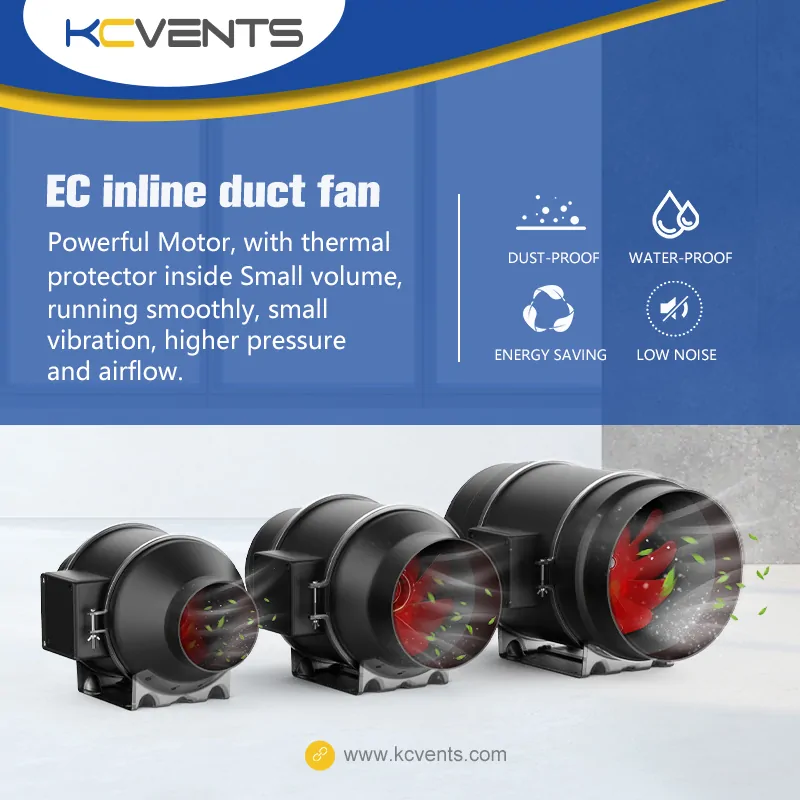
A duct fan (inline fan) is installed in the duct run and moves air from one place to another — typically pulling air out of the grow area through a filter and ducting. In a hydroponic or grow-tent setup, an inline duct fan is usually the main ventilation engine: it creates the airflow that the whole system depends on.
The jobs it does:
Fresh air intake / exhaust — keeps CO₂ available for plant growth by replacing used air.
Air circulation — moves air across and around plants, distributing CO₂ and preventing stagnant pockets.
Heat removal — exhausts heat from lights and equipment.
Airflow for the carbon filter — pulls odorous air through the filter bed so odors are treated before release.
Air Circulation, Temperature, and Humidity
Proper ventilation addresses three interlinked factors:
Air circulation. Stagnant air lets CO₂ deplete around leaves and creates microclimates where mildew starts. Moving air reaches all parts of the plants and keeps conditions even.
Temperature control. Lights and pumps generate heat. A duct fan exhausts that heat and draws in cooler air, keeping the canopy temperature in range.
Humidity control. Plants transpire, and unvented grow spaces climb in humidity. A duct fan replaces humid air with drier intake air, which is the main defense against mold and mildew.
The same three factors are why ventilation guidance for controlled environment agriculture emphasizes temperature, humidity, and air exchange. See our controlled environment agriculture ventilation guide for the plant-level ranges.
How to Size a Duct Fan
Sizing an inline duct fan is about matching airflow (m³/h or cfm) to the space and the resistance of ducts and filters:
Calculate the space volume — length × width × height of the grow area.
Pick a target air change rate — grow spaces often target several air changes per minute, far higher than a house. The right rate depends on heat load, plant density, and filter resistance.
Account for static pressure — a carbon filter and long ducts add resistance; look at the fan’s airflow at that pressure, not the free-air rating.
Choose a controllable fan — variable speed (EC motor) lets you dial airflow for the plant stage instead of always full blast.
Grow space (approx.)
Typical fan size
Notes
Small tent (e.g., 0.6–1 m)
100–125 mm inline fan
Check filter pressure drop
Medium tent (2×2 / 4×4 ft)
125–150 mm
Carbon filter recommended
Large tent / room
150–200 mm / multiple
Consider EC variable speed
Multi-room / greenhouse
Multiple fans / larger
Design per zone
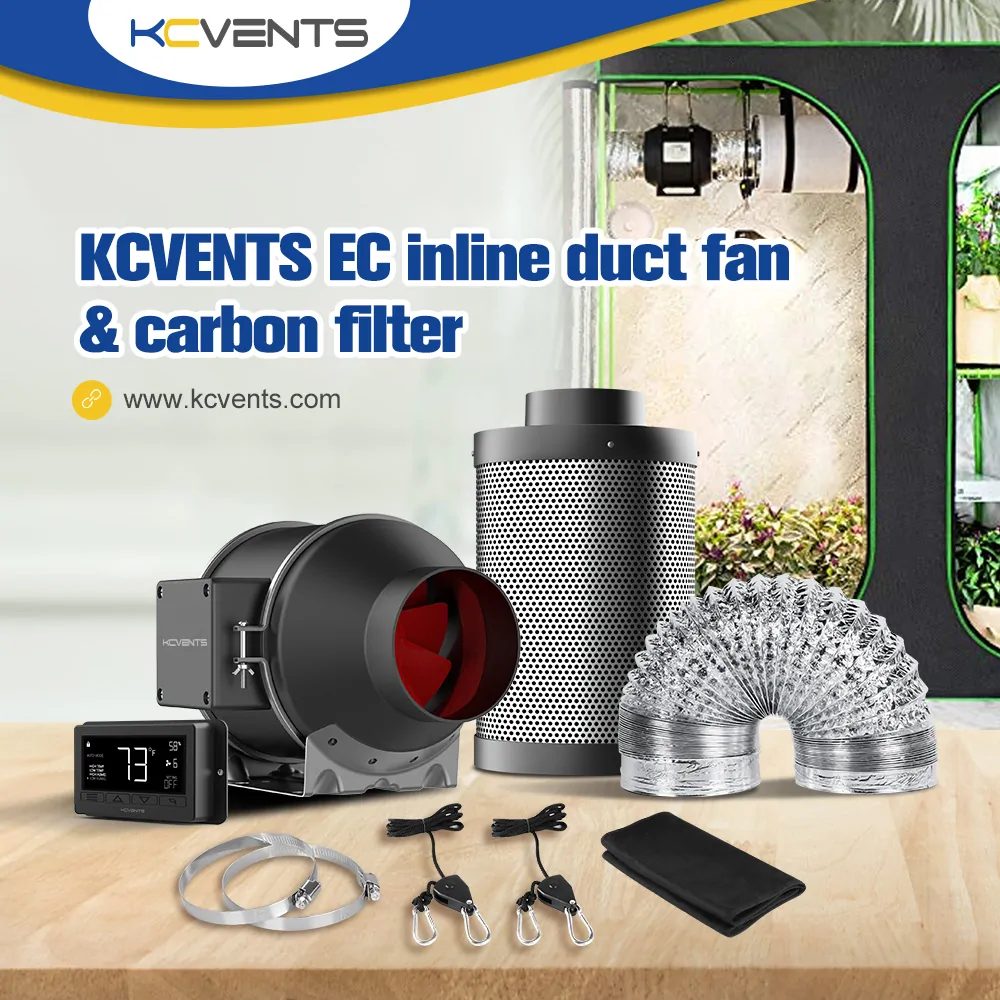
KCvents offers EC inline duct fans built for continuous, controllable grow-room ventilation.
Duct Fan + Carbon Filter
In indoor growing, the duct fan very often pulls air through an activated carbon filter — the carbon adsorbs odors before the air is released. Two sizing rules:
The fan must have enough pressure to pull through the carbon filter’s resistance.
The filter must be rated for the airflow the fan delivers at that pressure.
Q: Why does a grow room need an inline duct fan? A: It provides the air exchange, temperature control, and humidity control that a sealed or partially sealed growing space cannot get from windows or passive vents. It also drives the airflow through a carbon filter.
Q: How many air changes per minute does a grow tent need? A: Grow-room ventilation guidelines commonly suggest high exchange rates of several air changes per minute, but the right number depends on heat load, filter resistance, and plant density. Size the fan with margin, then control speed.
Q: Should the fan run continuously? A: Most grow spaces run exhaust continuously, often at reduced speed, with a separate circulation fan for leaf-level air movement. Demand control based on temperature and humidity is ideal.
Q: What size inline fan do I need for my grow tent? A: Calculate the volume, choose your target exchange rate, add the carbon filter’s pressure drop, and select a fan rated for that airflow at that static pressure. Our inline duct fan guide walks through this with a worked example.
Q: Do I need a carbon filter with my duct fan? A: If odor control matters (and it usually does for indoor growing), yes — a carbon filter on the exhaust path treats the air before release. Match filter to fan airflow.
Building a grow-room ventilation system? KCvents manufactures EC inline duct fans, activated carbon filters, and grow-room ventilation products for wholesale, OEM, and private-label buyers. Request a quote with your space size, airflow, and filter requirements.
Pembaruan Buletin
Masukkan alamat email Anda di bawah ini dan berlangganan buletin kami