We use cookies to ensure that we give you the best experience on our website.
Stay Updated with KCVENTS Ventilation & HVAC Solutions
Subscribe to our newsletter for the latest airflow engineering insights, energy-efficient ERV/HRV system updates, and eco-friendly HVAC solutions.
Be the first to receive exclusive technical guides, custom OEM/ODM capabilities, and global exhibition news directly from KCVENTS.
How Ventilation Works: Fresh Air, Exhaust, Airflow, and Heat Recovery
Why ventilation matters, the four basic layouts — exhaust, supply, balanced, and heat recovery — what air changes per hour mean, and how to design a system.
Ventilasi adalah pertukaran udara dalam ruangan dengan udara luar ruangan secara terkontrol: sistem ini menyuplai udara segar, membuang udara pengap, dan mengencerkan polutan yang menumpuk di ruangan berpenghuni. Ventilasi mekanis melakukan hal ini menggunakan kipas dan saluran udara (ducts) sehingga hasilnya tidak bergantung pada cuaca, jendela yang terbuka, atau tingkat kebocoran bangunan. Panduan ini menjelaskan mengapa ventilasi itu penting, cara kerja tata letak dasar, arti pergantian udara, dan peran pemulihan panas.
Mengapa Ventilasi yang Baik Itu Penting
Setiap ruangan berpenghuni menghasilkan polutan: manusia menghembuskan CO₂, aktivitas memasak dan pembersihan melepaskan VOC, kelembapan berasal dari kamar mandi dan cucian, serta debu dan partikel masuk dari luar. Tanpa udara segar yang memadai, polutan-polutan ini akan menumpuk.
According to the U.S. EPA, people spend about 90% of their time indoors, and concentrations of some indoor pollutants can be two to five times higher than outdoor levels. Source: U.S. EPA, The Inside Story: A Guide to Indoor Air Quality. Ventilasi yang tidak memadai dapat meningkatkan kadar polutan dalam ruangan karena tidak memasukkan cukup udara luar untuk mengencerkan emisi dari sumber dalam ruangan dan tidak membawa polutan udara dalam ruangan keluar dari area tersebut. Sumber: U.S. EPA, Introduction to Indoor Air Quality.
“Ventilasi membuang udara dalam ruangan yang mungkin terkonsentrasi dengan virus di udara dan menggantinya dengan udara segar dari luar.” — U.S. EPA, Ventilation and Respiratory Viruses
U.S. Centers for Disease Control and Prevention (CDC) menyatakan bahwa ventilasi yang baik sangat penting untuk menjaga lingkungan dalam ruangan yang sehat, dan merekomendasikan target 5 atau lebih pergantian udara per jam (ACH) udara bersih di ruangan gedung. Sumber: CDC, Improving Ventilation In Buildings. Ini adalah target desain bangunan, bukan sertifikasi untuk satu produk tunggal.
Tata Letak Dasar Sistem Ventilasi
Semua sistem ventilasi pada dasarnya bermuara pada empat cara mengalirkan udara. Sebagian besar bangunan menggunakan kombinasinya.
Ventilasi pembuangan saja (Exhaust-only ventilation)
Kipas membuang udara pengap dari ruangan basah atau berpolusi (kamar mandi, dapur, ruang cuci), dan udara segar masuk melalui celah serta ventilasi di tempat lain. Ini adalah sistem yang paling murah dan sederhana, serta banyak digunakan pada sebagian besar rumah model lama.
Kelebihan: Biaya rendah, sederhana, menghilangkan kelembapan dan bau langsung dari sumbernya.
Kekurangan: Udara yang masuk tidak disaring dan tidak terkontrol; dapat menarik udara dari kolong bangunan (crawl space) atau garasi; tidak ada pemulihan panas (heat recovery).
Ventilasi pasokan saja (Supply-only ventilation)
Kipas memasukkan udara luar yang telah disaring ke dalam bangunan, memberikan sedikit tekanan positif, dan udara pengap keluar melalui celah serta ventilasi.
Kelebihan: Udara segar yang disaring dan terkontrol; baik untuk area dengan sumber polusi dalam ruangan yang tinggi.
Kekurangan: Dapat mendorong kelembapan ke ruang loteng yang dingin (kondensasi); tidak ada pemulihan panas (heat recovery); bergantung pada kebocoran bangunan untuk pembuangan udara.
Ventilasi seimbang (pasokan + pembuangan)
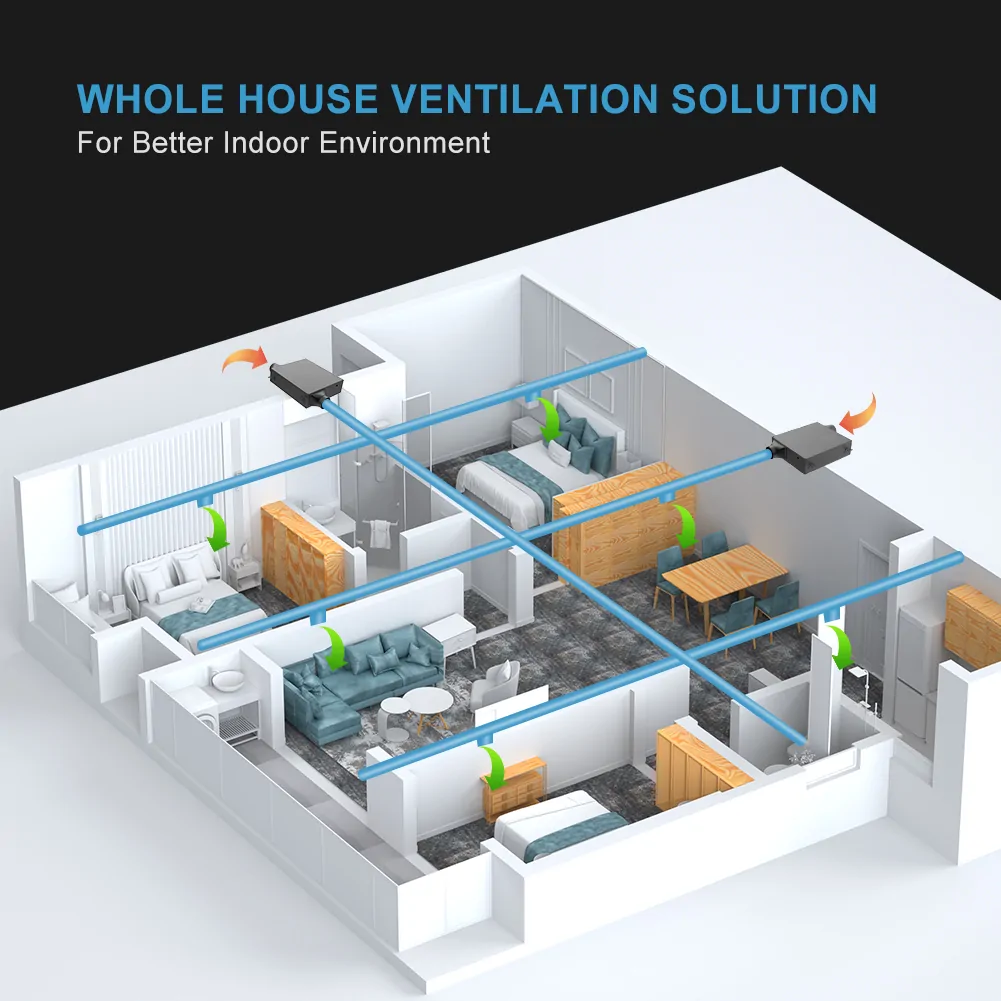
Dua kipas yang disesuaikan menyuplai udara segar dan membuang udara pengap, sehingga bangunan tidak mengalami tekanan positif maupun tekanan negatif berlebih. Tata letak inilah yang memungkinkan ventilasi merata, tersaring, dan terkontrol.
Kelebihan: Aliran udara masuk dan keluar terkontrol; dapat disaring pada kedua jalur aliran; dasar untuk sistem pemulihan panas (heat recovery).
Kekurangan: Memerlukan dua set saluran udara; lebih banyak peralatan; tanpa pemulihan panas, energi akan terbuang bersama udara pembuangan.
Ventilasi seimbang dengan pemulihan panas (HRV/ERV)
Sama seperti ventilasi seimbang, ditambah heat-exchange core yang mentransfer panas (HRV) atau panas dan kelembapan (ERV) antara udara keluar dan udara masuk.
Kelebihan: Udara segar tanpa membuang energi pemanasan atau pendinginan; pilihan terbaik untuk bangunan kedap udara dan hemat energi.
Kekurangan: Biaya dan kompleksitas lebih tinggi; core memerlukan pemeliharaan berkala.
Apa Arti Pergantian Udara per Jam (ACH)
Air changes per hour (ACH) adalah berapa kali seluruh volume ruangan digantikan oleh ventilasi dalam satu jam. Ini adalah metode standar untuk menyatakan seberapa banyak ventilasi yang diterima suatu ruangan.
ACH = aliran udara ventilasi (m³/h) ÷ volume ruangan (m³)
Ruangan berukuran 40 m² dengan tinggi plafon 2,7 m memiliki volume sekitar 108 m³. Untuk mencapai 3 ACH, Anda memerlukan aliran udara sekitar 324 m³/h; untuk mencapai 5 ACH, sekitar 540 m³/h.
Ruangan
Referensi desain tipikal
Hunian (kontinu)
ASHRAE 62.2: 7,5 cfm/orang + 3 cfm/100 sq ft
Ruangan bangunan (target udara bersih)
CDC: targetkan 5+ ACH udara bersih
Ruang kelas / okupansi padat
Desain berdasarkan ASHRAE 62.1, okupansi, dan luas lantai
ACH yang tepat untuk suatu ruangan bergantung pada penggunaan, okupansi, dan standar regulasi. Poin praktis yang penting: resistansi filter dan ducting mengurangi aliran udara aktual yang disalurkan kipas, sehingga ACH aktual lebih rendah daripada kapasitas nominal kipas kecuali sistem dirancang dengan margin perhitungan.
Udara Segar, Pembuangan, dan Tekanan dalam Praktiknya
Tiga aturan praktis agar sistem ventilasi tetap bekerja optimal:
Seimbangkan aliran udara. Dalam sistem yang seimbang, supply dan exhaust harus relatif sama. Terlalu banyak supply akan memberi tekanan berlebih pada bangunan; terlalu banyak exhaust akan menurunkan tekanan (depressurize) dan dapat menarik udara tanpa filter melalui celah yang tidak diinginkan.
Tempatkan intake jauh dari polusi. Intake udara luar harus diletakkan jauh dari terminal exhaust, ventilasi pembuangan, area sampah, dan jalan raya yang padat.
Jaga jalur udara tetap bersih dan bebas hambatan. Grille, filter, dan ducting semuanya memerlukan akses untuk pembersihan; filter yang tersumbat secara perlahan akan mengurangi ventilasi aktual yang diterima ruangan.
Peran Pemulihan Panas (Heat Recovery)
Dalam sistem yang seimbang, udara buang adalah sumber energi gratis. Di musim dingin suhunya hangat; di musim panas suhunya sejuk. Inti heat recovery mentransfer energi tersebut ke udara segar yang masuk:
Musim dingin: udara hangat yang keluar melakukan pemanasan awal pada udara dingin yang masuk → rumah mendapatkan udara segar tanpa beban pemanasan yang besar.
Musim panas: udara ber-AC yang keluar melakukan pendinginan awal pada udara panas yang masuk → beban pendinginan berkurang.
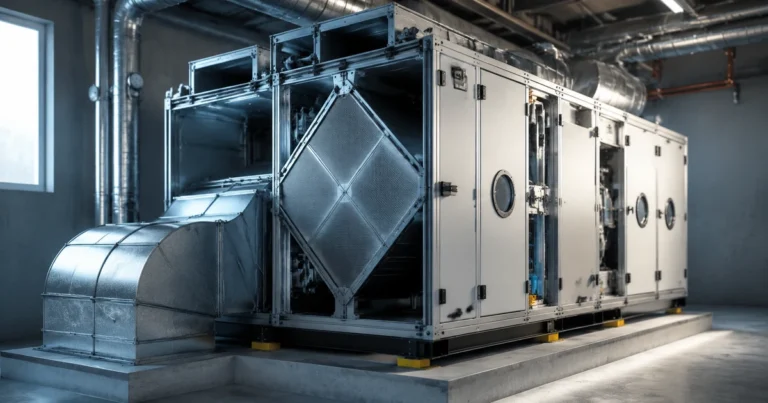
Ventilasi heat recovery biasanya memulihkan 60%–95% panas dari udara buang, menurut referensi teknis industri. Sistem dengan heat recovery dapat berupa HRV (hanya panas) atau ERV (panas dan kelembapan). Lihat HRV vs ERV guide untuk menentukan pilihan.
Frequently Asked Questions
T: Apa perbedaan antara ventilasi dan air conditioning? J: Ventilasi menukar udara dalam dan luar ruangan untuk mengontrol polutan dan kelembapan. Air conditioning mengontrol suhu (dan sering kali kelembapan) dengan mensirkulasikan kembali udara dalam ruangan. Banyak gedung menggunakan keduanya: ventilasi menyuplai udara segar, air conditioning menjaga kenyamanan suhu.
T: Apakah membuka jendela termasuk ventilasi? J: Ya, ventilasi alami. Cara ini berfungsi saat cuaca sejuk tetapi bergantung pada angin, perbedaan suhu, dan kualitas udara luar — serta tidak menyaring udara yang masuk. Ventilasi mekanis menyediakan ventilasi yang konsisten dan tersaring terlepas dari kondisi cuaca.
T: Berapa banyak ventilasi yang dibutuhkan sebuah rumah? J: Standar ASHRAE 62.2 menetapkan ventilasi mekanis berkelanjutan sebesar 7,5 cfm per orang ditambah 3 cfm per 100 kaki persegi luas lantai untuk bangunan residensial. Regulasi lokal dan kondisi spesifik bangunan menentukan desain akhir.
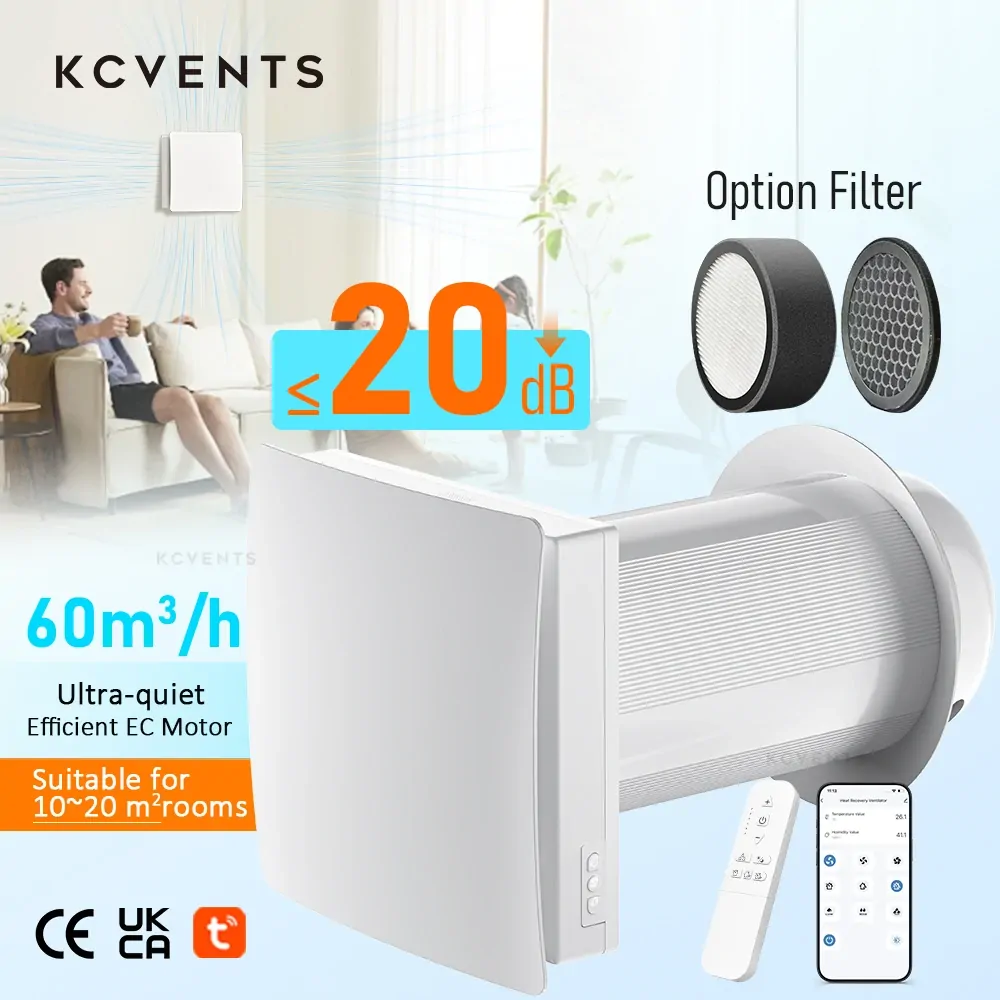
T: Apa fungsi HRV dalam sistem ventilasi? J: HRV adalah unit ventilasi seimbang dengan pemulihan panas (heat recovery): unit ini menyuplai udara segar, membuang udara kotor, dan mentransfer panas dari udara yang keluar ke udara yang masuk, sehingga ventilasi tidak membuang energi pemanas atau pendingin.
T: Bisakah kipas ventilasi terlalu bertenaga? J: Ya. Kipas exhaust yang terlalu besar dapat menurunkan tekanan udara di dalam gedung, menarik udara tanpa filter melalui celah-celah bangunan, dan dapat mengganggu peralatan pembakaran. Sistem ventilasi harus dirancang secara terukur, bukan dikira-kira.
Sedang merancang sistem ventilasi? KCvents memproduksi inline duct fan, unit HRV/ERV, dan sistem fresh air untuk proyek grosir, OEM, dan private-label. Minta penawaran harga dengan ukuran ruangan, target airflow, dan aplikasi Anda.
Pembaruan Buletin
Masukkan alamat email Anda di bawah ini dan berlangganan buletin kami