Why EC Motor Fans Are More Energy Efficient (and When They Pay Off)
EC motor fans are more energy efficient because they use brushless DC motor technology with electronic speed control, so they consume only the power needed for the airflow — unlike AC fans that use near-full power whenever they run. The energy saving is largest where a fan runs continuously or at varying demand, which is exactly the duty of most ventilation fans. This guide explains the mechanics, the payoff, and when an EC fan is worth the investment.
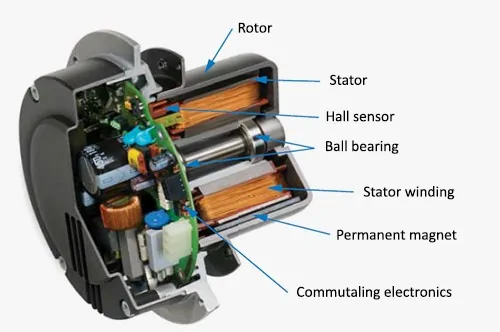
An EC (electronically commutated) fan is a brushless DC motor with a built-in electronic controller. Three features make it energy efficient:
Brushless DC motor technology. DC motors convert electrical power to mechanical power more efficiently than the induction motors used in AC fans, losing less energy as heat.
Precise speed control. The microprocessor adjusts the fan’s speed and output continuously, so the fan moves only the airflow actually needed at that moment.
Efficient commutation. The electronic controller switches the motor’s coils in step with the rotor, with no mechanical brushes to lose energy or wear out.
The practical result: at partial load an EC fan can use a small fraction of an AC fan’s power, and even at full load it is typically more efficient.
The Technology Behind the Saving
An AC (induction) motor runs at a speed tied to the mains frequency and draws roughly constant power when on. To change its speed in a duct or exhaust system you usually need an external variable-frequency drive, which adds cost and complexity.
An EC motor integrates the controller in the motor itself:
AC mains is converted to DC inside the motor.
A microprocessor drives the commutation electronically.
Speed responds to a 0–10 V or PWM control signal, or an internal sensor (humidity, CO₂).
That integration is why an EC fan can be a drop-in “smart” fan: you connect a sensor or controller and the fan manages its own speed — and its own energy use.
EC vs AC Fan Energy Use
Operating point
EC motor fan
AC motor fan
Full speed
Efficient
Baseline
Partial load (e.g., 50%)
Consumes roughly a fraction of full power
Consumes near full power
Speed change
Built-in electronic
Needs external control (or fixed taps)
Heat loss
Low
Higher
Fan power over time
Tracks demand
Tracks on/off
The efficiency gap is most visible in the kWh over months — a fan running slowly in a bathroom most of the day, or a ventilation system running continuously, is where the EC fan earns its keep.
Where the Payoff Is Biggest
EC fans cost more upfront, so the payback is fastest where they run long or at variable demand:
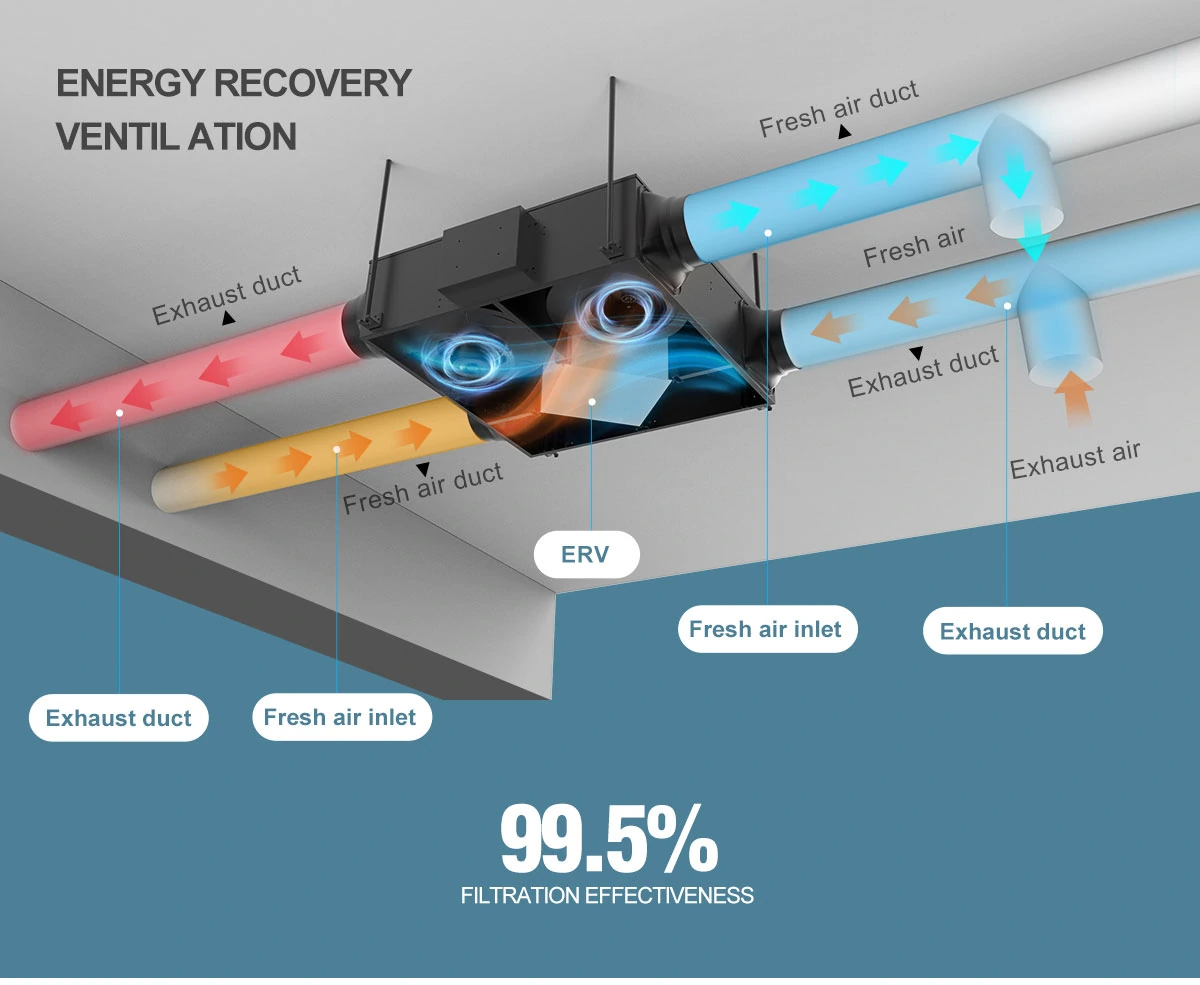
Continuous ventilation — HRV/ERV systems, fresh-air units that run 24/7.
Bathroom and kitchen fans on humidity sensors — most of the day at low speed, spikes only with steam.
Grow-room and greenhouse exhaust — long seasons, adjustable airflow.
Commercial ventilation — demand control lowers both energy and peak load.
Any fan that would otherwise run at full speed for hours — here the EC saving is immediate.
If a fan runs rarely and always at full speed (e.g., a utility exhaust a few minutes daily), an AC fan is cheaper and the EC premium is hard to justify.
Tip: when comparing fans, look at power consumption at the speed you will actually use, not just the maximum airflow rating. An EC fan’s low-speed power is where the real saving shows.
Frequently Asked Questions
Q: How much energy can an EC fan save? A: The saving depends on runtime and speed profile. Fans that run continuously or at partial load can see the biggest relative savings, because EC motors are efficient at full load and dramatically more efficient at partial load than AC motors.
Q: Are EC fans worth the higher price? A: Usually, yes, for continuous or variable-demand ventilation, because the energy saving compounds every hour the fan runs. For rare, fixed-speed use, an AC fan may be more cost-effective.
Q: Can I connect an EC fan to a humidity or CO₂ sensor? A: Yes — that is a common setup. The fan’s built-in controller responds to the sensor signal and adjusts speed automatically.
Q: Do EC fans last longer? A: Generally yes — no brushes to wear out, cooler operation, and softer starts reduce long-term wear.
Q: Are EC fans quieter? A: At reduced speed, yes — because the fan runs slower, it is quieter. That is a practical side benefit of EC control.
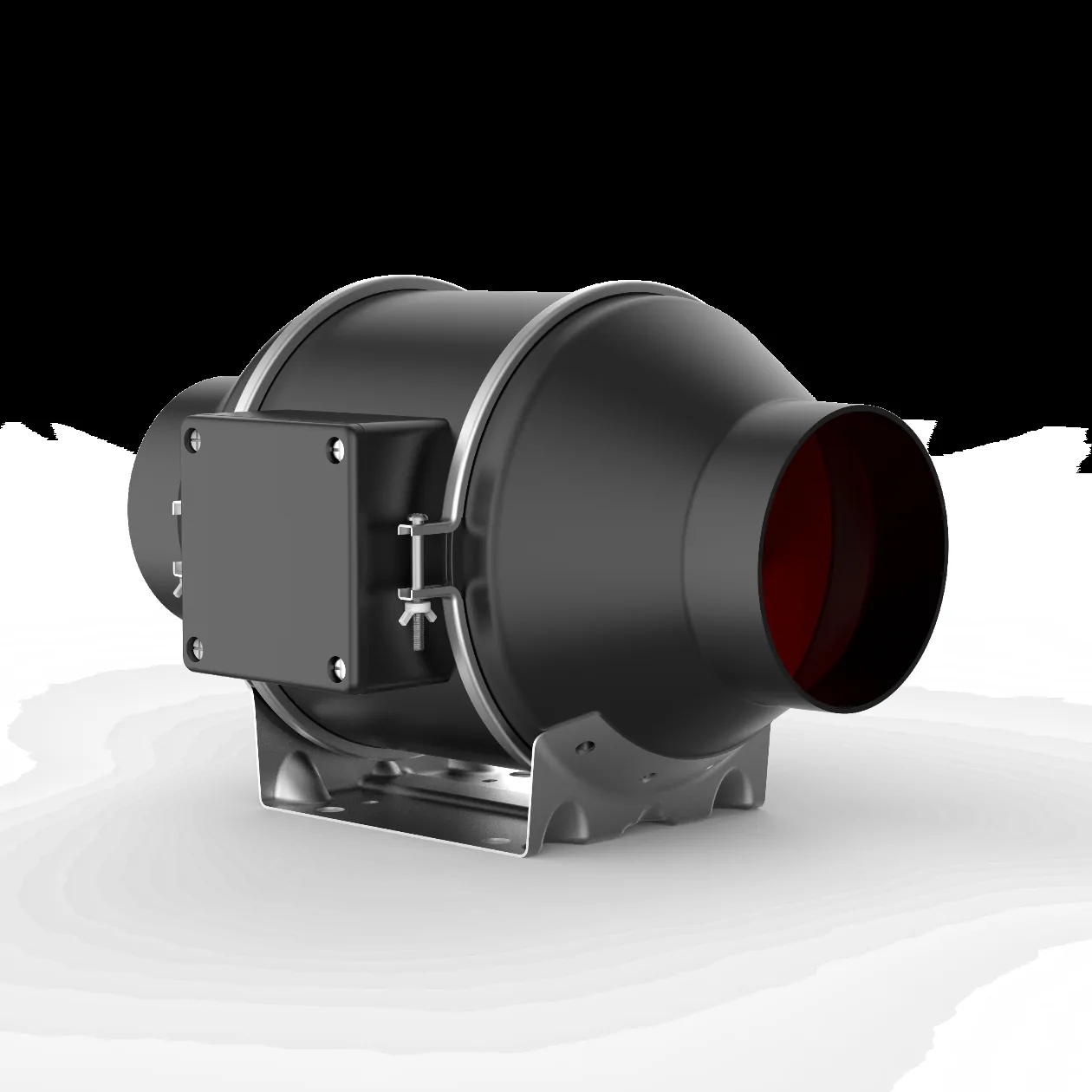
Lowering the energy cost of your ventilation? KCvents manufactures EC inline duct fans, EC exhaust fans, and energy-efficient ventilation systems for wholesale, OEM, and private-label projects. Request a quote with your airflow, runtime, and application.
Pembaruan Buletin
Masukkan alamat email Anda di bawah ini dan berlangganan buletin kami