Мы используем файлы cookie, чтобы обеспечить максимальное удобство использования нашего веб-сайта.
Stay Updated with KCVENTS Ventilation & HVAC Solutions
Subscribe to our newsletter for the latest airflow engineering insights, energy-efficient ERV/HRV system updates, and eco-friendly HVAC solutions.
Be the first to receive exclusive technical guides, custom OEM/ODM capabilities, and global exhibition news directly from KCVENTS.
Classroom Ventilation: How to Improve Indoor Air Quality in Schools
Why classroom air quality matters, the four common problems, how much ventilation a classroom needs, and which equipment — HRV, fresh-air blower, or exhaust fan — fits a school.
Качественная вентиляция учебных классов предполагает непрерывную замену отработанного воздуха чистым наружным воздухом, контроль уровня CO₂ и фильтрацию взвешенных частиц — это помогает учащимся сохранять концентрацию и комфорт. Класс на 25–35 человек генерирует CO₂, влагу и мелкодисперсные частицы быстрее, чем предполагается, а одного проветривания через окна часто недостаточно, особенно в холодную или шумную погоду. В данном руководстве рассматривается, почему качество воздуха в классах столь важно, с какими проблемами приходится сталкиваться, как спроектировать вентиляцию для класса и какое оборудование выбрать.
Почему качество воздуха в классах имеет решающее значение
Класс — одно из помещений с самой высокой плотностью людей в здании. Учащиеся проводят часы в одном помещении, вдыхая один и тот же воздух, и уровень CO₂ стремительно растет по мере заполнения класса.
По данным Агентства по охране окружающей среды США (EPA), американцы проводят в помещениях около 90% своего времени, а концентрация некоторых загрязняющих веществ внутри помещений может быть в два-пять раз выше, чем на улице. Source: U.S. EPA, The Inside Story: A Guide to Indoor Air Quality. Школы не являются исключением — тем более что внутри находятся дети, чей растущий организм и более высокая частота дыхания делают их более уязвимыми.
“Надлежащая вентиляция необходима для поддержания здорового микроклимата в помещении и защиты находящихся в здании людей от респираторных инфекций”. — Центры по контролю и профилактике заболеваний США (CDC), Улучшение вентиляции в зданиях
Рекомендации CDC для помещений зданий предписывают стремиться к 5 или более кратностям воздухообмена в час (ACH) чистого воздуха, а также использовать разбавление приточным наружным воздухом в качестве одной из ключевых инженерных мер контроля. Источник: CDC. Это проектные целевые показатели для инженерных систем здания, а не сертификация конкретного оборудования.
Четыре основные проблемы с качеством воздуха в классах
В предыдущей статье KCVENTS “Как улучшить качество воздуха в классах?” были перечислены практические проблемы, с которыми сталкиваются преподаватели и службы эксплуатации:
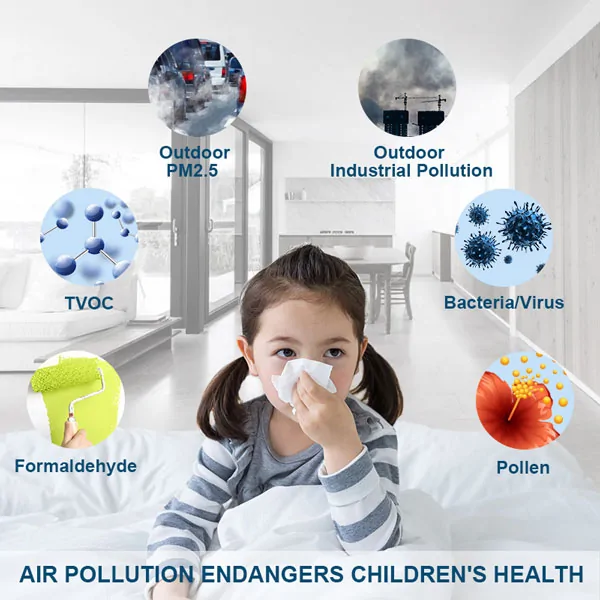
Проникновение наружных частиц PM2.5. В дни со смогом или высоким уровнем загрязнения мелкодисперсные частицы проникают в класс через неплотности окон и дверей даже при закрытых окнах. Открытие окон только усугубляет ситуацию.
Высокая концентрация CO₂. Полный класс приводит к резкому росту CO₂ уже в течение первого часа занятий; высокая концентрация CO₂ напрямую связана с сонливостью и снижением концентрации внимания.
Распространение взвешенных в воздухе частиц. Высокая плотность людей означает, что большее количество учащихся дышит одним воздухом; вентиляция снижает концентрацию взвешенных частиц за счет разбавления.
Выделение формальдегида и других летучих соединений в помещении. Мебель, напольные покрытия и чистящие средства выделяют ЛОС (VOC), которые накапливаются в непроветриваемом помещении.
Главный вывод из этих четырех проблем: система вентиляции класса должна подавать наружный воздух, разбавлять внутренние загрязнители и фильтровать приточный воздух, а не полагаться исключительно на периодическое открытие окон.
Какой объем вентиляции необходим для учебного класса?
Единого нормативного значения для всех стран не существует, однако два общепринятых стандарта задают проектные рамки:
CDC: от 5 ACH чистого воздуха в качестве целевого показателя для помещений здания. Источник
ASHRAE 62.1 устанавливает нормы подачи наружного воздуха для коммерческих и общественных зданий, включая учебные классы, с учетом количества людей и площади пола.
С точки зрения практического проектирования необходимо рассчитать:
Объем помещения (м² × высота потолка).
Количество людей (наполняемость) — количество учащихся и преподавателя.
Целевая кратность воздухообмена в час — расчетная норма воздухообмена для помещения.
Подача наружного воздуха — объем свежего воздуха, подаваемого системой с учетом сопротивления фильтров и воздуховодов.
Исходные данные для проектирования
На что обратить внимание
Площадь помещения (м²)
Площадь пола определяет составляющую нормы воздухообмена по площади
Высота потолка
Объем помещения определяет кратность воздухообмена (ACH) при заданном расходе воздуха
Количество людей (наполняемость)
Количество людей определяет норму подачи наружного воздуха в расчете на одного человека
Предельный уровень шума
Школьное оборудование должно работать в пределах допустимого для учебных классов уровня шума
Ступень фильтрации
Как минимум фильтр грубой очистки на притоке воздуха; для районов с загрязненным воздухом следует предусмотреть более тонкую фильтрацию
Чек-лист для раздельного расчета по каждому помещению эффективнее фиксированных значений, поскольку площадь классов, их наполняемость и качество наружного воздуха различаются. Правильный подход: определить целевую кратность воздухообмена (ACH), рассчитать требуемый расход воздуха и подобрать оборудование, способное обеспечить его при допустимом уровне шума.
Какое вентиляционное оборудование подходит для учебного класса
Different classrooms have different constraints, so the right equipment depends on the situation:
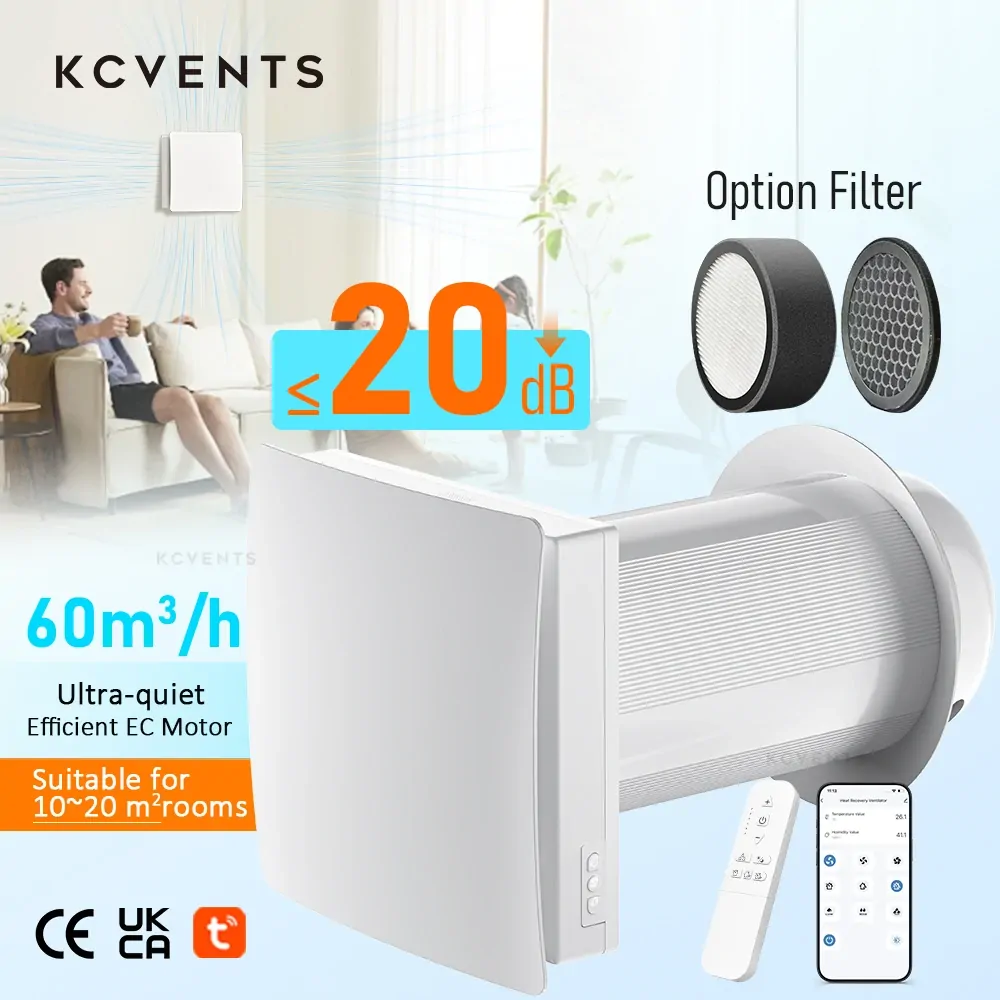
Balanced HRV/ERV unit — supplies filtered fresh air and exhausts stale air while recovering heat. The best fit where heating or cooling energy matters (cold winters, hot summers) and where a ducted system can be installed. A single-room HRV such as the VT501 can serve one classroom; a larger commercial heat recovery unit serves multiple rooms.
Fresh-air blower with filtration — supplies filtered outdoor air without exhaust. Simpler to install; used where the room already has exhaust (toilet or corridor exhaust) or where pressurization is acceptable.
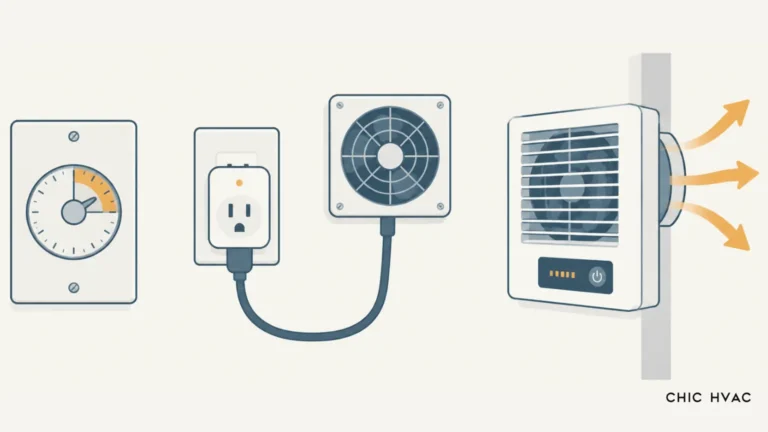
Вытяжной вентилятор — removes stale air and relies on natural supply. Cheapest, but it does not filter the incoming air and does not recover heat.
Air purifier with HEPA — filters indoor air but does not provide fresh outdoor air; a supplement, not a ventilation solution.
Этот VT501 school fresh air system was designed for this kind of application: continuous supply of filtered fresh air, quiet operation, and heat recovery so the room stays comfortable in winter without wasting heating energy.
Classroom ventilation quick checklist
[ ] Measure the room and set a target ACH (for example, a design rate appropriate to the room type).
[ ] Calculate the outdoor-air airflow needed, then add margin for filter and duct resistance.
[ ] Choose equipment that can deliver that airflow at an acceptable noise level.
[ ] Add filtration on the incoming air (coarse filter minimum; consider fine filtration in polluted areas).
[ ] Plan CO₂ monitoring so staff can see when ventilation is insufficient.
[ ] Schedule filter checks and cleaning — a clogged filter reduces airflow and defeats the design.
Мониторинг CO₂ и рекомендации по эксплуатации
CO₂ concentration is the easiest practical signal of whether ventilation is keeping up with occupancy. When CO₂ climbs toward the high end of the recommended range, the room needs more outdoor air — either more ventilation or fewer occupants.
Operation tips that cost nothing:
Run the ventilation system during occupied hours, and start it a few minutes before class begins.
Keep supply grilles and return paths unobstructed — furniture against a grille kills the airflow.
Clean or replace filters on schedule; a clogged filter silently reduces ventilation.
In mild weather, use natural ventilation as a supplement where noise and outdoor air quality allow.
Frequently Asked Questions
Q: What is the best way to improve classroom air quality? A: Continuously supply filtered outdoor air, exhaust stale air, monitor CO₂, and keep the system maintained. The best equipment depends on the room: an HRV/ERV for balanced supply and exhaust with heat recovery, or a filtered fresh-air blower where only supply is needed.
Q: Does opening a window solve classroom ventilation? A: Sometimes, but not reliably. Windows bring in unfiltered outdoor air (including PM2.5 and noise), depend on weather, and are often closed in winter or summer. Mechanical ventilation with filtration provides consistent, filtered outdoor air.
Q: How many air changes per hour should a classroom have? A: The CDC recommends aiming for 5 or more air changes per hour of clean air in building rooms. The appropriate design rate for a specific classroom should be set by the ventilation designer based on occupancy, room size, and local requirements.
Q: Can a single-room HRV ventilate one classroom? A: Yes. A single-room heat recovery ventilator can supply filtered fresh air and exhaust stale air for one room while recovering heat, which keeps the classroom comfortable without high heating costs. Match the unit’s airflow to the calculated requirement.
Q: Does ventilation prevent flu or other illnesses? A: Ventilation dilutes airborne particles and is an important engineering control, but it is not a treatment and does not guarantee protection from any illness. It is one part of a healthy indoor environment.
Planning classroom ventilation for a school project? KCvents supplies single-room and commercial heat recovery units for schools, wholesale, OEM, and private-label projects. Request a quote with your room sizes, occupancy, and target airflow.
Обновления рассылки
Подпишитесь на нашу рассылку, введя свой адрес электропочты