We use cookies to ensure that we give you the best experience on our website.
Stay Updated with KCVENTS Ventilation & HVAC Solutions
Subscribe to our newsletter for the latest airflow engineering insights, energy-efficient ERV/HRV system updates, and eco-friendly HVAC solutions.
Be the first to receive exclusive technical guides, custom OEM/ODM capabilities, and global exhibition news directly from KCVENTS.
Classroom Ventilation: How to Improve Indoor Air Quality in Schools
Why classroom air quality matters, the four common problems, how much ventilation a classroom needs, and which equipment — HRV, fresh-air blower, or exhaust fan — fits a school.
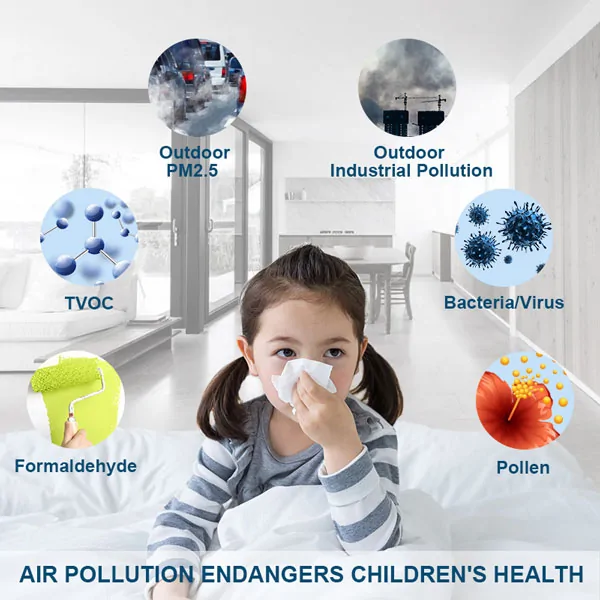
จากข้อมูลของ U.S. EPA ชาวอเมริกันใช้เวลาประมาณ 90% อยู่ภายในอาคาร และความเข้มข้นของมลพิษภายในอาคารบางชนิดอาจสูงกว่าระดับภายนอกอาคารได้ถึง 2 ถึง 5 เท่า. ที่มา: U.S. EPA, The Inside Story: A Guide to Indoor Air Quality. โรงเรียนก็ไม่ใช่ข้อยกเว้น — และผู้อยู่ภายในคือเด็ก ซึ่งร่างกายกำลังพัฒนาและมีอัตราการหายใจที่สูงกว่า ทำให้มีความไวต่อมลภาวะมากกว่า.
A room-by-room planning checklist is more useful than a fixed number, because classroom size, occupancy, and local air quality differ. The right approach: decide the target ACH, calculate the airflow, then choose equipment that can deliver it at acceptable noise.
อุปกรณ์ระบายอากาศรุ่นใดที่เหมาะกับห้องเรียน
Different classrooms have different constraints, so the right equipment depends on the situation:
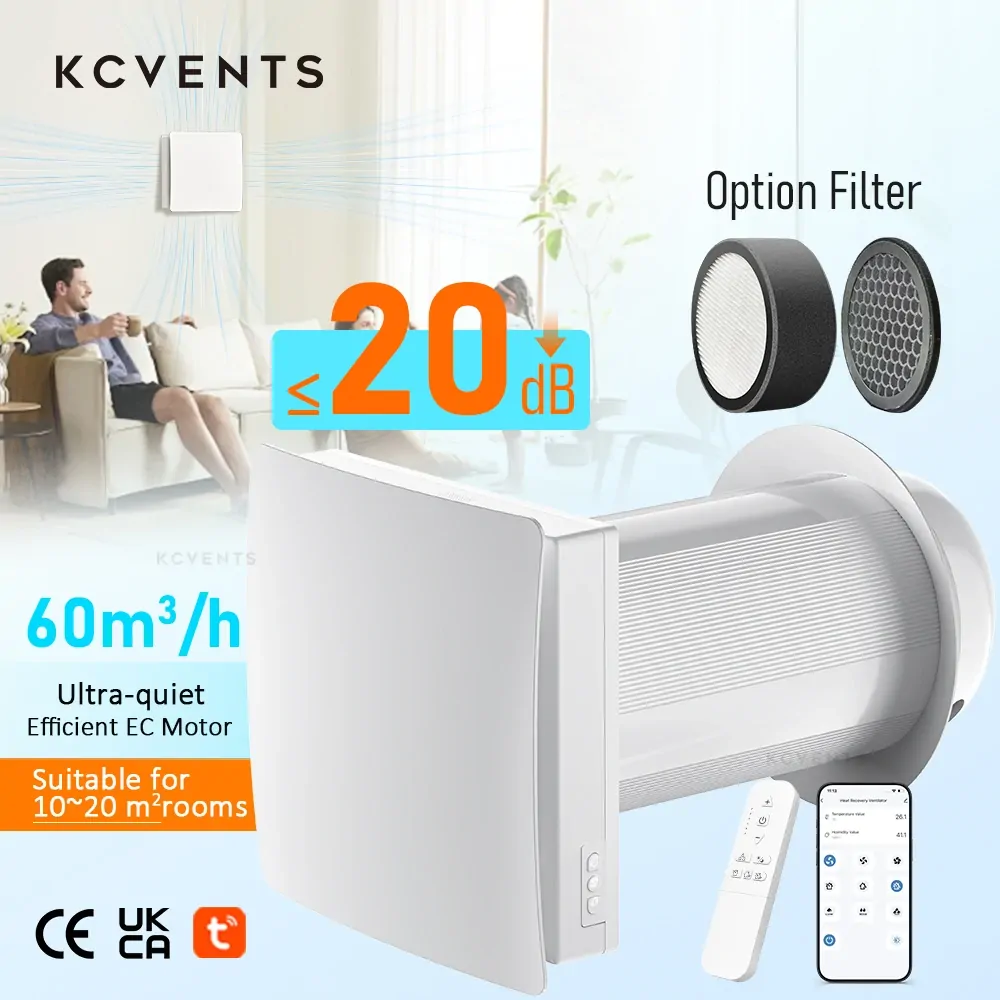
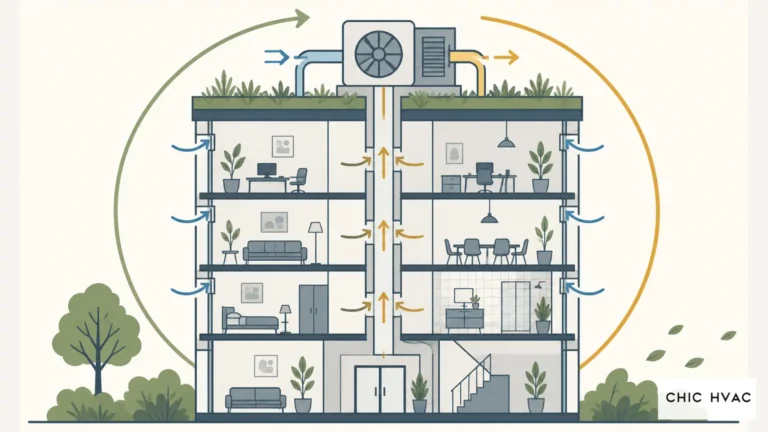
Balanced HRV/ERV unit — supplies filtered fresh air and exhausts stale air while recovering heat. The best fit where heating or cooling energy matters (cold winters, hot summers) and where a ducted system can be installed. A single-room HRV such as the VT501 can serve one classroom; a larger commercial heat recovery unit serves multiple rooms.
Fresh-air blower with filtration — supplies filtered outdoor air without exhaust. Simpler to install; used where the room already has exhaust (toilet or corridor exhaust) or where pressurization is acceptable.
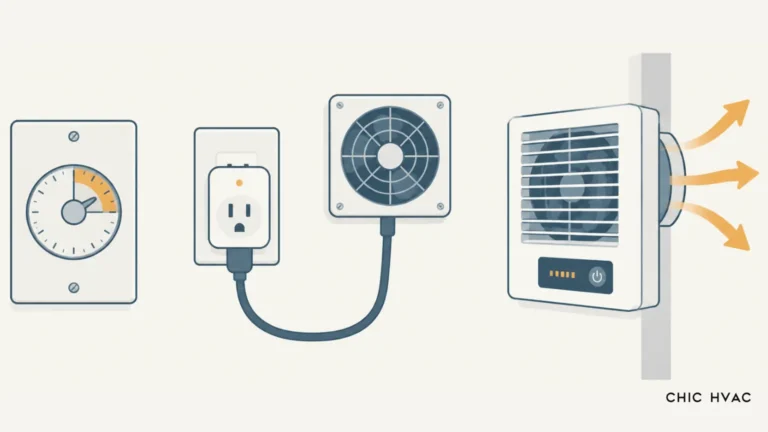
พัดลมดูดอากาศเสีย (Exhaust fan) — removes stale air and relies on natural supply. Cheapest, but it does not filter the incoming air and does not recover heat.
Air purifier with HEPA — filters indoor air but does not provide fresh outdoor air; a supplement, not a ventilation solution.
The VT501 school fresh air system was designed for this kind of application: continuous supply of filtered fresh air, quiet operation, and heat recovery so the room stays comfortable in winter without wasting heating energy.
Classroom ventilation quick checklist
[ ] Measure the room and set a target ACH (for example, a design rate appropriate to the room type).
[ ] Calculate the outdoor-air airflow needed, then add margin for filter and duct resistance.
[ ] Choose equipment that can deliver that airflow at an acceptable noise level.
[ ] Add filtration on the incoming air (coarse filter minimum; consider fine filtration in polluted areas).
[ ] Plan CO₂ monitoring so staff can see when ventilation is insufficient.
[ ] Schedule filter checks and cleaning — a clogged filter reduces airflow and defeats the design.
การตรวจวัด CO₂ และเคล็ดลับการใช้งาน
CO₂ concentration is the easiest practical signal of whether ventilation is keeping up with occupancy. When CO₂ climbs toward the high end of the recommended range, the room needs more outdoor air — either more ventilation or fewer occupants.
Operation tips that cost nothing:
Run the ventilation system during occupied hours, and start it a few minutes before class begins.
Keep supply grilles and return paths unobstructed — furniture against a grille kills the airflow.
Clean or replace filters on schedule; a clogged filter silently reduces ventilation.
In mild weather, use natural ventilation as a supplement where noise and outdoor air quality allow.
Frequently Asked Questions
Q: What is the best way to improve classroom air quality? A: Continuously supply filtered outdoor air, exhaust stale air, monitor CO₂, and keep the system maintained. The best equipment depends on the room: an HRV/ERV for balanced supply and exhaust with heat recovery, or a filtered fresh-air blower where only supply is needed.
Q: Does opening a window solve classroom ventilation? A: Sometimes, but not reliably. Windows bring in unfiltered outdoor air (including PM2.5 and noise), depend on weather, and are often closed in winter or summer. Mechanical ventilation with filtration provides consistent, filtered outdoor air.
Q: How many air changes per hour should a classroom have? A: The CDC recommends aiming for 5 or more air changes per hour of clean air in building rooms. The appropriate design rate for a specific classroom should be set by the ventilation designer based on occupancy, room size, and local requirements.
Q: Can a single-room HRV ventilate one classroom? A: Yes. A single-room heat recovery ventilator can supply filtered fresh air and exhaust stale air for one room while recovering heat, which keeps the classroom comfortable without high heating costs. Match the unit’s airflow to the calculated requirement.
Q: Does ventilation prevent flu or other illnesses? A: Ventilation dilutes airborne particles and is an important engineering control, but it is not a treatment and does not guarantee protection from any illness. It is one part of a healthy indoor environment.
Planning classroom ventilation for a school project? KCvents supplies single-room and commercial heat recovery units for schools, wholesale, OEM, and private-label projects. Request a quote with your room sizes, occupancy, and target airflow.
Newsletter Updates
Enter your email address below and subscribe to our newsletter