A ventilation fan is a commodity until it fails in a building you cannot easily service. That is the real reason distributors audit factories: not to collect a certificate, but to decide whether the unit on the pallet will still perform in year three, and whether the supplier will still be there when it does not. This guide sets out what a factory audit should actually examine, in the order that reveals the most about a supplier’s capability.
The short version: a quality certificate tells you a system exists on paper. Only a physical audit tells you whether the system is running. Treat the certificate as the invitation to the audit, never as the substitute for it.
Start with what the certificate does and does not mean
ISO 9001 is a quality management system standard. It certifies that a manufacturer has defined processes, documented them, and is audited periodically against its own documented system. It does not certify that any particular fan performs to a particular specification, and it does not certify that the processes in the manual are followed on the line the day you visit.
So the first and most informative questions are about scope and currency:
Which legal entity and which site does the certificate cover? A group certificate that names a different factory than the one producing your order is a common and material gap.
What is the certificate’s scope statement? Does it name the actual product family you are buying?
Which edition of the standard is the certificate issued against, and is that edition still current? Certification bodies move to a new edition on a transition timetable; a certificate against a superseded edition is a question worth asking, because the supplier may be mid-transition.
Who issued it, when does it expire, and when was the last surveillance audit?
Is there a documented corrective-action record from that last audit? Ask to see a closed corrective action. It is far more revealing than the certificate itself.
The four questions that reveal the most
If you have half a day on site, spend it here.
1. How do they test airflow — and where is the test bench?
Airflow performance is the product. Ask to see the airflow test bench, watch a unit tested, and ask what the measured value is compared against. A functioning manufacturer has a bench that measures airflow against varying static pressure, not just a free-air reading. If the bench does not exist, or is not in use, the published performance data was not produced on site, and you need to know where it came from.
Ask specifically: at what static pressure is the rated airflow measured, and is that figure recorded per unit or per batch? The distinction between testing one unit per batch and testing every unit determines whether a defect is caught before it ships.
2. What happens to a unit that fails?
Every factory has failures; the audit question is what happens next. Ask to see the non-conforming material area and its log. Is it physically separated and clearly labelled, or is there a shelf of “to look at later” units sitting next to finished goods? Is there a written disposition — rework, scrap, concession — with a signature?
A factory that cannot show you a defect log has either no defects, which is not credible, or no record, which is worse.
3. Can they trace a finished unit back to its components?
Pick a unit from finished goods and ask them to trace it: which production order, which motor batch, which bearing supplier, which incoming inspection record. Traceability is what makes a field failure diagnosable and a recall bounded.
This test also surfaces a supply-chain fact worth knowing: the motor and the bearings are usually the components that determine a fan’s service life, and they are frequently bought in. Ask which brands are used and whether they are the same on every order or substituted batch to batch. A supplier who will name the motor and bearing brands, and commit to them, is telling you something real about how they view quality.
4. What does incoming inspection actually check?
A factory that inspects nothing on the way in can only find problems on the way out. Ask to see the incoming inspection records for a recent motor delivery: what was measured, on what sample size, against what acceptance criteria, and what happened when something was rejected. If incoming inspection is a visual glance at the carton, that is the answer.
What to look at on the line
Balancing. Is there a balancing step for impellers, and is it recorded? Imbalance is a direct cause of noise and premature bearing wear.
Electrical test. Is every unit hipot or insulation tested, or only a sample? Is the result recorded against the unit’s serial?
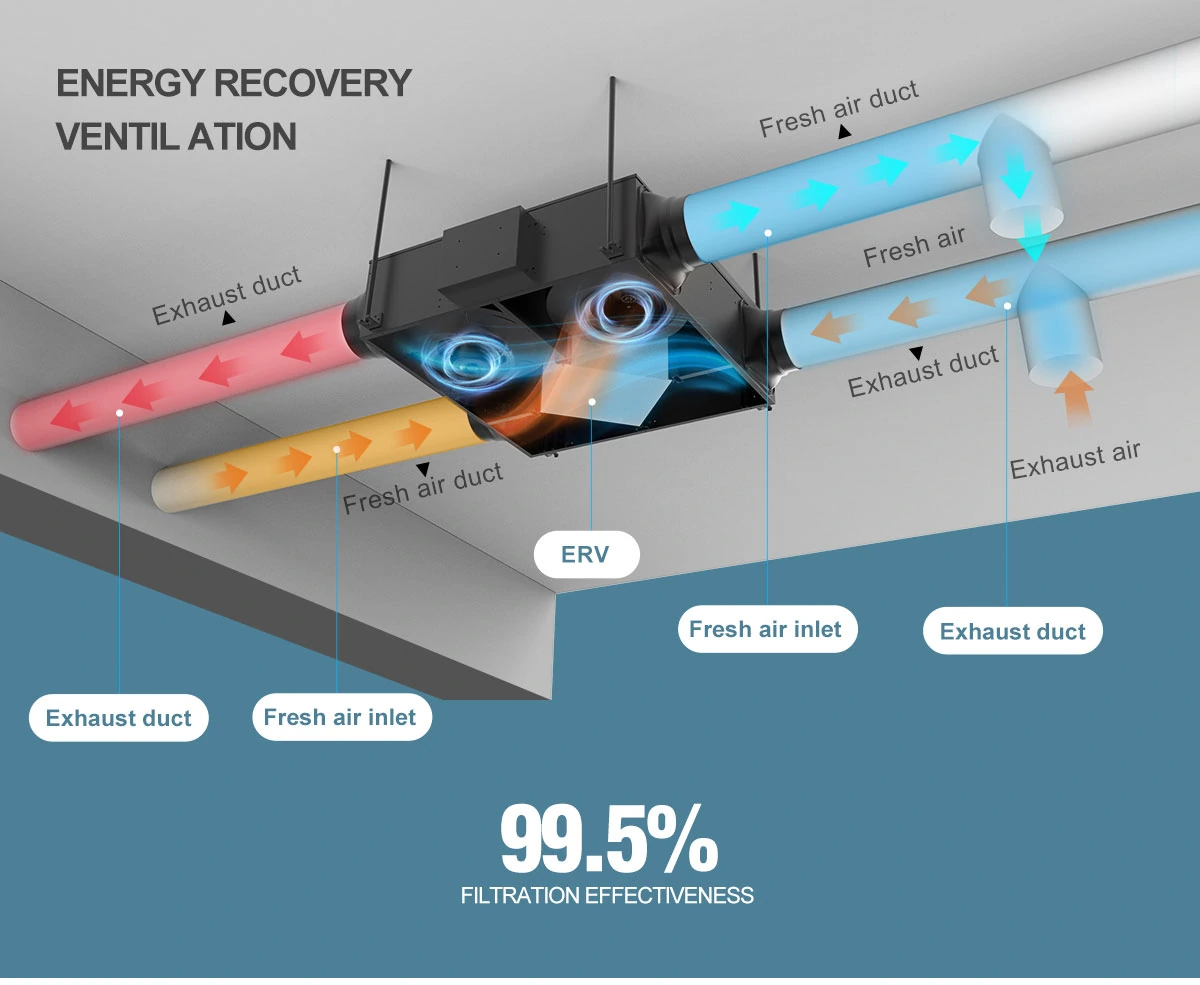
Seal and assembly integrity. For heat-recovery units, the seal between supply and exhaust airstreams is a performance and cross-leakage question, not a cosmetic one.
Work instructions at the station. Are current instructions physically present where the work happens, in a language the operator reads?
Calibration. Pick the instruments used for measurement — gauges, flow meters, electrical testers — and check the calibration labels are current.
Questions about capability, not just conformance
Conformance questions ask whether the factory meets the specification. Capability questions ask whether it can keep meeting it at your volume and your change rate. Ask both:
What are the in-house processes, and what is subcontracted? Injection moulding and metal forming in-house implies control over tooling and dimensions; full outsourcing implies a longer and less visible chain.
What is the engineering headcount, and can they respond to a specification change with drawings and a revised sample?
What is current capacity utilisation, and what lead time can they hold if your volume doubles?
How is change managed? What is the notification process if a component, material or subcontractor changes after approval?
That last question is one of the most commercially important and least frequently asked. A supplier who will commit in writing to notify you before changing a component or subcontractor is offering you something a certificate never will.
Documentation to request before you travel
Document
What it proves
What to check
Quality system certificate
A system is defined and audited
Legal entity, site, scope, expiry, issuer
Airflow / performance test report
How performance was measured
Test standard and edition, static pressure, sample size
Incoming inspection records
Components are verified on receipt
Criteria, sample size, rejection handling
Non-conformance log
Defects are recorded and dispositioned
Recency, closure, signatures
Calibration records
Measurements are trustworthy
Dates current, instruments match those on the line
Change notification procedure
Approved products stay approved
Written commitment, notification timing
Common traps in a factory audit
Auditing the showroom. A carefully prepared sample room is not a production line. Ask to walk the actual line producing your order type, unannounced if your relationship allows it.
Accepting a group certificate for a different site. Verify the address on the certificate against the address you are visiting.
Treating one good sample as evidence of process control. A sample shows what the factory can do when it tries. Process control shows what it does when nobody is watching. That is what records are for.
Confusing product certification with factory capability. A unit may be listed or tested by a third party while the factory’s process control is weak, or vice versa. The two are separate questions and need separate evidence.
Frequently asked questions
Is an ISO 9001 factory automatically a good supplier? No. It means the supplier has a documented quality system that has been audited against itself. Whether that system is actually operating depends on the evidence on site — test data, inspection records, defect handling and traceability.
Should the audit be announced? A first audit is normally announced, because you need the right people available to show you records. The value of an unannounced visit comes later, once there is an established relationship and a baseline to compare against.
What if the supplier refuses to show test bench or defect logs? Treat it as information. There are legitimate confidentiality limits around customer-specific data, but general process evidence — calibration, non-conformance handling, incoming inspection — is not commercially sensitive. A refusal to show any of it is a signal about the answer.
How often should a factory be re-audited? Annually is a common baseline for an active supply relationship, with a more frequent check after any field failure, any change notification, or any change of subcontractor. The audit cadence should follow risk, not the calendar.
Turning the audit into a supply decision
Score the audit against the criteria you actually care about — performance evidence, process control, traceability, change management, and engineering responsiveness — rather than against the certificate. A supplier that scores well on process control and change management is a long-term partner. A supplier that scores well only on presentation is a short-term price.
KCvents manufactures HRV, ERV, inline duct fan, exhaust fan and fresh air ventilation ranges from our own facility and supplies distributors, contractors and private-label customers internationally. We welcome factory audits and will walk you through our test bench, inspection records and process controls. Ask us for the documentation set that matches your market.
ISO 9001, Quality management systems — Requirements — the current edition and its transition arrangements are published by ISO; confirm the edition your supplier is certified against with the issuing certification body — iso.org
ISO 5801:2017, Industrial fans — Performance testing using standardized airways — the test method behind fan performance claims — ISO via ANSI webstore
EN 13141-7:2021, laboratory test methods for ducted residential ventilation units — CEN listing
This article describes evaluation criteria for ventilation suppliers. It does not claim that any specific certification applies to KCvents or its products; request the current documentation for the model and market you are buying.
Newsletter Updates
Enter your email address below and subscribe to our newsletter