Utilizamos cookies para garantizar que le brindamos la mejor experiencia en nuestra web.
Manténgase al día con KCVENTS Soluciones de ventilación & HVAC
Suscríbase a nuestro boletín para recibir los últimos avances en ingeniería de flujo de aire, actualizaciones de sistemas ERV/HRV energéticamente eficientes y soluciones HVAC ecológicas.
Sea el primero en recibir guías técnicas exclusivas, información sobre capacidades personalizadas de OEM/ODM y noticias sobre ferias internacionales directamente de KCVENTS.
Inline Fan Guide: Sizing, Installation & Best Picks 2026
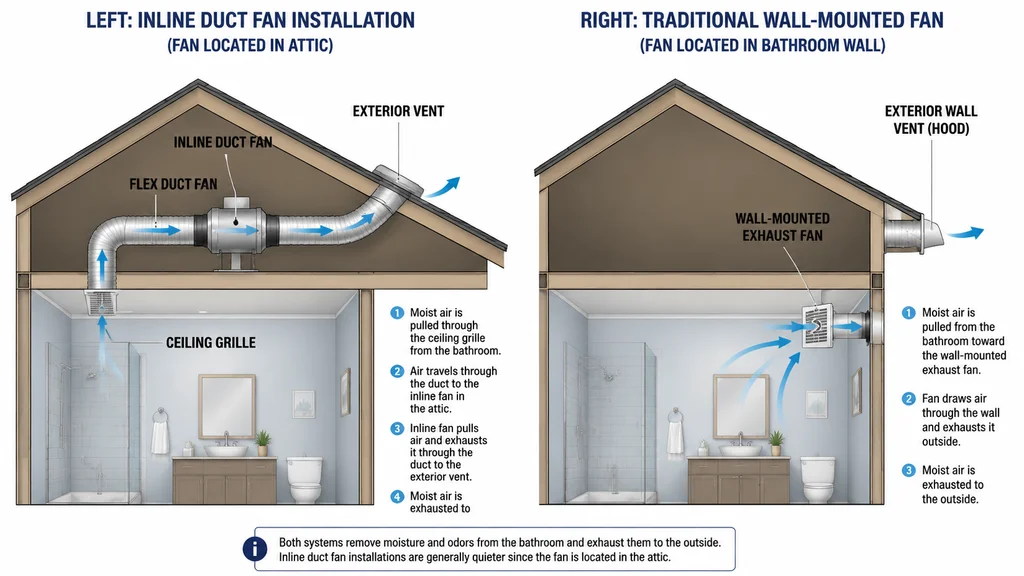
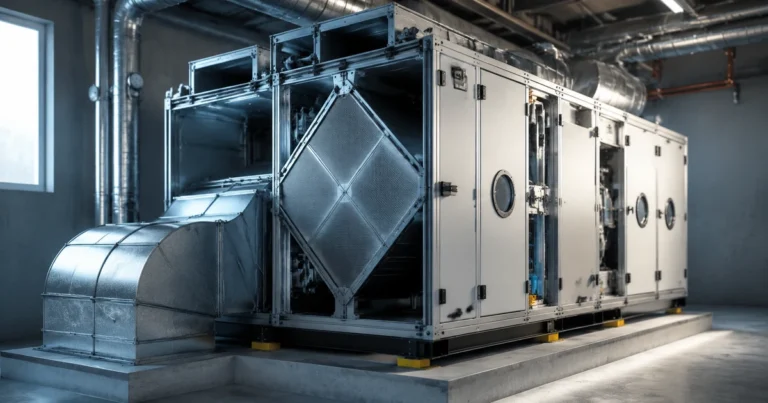
An inline fan (también denominado ventilador en línea para conductos o ventilador de montaje remoto) es un dispositivo de ventilación instalado directamente dentro de la red de conductos, normalmente en un ático, espacio sanitario o sala técnica. A diferencia de los extractores tradicionales que se montan enrasados en la pared o el techo, los ventiladores en línea se sitúan “en línea” con los conductos de aire: ocultos a la vista pero con la máxima potencia donde se requiere.
Inline fan vs traditional wall-mounted fan
How Inline Fans Work
Los ventiladores en línea generan presión negativa o positiva dentro del sistema de conductos para mover el aire de manera eficiente de un espacio a otro. Cuando se utilizan para extracción, aspiran el aire viciado, húmedo o contaminado de las estancias a través de los conductos y lo expulsan al exterior.
Inline Fan vs. Wall-Mounted Fan
Feature
Inline Fan
Wall-Mounted Fan
Installation Location
Inside ductwork (attic, crawlspace)
Directly in wall or ceiling
Noise Level
Low (1-2 sone)
Moderate to high (3-5 sone)
Airflow Capacity
High (100-1000+ CFM)
Limited (50-150 CFM)
Duct Length Capability
Excellent (50+ ft)
Poor (struggles beyond 15 ft)
Cost
Higher ($100-$400)
Lower ($30-$150)
Types of Inline Fans
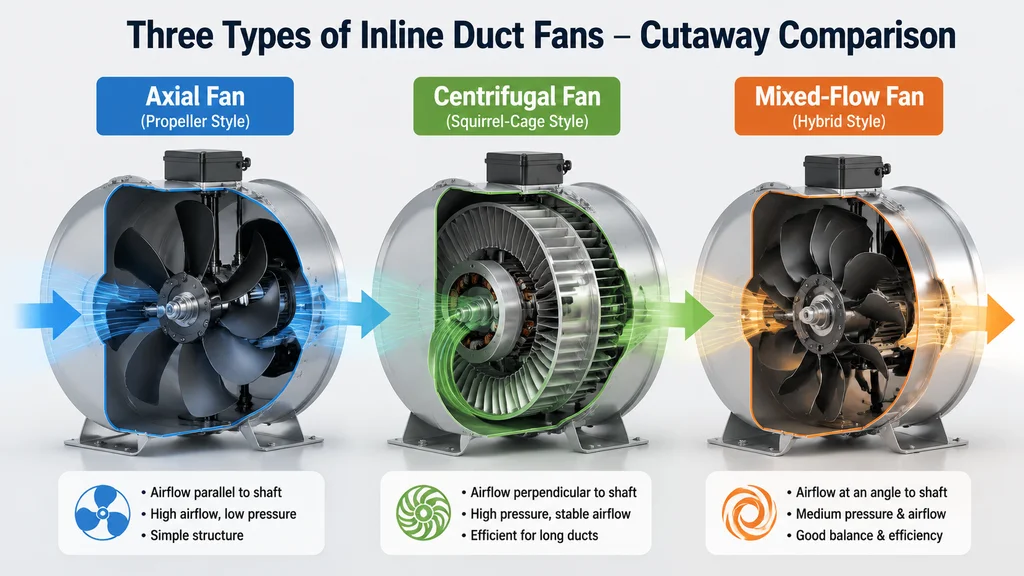
Los tres tipos principales —axiales, centrífugos y de flujo mixto— utilizan diferentes diseños internos para impulsar el aire.
Axial, Centrifugal, and Mixed-Flow fans
Axial Inline Fans
Los ventiladores axiales utilizan álabes tipo hélice que impulsan el aire de forma paralela al eje del motor. Destacan en aplicaciones de alto caudal y baja presión en conductos cortos.
CFM Range: 100-500
Presión estática: Low (0.1-0.3 inches)
Best For: Short ducts (<25 feet), simple exhaust
Price Range: $50-$150
Centrifugal Inline Fans
Los ventiladores centrífugos emplean un rodete de jaula de ardilla que genera una presión mucho mayor, resultando ideales para conductos largos o trazados de conductos complejos.
CFM Range: 150-1000+
Presión estática: High (0.5-1.5 inches)
Best For: Long ducts (25-100+ ft), multi-room systems
Price Range: $150-$400
How to Size an Inline Fan: CFM Calculation
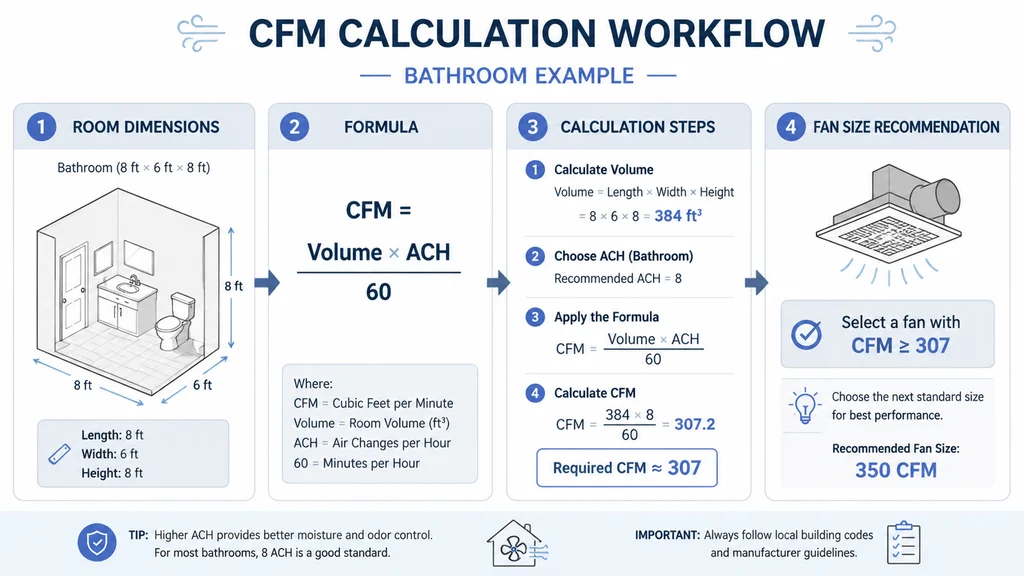
CFM calculation workflow
The key metric is CFM (Cubic Feet per Minute). Use this formula:
CFM = (Room Volume × Air Changes per Hour) / 60
Example: Standard Bathroom
Room: 8′ × 6′ × 8′ = 384 cubic feet
ACH: 8 (bathroom standard)
CFM = (384 × 8) / 60 = 51 CFM
Recommended fan: 80 CFM
Room Size
Volume
CFM Required
Recommended Fan
5′ × 8′ × 8′
320 cu ft
43 CFM
50-80 CFM
8′ × 10′ × 8′
640 cu ft
85 CFM
110 CFM
10′ × 12′ × 9′
1,080 cu ft
144 CFM
150-200 CFM
? CFM Calculator
Calculate the fan size you need:
Volumen de la sala384 cu ft
Required CFM:51.2 CFM
? Recommended:80 CFM
Inline Fan Installation Guide
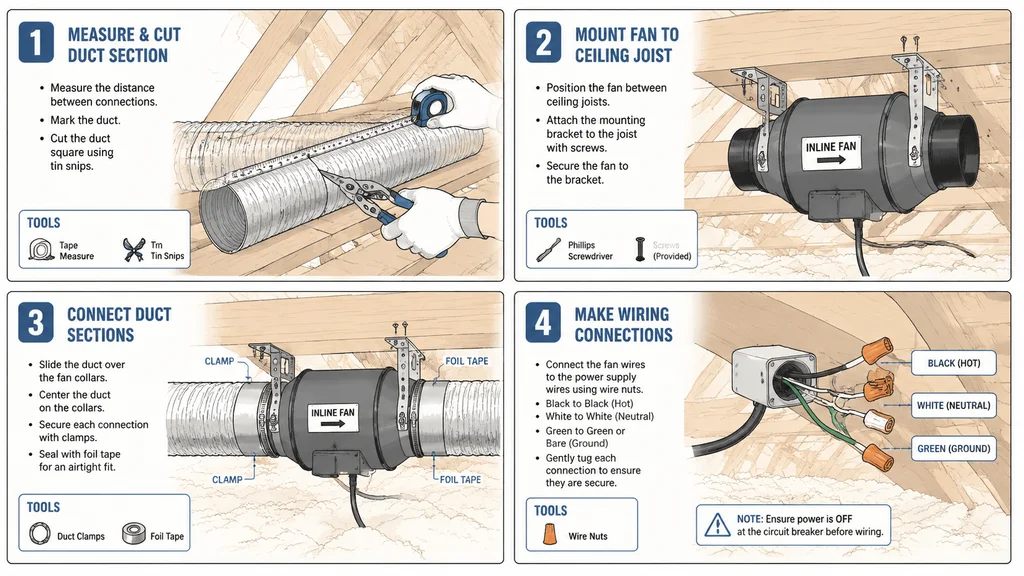
Step-by-step installation guide
Tools Needed
Tin snips or reciprocating saw
Taladro/atornillador con brocas
Wire cutters and strippers
Cinta de aluminio (NO cinta adhesiva de tela)
Voltage tester
Installation Steps
Step 1: Cut the Duct Section Measure and cut the duct cleanly where the fan will sit.
Step 2: Mount the Fan Oriente el ventilador correctamente (la flecha debe apuntar hacia la descarga/extracción). Fíjelo a la vigueta/cabio con el soporte de montaje.
Step 3: Connect Ductwork Utilice abrazaderas para conductos y cinta de aluminio para lograr un sellado hermético.