Inline Duct Fans for Grow Tents: Sizing, Setup, and Quiet Operation
Inline duct fan adalah inti dari sistem ventilasi grow tent: alat ini menarik udara panas, lembap, dan pengap keluar dari tenda (sering kali melalui filter karbon) dan memasukkan udara segar ke dalam, menjaga suhu, kelembapan, serta CO₂ tetap terkendali. Tiga pertanyaan yang selalu dimiliki setiap penanam adalah penentuan ukuran (sizing), pemasangan (setup), dan cara pengoperasian yang hening. Panduan ini menjawab ketiganya.
Grow tent pada dasarnya adalah kotak tertutup yang diterangi lampu. Lampu menghasilkan panas, tanaman melepaskan kelembapan melalui transpirasi, dan udara dengan cepat kehabisan CO₂. Tanpa pembuangan udara aktif (active exhaust), suhu dan kelembapan tenda akan melonjak — serta kadar CO₂ akan anjlok.
Inline duct fan mengatasi ketiga masalah tersebut:
Membuang panas dari lampu (LED atau HPS/HID).
Mengganti udara lembap dengan udara masuk yang lebih kering, mengendalikan risiko jamur.
Menjaga ketersediaan CO₂ dengan terus memasukkan udara segar.
Menggerakkan filter karbon sehingga bau dinetralkan sebelum dibuang ke luar.
Cara Menentukan Ukuran Inline Fan untuk Grow Tent
Metode awalnya adalah laju aliran udara (airflow) per volume tenda per menit:
Pilih pergantian udara per menit (air changes per minute) — panduan grow room umumnya menargetkan satu kali pertukaran volume tenda per menit (atau lebih, tergantung pada beban panas dan hambatan filter).
Pilih (dan hitung de-rating) kipas — filter karbon dan ducting menambah tekanan statis (static pressure), yang mengurangi aliran udara di bawah rating free-air kipas. Pilih kipas dengan kapasitas di atas target Anda pada tekanan operasional.
Tambahkan kontrol — kipas variable-speed memungkinkan Anda menjalankannya pada kecepatan lebih rendah di malam hari atau tahap panas rendah, yang juga menghemat energi dan mengurangi kebisingan.
Ukuran tenda
Rating kipas tipikal
Notes
60×60×140 cm
Inline 100–125 mm
Tenda kecil, panas rendah
2×1.2×2 m (4×4 ft)
125–150 mm
Filter karbon direkomendasikan
5×1.5+ m
150–200 mm
Pertimbangkan kecepatan variabel EC
Ruang tanam
Multipel / lebih besar
Desain per zona dan beban panas
Pemasangan: Ducting, Filter, dan Penempatan
Pengaturan umum untuk satu tenda:
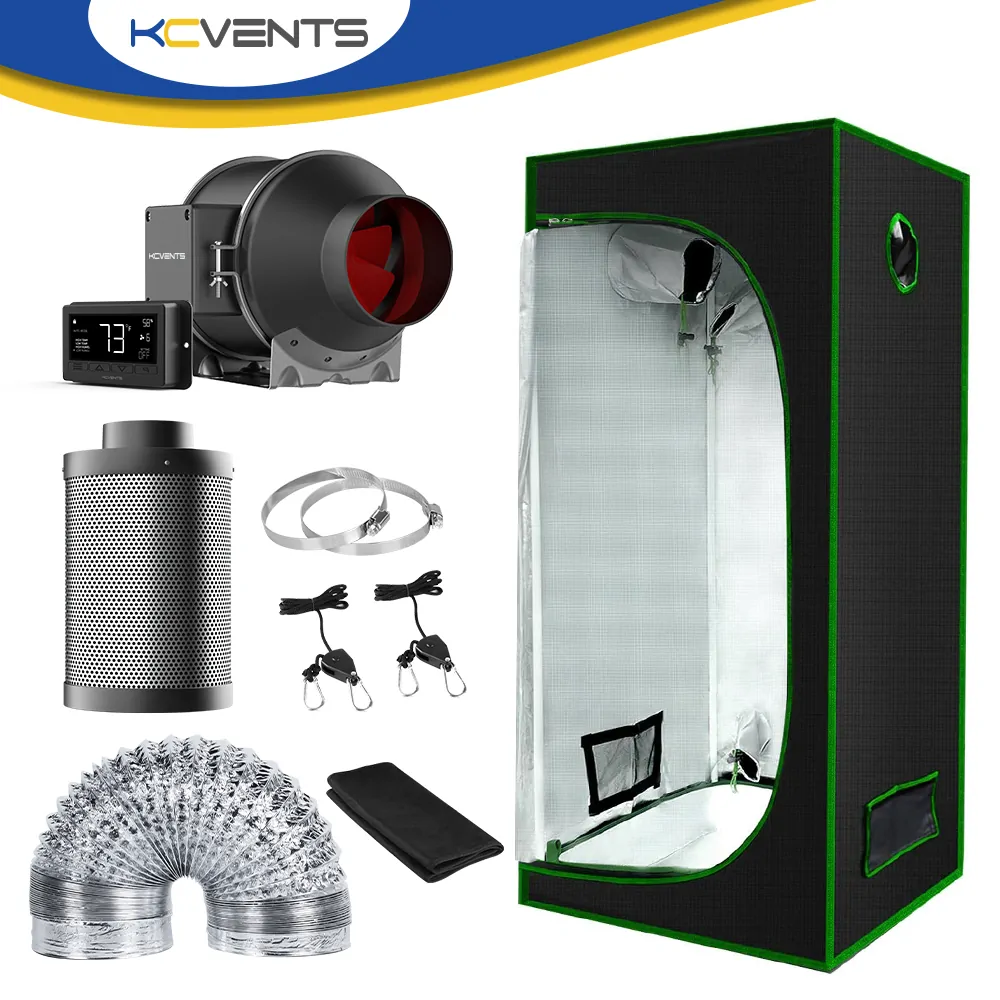
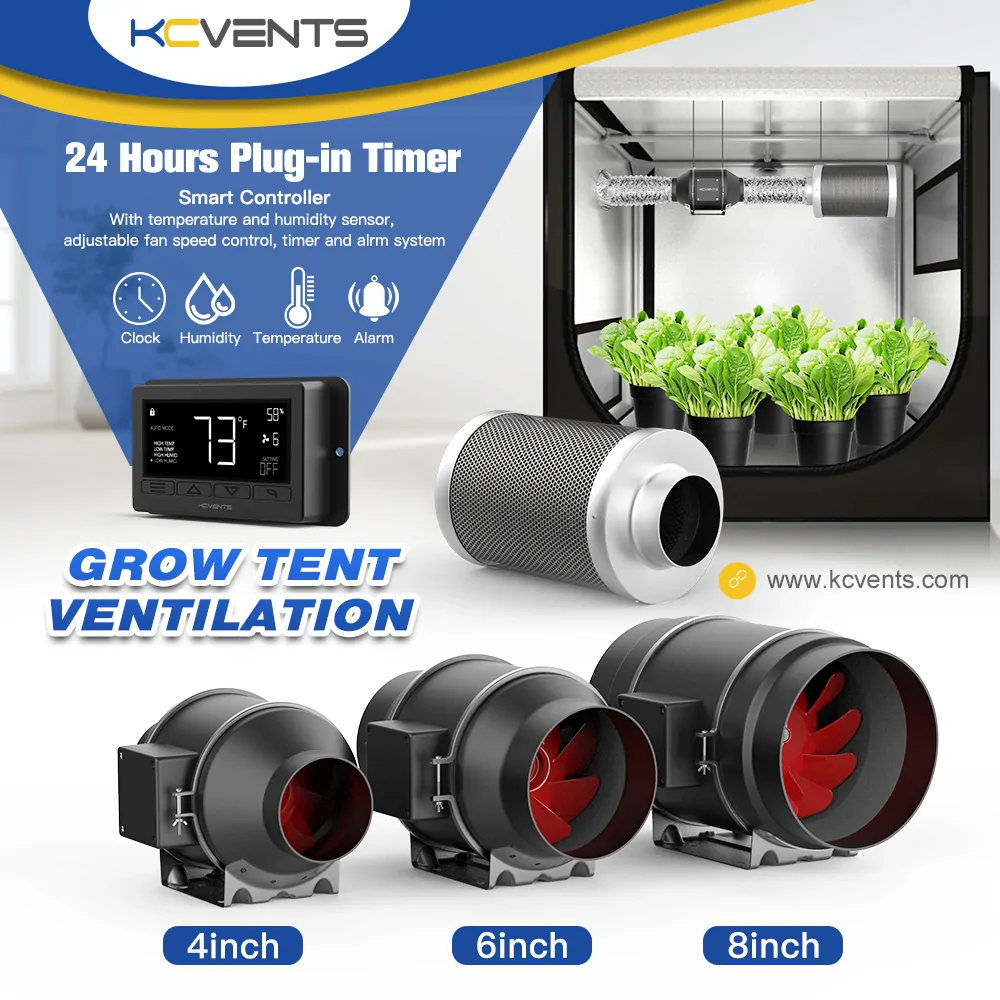
Filter karbon di dalam tenda (atau tepat di luar), terhubung ke inline fan.
Inline fan menarik udara melalui filter, lalu melalui ducting ke luar ruangan.
Intake pasif — ventilasi di bagian bawah memasukkan udara segar; untuk tenda yang lebih besar, kipas intake aktif akan membantu.
Kipas sirkulasi di dalam — kipas klip atau kipas osilasi menjaga pergerakan udara di tingkat kanopi daun (terpisah dari exhaust).
Rapatkan jalur ducting — gunakan klem ducting (duct clamps) dan buat jalur sependek serta selurus mungkin; tekukan dan penyempitan menambah hambatan.
Posisikan intake di bagian bawah (udara dingin masuk) dan exhaust di bagian atas (udara panas keluar). Pastikan arah panah aliran udara pada filter terpasang dengan benar — filter yang terbalik menambah hambatan dan menurunkan efektivitas pengendalian bau.
Cara Menjaga Inline Fan Tetap Senyap
Fan inline adalah bagian paling bising dari instalasi grow tent, tetapi kebisingan dapat dikendalikan:
Jalankan pada kecepatan yang dikurangi. Fan EC pada 60% jauh lebih senyap dibandingkan fan pada 100%.
Pasang pada gantungan anti-getaran — menggantung fan dengan tali bungee/shock cord alih-alih memasangnya secara kaku dapat mengatasi sebagian besar dengung akibat getaran.
Gunakan ducting akustik atau silencer — potongan pendek flexible duct berinsulasi atau silencer khusus mampu menyerap banyak suara hembusan udara.
Tempatkan di lokasi yang tepat — di luar tenda (di dalam lemari atau loteng) menjauhkan kebisingan dari tanaman dan area hunian.
Perbesar ukuran dan turunkan kecepatan — fan yang lebih besar yang berputar lebih lambat mengalirkan udara dalam volume yang sama secara lebih senyap dibandingkan fan kecil pada kecepatan penuh.
Inline Fan EC vs AC untuk Grow Tent
Feature
Inline fan EC
Inline fan AC
Speed control
Terintegrasi, presisi
Terbatas / on-off atau multi-tap
Efisiensi pada kecepatan rendah
High
Low
Kebisingan pada kecepatan rendah
Jauh lebih senyap
Kebisingan tetap setara kecepatan penuh
Output panas
Lower
Higher
Biaya
Higher
Lower
Best for
Ventilasi kontinu yang dapat dikontrol
Exhaust kecepatan tetap sederhana
Untuk grow tent yang beroperasi secara kontinu, sebuah inline duct fan EC memberikan keuntungan dalam hal kebisingan, efisiensi, dan kontrol. Untuk exhaust kecil yang jarang digunakan, fan AC sudah mencukupi.
Frequently Asked Questions
T: Berapa ukuran inline fan yang saya butuhkan untuk grow tent 4×4? J: Mulailah dengan volume tenda dan targetkan satu pertukaran udara per menit, lalu tambahkan margin untuk penurunan tekanan (pressure drop) filter karbon. Inline fan EC 125–150 mm adalah ukuran yang umum cocok untuk tenda 4×4 (1,2×1,2 m).
T: Apakah inline fan harus beroperasi 24/7? J: Sebagian besar pembudidaya menjalankan exhaust secara kontinu, dengan kecepatan yang dikurangi saat lampu mati atau beban panas rendah. Fan sirkulasi beroperasi secara terpisah di ketinggian daun.
T: Apakah filter karbon diperlukan? J: Untuk pengendalian bau, ya — inline fan harus menarik udara melalui filter karbon yang sesuai jika Anda perlu mengontrol bau. Lihat panduan filter karbon kami.
T: Bagaimana cara menghitung airflow untuk grow tent saya? J: Kalikan volume tenda dengan target pergantian udara per menit, lalu tambahkan margin hambatan untuk filter dan ducting. Panduan kami panduan ukuran inline duct fan kami memiliki contoh perhitungan lengkap.
T: Mengapa inline fan saya sangat bising? J: Biasanya disebabkan oleh salah satu dari tiga hal: berjalan pada kecepatan penuh, pemasangan kaku (getaran), atau fan kecil yang bekerja terlalu keras melawan hambatan filter. Turunkan kecepatan, gantung menggunakan shock cord, atau perbesar ukuran fan.
T: Bisakah inline fan digunakan untuk intake sekaligus exhaust? J: Ya — satu fan exhaust (melalui filter) ditambah intake pasif atau fan kedua untuk intake. Banyak tenda menggunakan satu fan untuk exhaust dan mengandalkan ventilasi bawah untuk intake.
Sedang merancang sistem ventilasi grow tent? KCvents memproduksi EC inline duct fan, filter karbon aktif, dan produk ventilasi grow room untuk pembeli grosir, OEM, dan private label. Minta penawaran harga dengan ukuran tenda, beban panas, dan kebutuhan filter Anda.
Pembaruan Buletin
Masukkan alamat email Anda di bawah ini dan berlangganan buletin kami