Inline Duct Fans for Grow Tents: Sizing, Setup, and Quiet Operation
An inline duct fan is the core of a grow-tent ventilation system: it pulls hot, humid, stale air out of the tent (often through a carbon filter) and brings fresh air in, keeping temperature, humidity, and CO₂ under control. The three questions every grower has are sizing, setup, and how to run it quietly. This guide answers all three.
A grow tent is effectively a sealed, lit box. Lights generate heat, plants transpire moisture, and the air quickly depletes CO₂. Without active exhaust, the tent climbs in temperature and humidity — and falls in CO₂.
An inline duct fan solves all three:
Exhausts heat from lights (LED or HPS/HID).
Replaces humid air with drier intake air, controlling mold risk.
Keeps CO₂ available by continuously bringing in fresh air.
Drives the carbon filter so odors are treated before release.
How to Size an Inline Fan for a Grow Tent
The starting method is airflow per tent volume per minute:
Calculate the tent volume — e.g., a 1.2 × 1.2 × 2 m tent = 2.88 m³.
Choose your air changes per minute — grow-room guidance commonly targets one tent volume exchanged per minute (or more, depending on heat load and filter resistance).
Select (and de-rate) the fan — a carbon filter and ducting add static pressure, which reduces the airflow below the fan’s free-air rating. Pick a fan with capacity above your target at operating pressure.
Add control — a variable-speed fan lets you run lower at night or low-heat stages, which also saves energy and noise.
Tent size
Typical fan rating
Notes
60×60×140 cm
100–125 mm inline
Small tent, low heat
1.2×1.2×2 m (4×4 ft)
125–150 mm
Carbon filter recommended
1.5×1.5+ m
150–200 mm
Consider EC variable speed
Grow room
Multiple / larger
Design per zone and heat load
Setup: Ducting, Filter, and Placement
A typical single-tent setup:
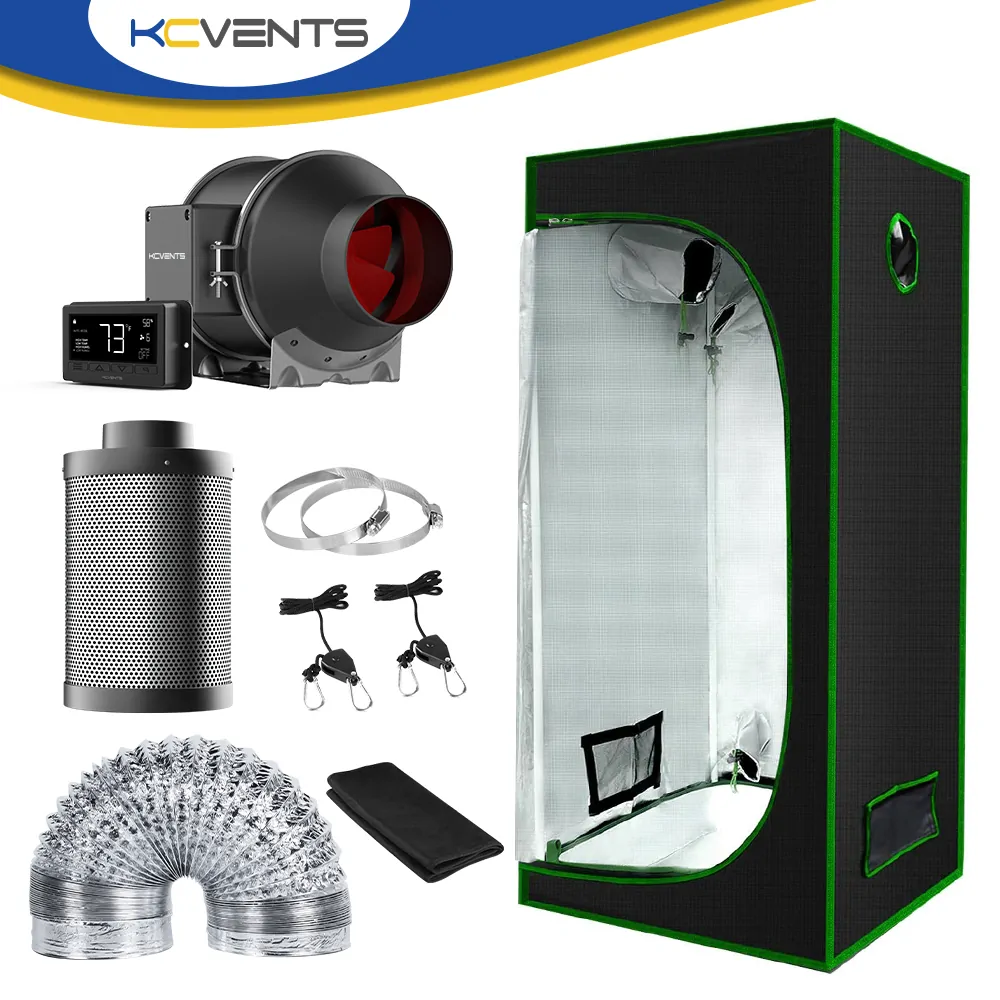
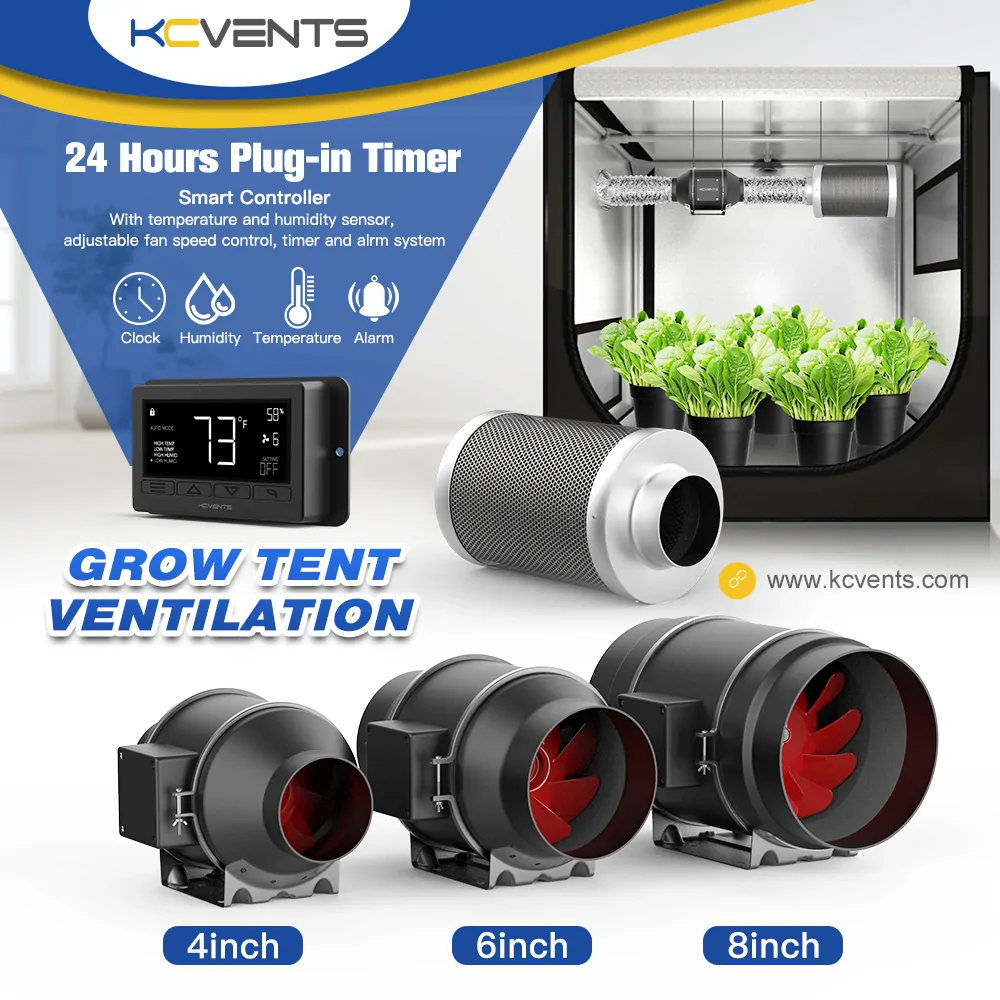
Carbon filter inside the tent (or just outside), connected to the inline fan.
Inline fan pulls air through the filter, then through ducting to the outside.
Passive intake — a vent at the bottom lets fresh air in; for larger tents, an active intake fan helps.
Circulation fans inside — a clip or oscillating fan keeps leaf-level air moving (separate from exhaust).
Seal the duct run — use duct clamps and keep the run as short and straight as possible; bends and crushing add resistance.
Position the intake low (cool air in) and exhaust high (hot air out). Keep the filter’s airflow arrow oriented correctly — a backwards filter adds resistance and reduces odor control.
How to Keep an Inline Fan Quiet
Inline fans are the loudest part of a grow-tent setup, but noise can be controlled:
Run at reduced speed. An EC fan at 60% is dramatically quieter than a fan at 100%.
Mount on anti-vibration hangers — hanging the fan from bungee/shock cord instead of rigidly fixes most vibration hum.
Use acoustic ducting or a silencer — a short section of insulated flexible duct or a dedicated silencer absorbs a lot of the whoosh.
Place it in the right location — outside the tent (in a cabinet or the attic) moves the noise away from plants and living space.
Size up and slow down — a larger fan running slower moves the same air more quietly than a small fan at full speed.
EC vs AC Inline Fans for Grow Tents
特徴
EC inline fan
AC inline fan
回転数制御
Built-in, precise
Limited / on-off or tap
Efficiency at low speed
High
Low
Noise at low speed
Much quieter
Still full-speed noise
Heat output
低め
高め
コスト
高め
低め
最適な用途
Continuous, controllable ventilation
Simple fixed-speed exhaust
For a grow tent that runs continuously, an EC inline duct fan pays off in noise, efficiency, and control. For a small, rarely-run exhaust, an AC fan can be enough.
Frequently Asked Questions
Q: What size inline fan do I need for a 4×4 grow tent? A: Start with the tent volume and target one exchange per minute, then add margin for the carbon filter’s pressure drop. A 125–150 mm EC inline fan is a common fit for a 4×4 (1.2×1.2 m) tent.
Q: Should the inline fan run 24/7? A: Most growers run exhaust continuously, at reduced speed when the lights are off or heat is low. A circulation fan runs separately at leaf level.
Q: Is a carbon filter necessary? A: For odor control, yes — the inline fan should pull through a properly matched carbon filter if you need to control smells. See our カーボンフィルターガイド.
Q: How do I calculate the airflow for my grow tent? A: Multiply the tent volume by your target air changes per minute, then add resistance margin for filter and ducting. Our インラインダクトファン選定ガイド has a worked example.
Q: Why is my inline fan so loud? A: Usually one of three things: running at full speed, rigid mounting (vibration), or a small fan working hard against filter resistance. Run slower, hang on shock cord, or size up the fan.
Q: Can an inline fan be used for both intake and exhaust? A: Yes — one exhaust fan (through the filter) plus either passive intake or a second fan for intake. Many tents use one fan for exhaust and rely on a low vent for intake.
Building a grow-tent ventilation system? KCvents manufactures EC inline duct fans, activated carbon filters, and grow-room ventilation products for wholesale, OEM, and private-label buyers. お見積りを依頼する with your tent size, heat load, and filter requirements.