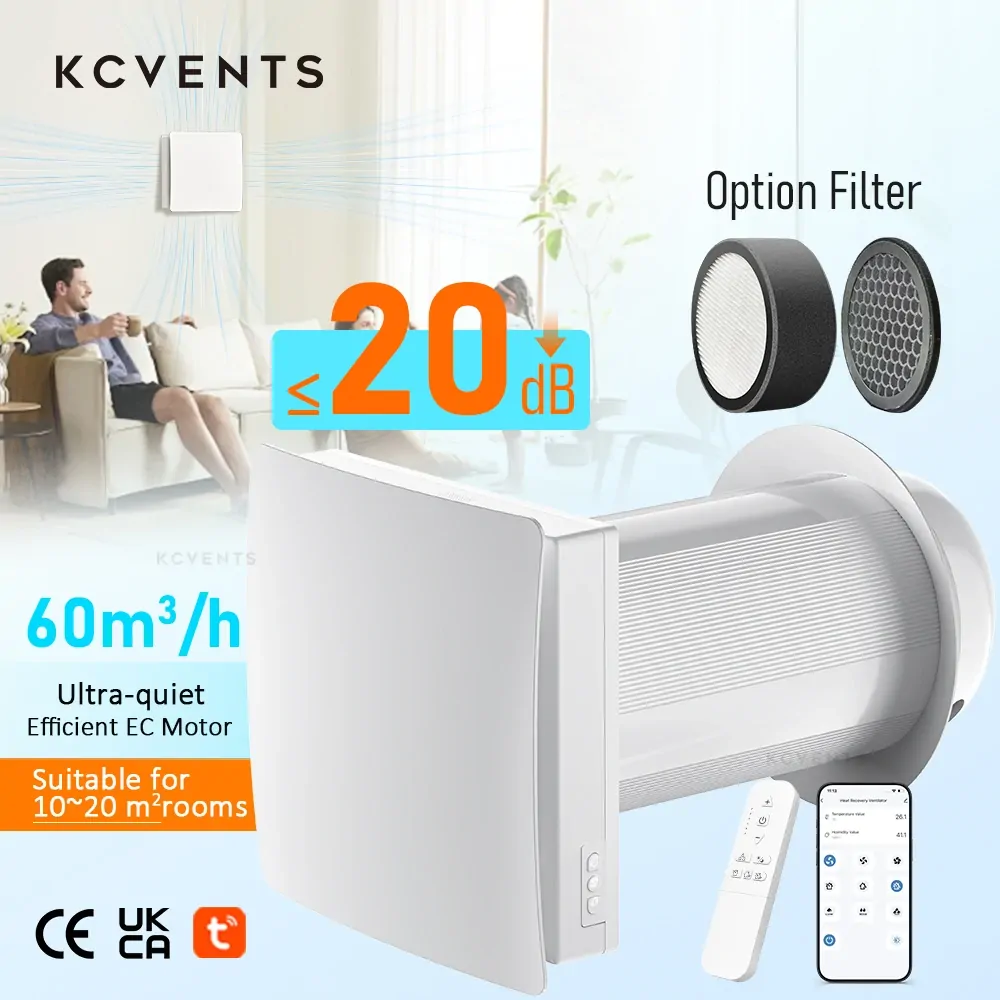
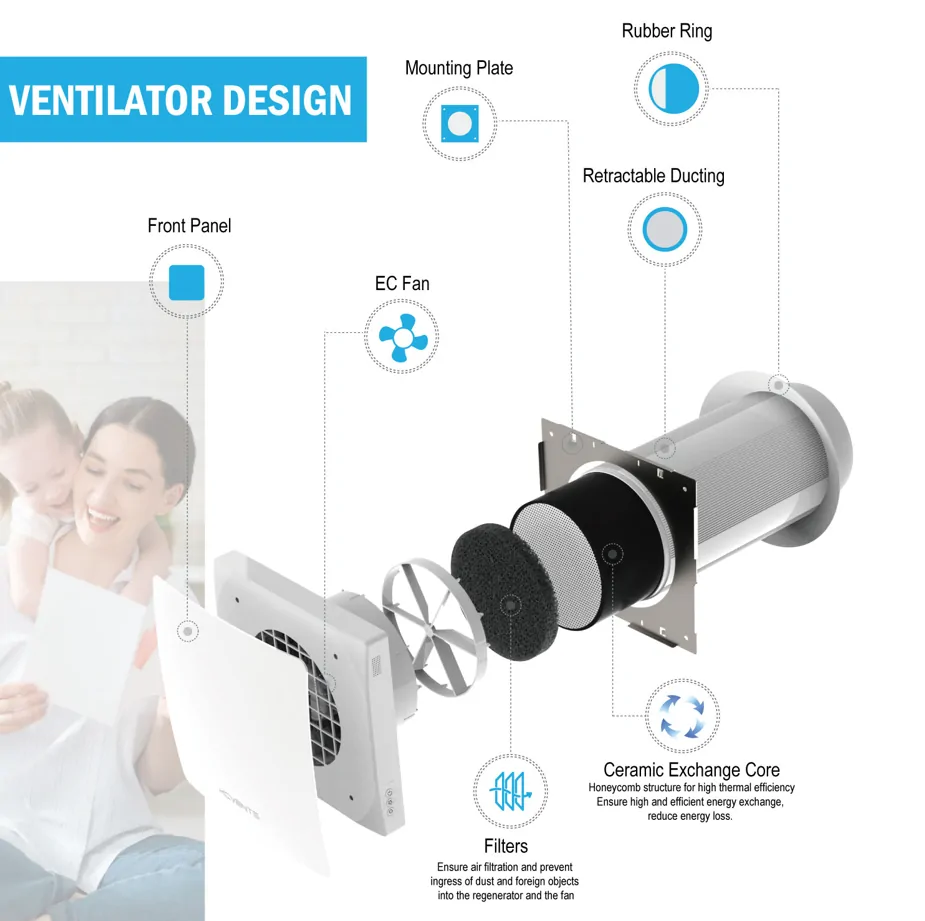
What Is an EC Motor and Why Choose EC Ventilation Fans?
An EC (electronically commutated) motor is a brushless DC motor with built-in electronics that control its speed and efficiency, and it is the main reason modern ventilation fans can run quietly, adjust airflow on demand, and consume far less energy than conventional AC fans. This guide explains what an EC motor is, how it works, what benefits it brings to ventilation, and when it is worth the higher upfront cost.
An EC motor is an electronically commutated motor. It is essentially a brushless DC motor with a built-in electronic controller. The motor uses electronic switching (commutation) instead of brushes to keep the rotor turning, and the controller manages speed precisely.
Traditional AC fans run at a fixed speed set by the mains frequency.
EC fans run on DC power converted from the mains, with speed controlled electronically.
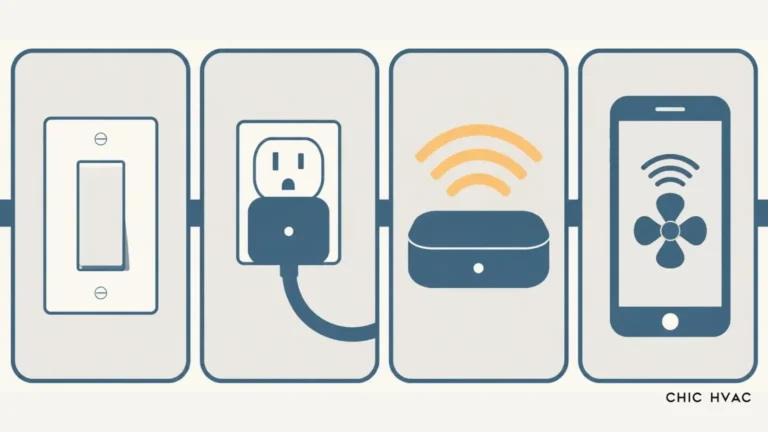
Because the electronics are built into the motor, an EC fan can be controlled with a simple 0–10 V signal, PWM, or a digital controller — no external variable-frequency drive needed for many models.
How an EC Motor Works
AC mains power is converted to DC inside the motor’s controller.
A microprocessor controls commutation — it switches the motor’s coils electronically, in step with the rotor position.
Speed and torque are controlled precisely by adjusting the voltage/current to the motor.
This is the same technology family used in computer fans, e-bikes, and electric cars — reliable, efficient, and controllable. In a ventilation fan, it means the fan can run at exactly the airflow you need instead of always full speed.
EC Motor vs AC Motor in Ventilation Fans
Feature
EC motor fan
AC motor fan
Speed control
Precise, electronic, variable
Fixed or limited tap speeds
Efficiency at partial load
High (uses only what’s needed)
Low (fixed power)
Heat/energy loss
Low
Higher
Noise
Quieter, especially at low speed
Full-speed noise
Soft start/stop
Yes (no inrush shock)
No
Controller needed
Built-in (many models)
External (for VFD)
Upfront cost
Higher
Lower
The efficiency difference is most visible at partial load: an AC fan that is on-but-not-needed still consumes close to its full power, while an EC fan drops its consumption with the airflow.
Benefits of EC Ventilation Fans
Energy efficiency. EC fans use only the power needed for the airflow. In systems that run continuously or at varying demand, this can be a large share of the fan’s energy cost.
Variable speed control. Airflow can be tuned to demand, CO₂, humidity, or a schedule — ideal for ventilation systems that need to change output.
Soft start and stop. No high inrush current, which reduces stress on the motor and the electrical supply.
Quieter operation. Running at lower speeds when full airflow is not needed reduces noise.
Longer life. No brushes to wear out, and cooler operation reduces component stress.
When an EC Fan Is Worth the Cost
An EC fan costs more upfront than an AC fan, so it pays off where the fan runs long or at varying loads:
Continuous ventilation systems (HRV, ERV, ar novo) que funcionam 24/7.
Ventilação de casas de banho e cozinhas com sensores de humidade — o ventilador acelera apenas quando necessário.
Salas de cultivo e estufas que necessitam de caudal de ar ajustável e baixo consumo de eletricidade durante longos períodos.
Sistemas de condutas em linha onde o ruído e o controlo de velocidade são essenciais.
Ventilação comercial onde o custo energético e o controlo por procura são prioridades.
Se um ventilador funcionar raramente ou sempre na potência máxima sem necessidade de controlo, um ventilador AC pode ser a escolha mais económica. Se funcionar continuamente ou necessitar de caudal de ar variável, o motor EC normalmente compensa o investimento.
Frequently Asked Questions
P: Um motor EC é melhor do que um motor AC? R: Na ventilação, os motores EC são geralmente mais eficientes, mais silenciosos e mais fáceis de controlar. Apresentam um custo inicial mais elevado, mas economizam energia quando o ventilador funciona com frequência ou sob carga variável.
P: Os ventiladores EC consomem menos eletricidade? R: Sim, especialmente em carga parcial. Um ventilador EC ajusta a sua potência à procura de caudal de ar, enquanto um ventilador AC consome quase a potência máxima sempre que está em funcionamento.
P: É possível controlar a velocidade de um ventilador EC? R: Sim. Muitos ventiladores EC aceitam um sinal de 0–10 V, PWM ou um controlador digital, permitindo configurar ou automatizar o caudal de ar.
P: Os ventiladores EC são mais silenciosos do que os ventiladores AC? R: De modo geral, sim — especialmente a baixas velocidades, pois o ventilador funciona mais lentamente quando o caudal máximo de ar não é necessário.
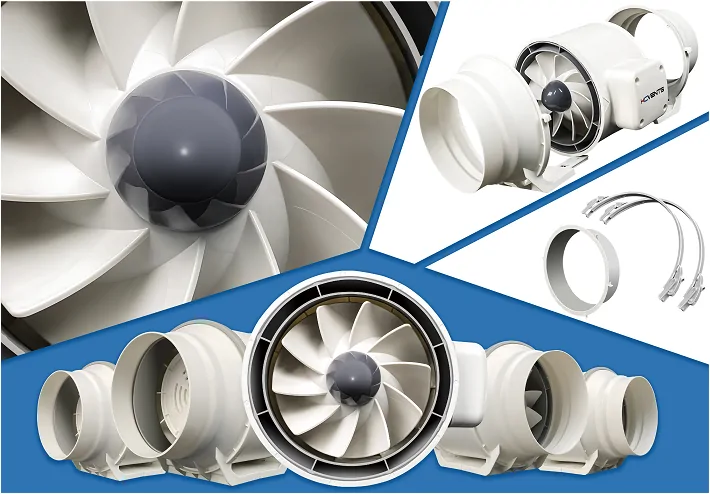
P: Onde posso utilizar um ventilador com motor EC? R: Em aplicações de casas de banho, cozinhas, salas de cultivo, estufas, condutas em linha e sistemas HRV/ERV. Consulte o nosso inline duct fan guide para obter detalhes de dimensionamento e instalação.
Procura soluções de ventilação EC energeticamente eficientes? A KCvents fabrica ventiladores de conduta em linha EC, exaustores EC e produtos de ventilação com velocidade controlada para projetos de distribuição, OEM e de marca própria. Solicite um orçamento com o seu caudal de ar e aplicação.
Atualizações da newsletter
Enter your email address below and subscribe to our newsletter