We use cookies to ensure that we give you the best experience on our website.
Stay Updated with KCVENTS Ventilation & HVAC Solutions
Subscribe to our newsletter for the latest airflow engineering insights, energy-efficient ERV/HRV system updates, and eco-friendly HVAC solutions.
Be the first to receive exclusive technical guides, custom OEM/ODM capabilities, and global exhibition news directly from KCVENTS.
Filter Box for HVAC Air Filtration: Applications, Selection, and Maintenance
How a filter box works, the three filter stages (pre-filter, HEPA, activated carbon), where it fits in an HVAC or ventilation system, how to select one, and how to maintain it.
Eine Filterbox ist ein Gehäuse zur Aufnahme eines Luftfilters in einem HLK- oder Lüftungssystem, sodass die durchströmende Luft gereinigt wird, bevor sie in den Raum – oder zu empfindlichen Anlagenkomponenten – gelangt. Eine typische Filterbox kombiniert einen Vorfilter, einen Feinfilter (wie z. B. HEPA) und gelegentlich eine Aktivkohlestufe, um sowohl Partikel als auch Gerüche abzuscheiden. Dieser Leitfaden erläutert die Funktionsweise einer Filterbox, ihre Einbindung in das System, die richtige Auswahl sowie die Wartung.
Warum eine Filterbox in der HLK- und Lüftungstechnik wichtig ist
Die Hauptaufgabe einer Filterbox besteht darin, dem Filter einen abgedichteten, passgenauen Sitz im Luftstrom zu bieten. Ohne ein geeignetes Gehäuse entstehen Leckagen um den Filter herum, ungefilterte Luft umgeht das Filtermedium (Bypass) und der Filter erreicht nicht seine Nennleistung.
Nach Angaben der US-Umweltbehörde EPA verbringen Menschen etwa 90% ihrer Zeit in Innenräumen, wobei die Konzentration einiger Innenraumschadstoffe zwei- bis fünfmal höher sein kann als im Außenbereich. Quelle: U.S. EPA, The Inside Story: A Guide to Indoor Air Quality. Lüftungssysteme führen Außenluft zu, diese Luft muss jedoch gefiltert werden, bevor sie in belegte Räume gelangt – genau hier kommt eine Filterbox mit dem passenden Filtermedium zum Einsatz.
Eine Filterbox erfüllt drei Aufgaben in einem HLK-System:
Verbessert die Raumluftqualität. Sie scheidet luftgetragene Partikel wie Staub, Pollen und Allergene ab, während die Luft das System durchströmt.
Schützt Anlagenteile. Ohne Filtration lagern sich Staub und Schmutz auf Registern, Ventilatoren und Wärmetauschern ab, was die Wärmeübertragung verringert und die Lebensdauer der Geräte verkürzt.
Hält das System effizient. Ein sauberer, korrekt eingesetzter Filter gewährleistet den Luftvolumenstrom; ein zugesetzter oder von Luft umströmter Filter erhöht den Druckverlust und steigert den Energieverbrauch.
Wichtige Abgrenzung: Eine Filterbox reinigt die Luft, die sie durchströmt. Sie ersetzt weder die Schadstoffquellenkontrolle noch die Außenluftzufuhr und beseitigt nicht jeden Schadstoff. Sie sollte stets Bestandteil eines ganzheitlichen Lüftungskonzepts sein und keine isolierte Notlösung.
Funktionsweise einer Filterbox: Die drei Filterstufen
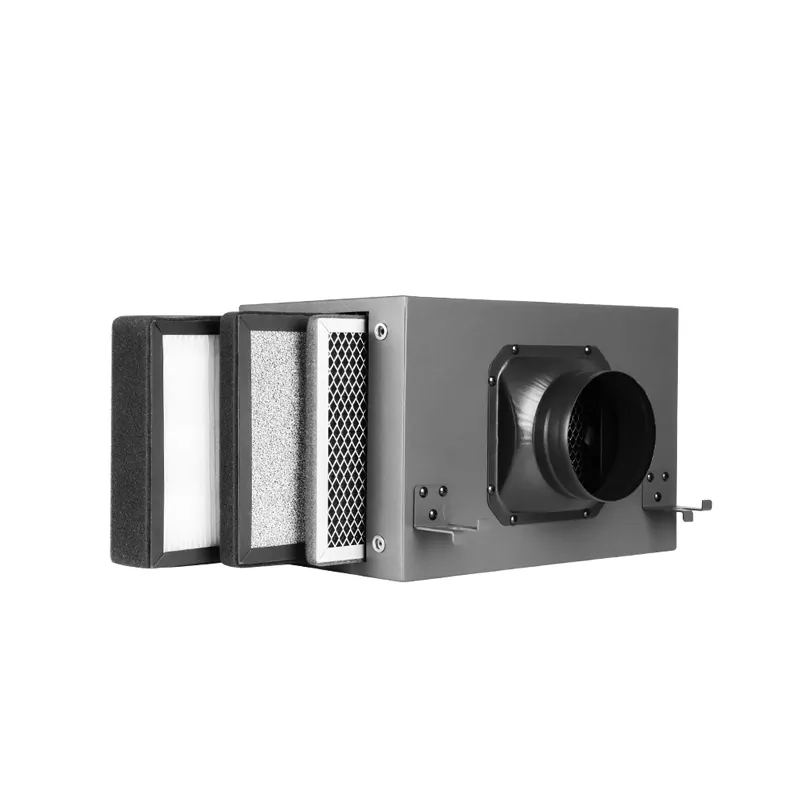
Viele Filterboxen sind als 3-Stufen-Filtrationssystem aufgebaut, wobei jede Stufe eine spezifische Funktion erfüllt:
Stufe
Was gefiltert wird
Typisches Medium
Austausch
Vorfilter
Grobpartikel: Staub, Haare, Flusen
Synthetisches Grobfilter- oder Gittermedium
Alle 1–3 Monate oder bei sichtbarer Beladung
Feinfilter (HEPA)
Feinstpartikel: PM2.5, Pollen, Allergene
HEPA- oder feinplissiertes Medium
Alle 6–12 Monate gemäß Herstellerangabe
Aktivkohle
Gase und Gerüche: VOCs, Koch- und Pflanzengerüche
Aktivkohlebett
Alle 6–12 Monate, sobald Gerüche durchbrechen
Vorfilter bildet die erste Schutzstufe. Er schützt die nachgeschalteten feineren Filterstufen, wodurch die Standzeit der kostenintensiveren HEPA- und Aktivkohlemedien verlängert wird.
HEPA-Filter scheidet Feinstpartikel ab. Beachten Sie, dass HEPA Partikel und keine Gase filtert – siehe den Unterschied zwischen Aktivkohle und HEPA unten.
Aktivkohle adsorbiert Gase und Gerüche. Er scheidet keine Partikel ab und kann nach Erreichen der Sättigungsgrenze nicht gewaschen und wiederverwendet werden.
Da die drei Stufen unterschiedliche Aufgaben erfüllen, bietet eine Filterbox, die diese in Reihe schaltet, ein breiteres Wirkungsspektrum als jeder einzelne Filter.
Aktivkohle vs. HEPA in einer Filterbox
Ein häufiger Irrtum ist die Annahme “mehr Filter sind besser”, ohne zu wissen, welche Funktion der jeweilige Filter erfüllt.
Leistungsmerkmal
Aktivkohle
HEPA
Entfernt Partikel (Staub, PM2,5, Pollen)
No
Yes
Entfernt Gase und Gerüche
Ja (viele VOCs und Gerüche)
No
Mechanismus
Adsorption an der Kohlenstoffoberfläche
Mechanische Abscheidung
Can be washed and reused
No
No (replace only)
Airflow resistance
Moderate, rises as it saturates
High, rises as it loads
For most spaces you need both: a pre-filter and HEPA for particles, plus carbon if you have odor or gas sources (kitchens, pets, grow rooms, chemical storage). A 3-layer filter box combines them in one housing. See our activated carbon filter guide for how carbon adsorption works and when to replace the carbon stage.
Wo eine Filterbox im Lüftungssystem platziert wird
A filter box can be placed in several positions, depending on the goal:
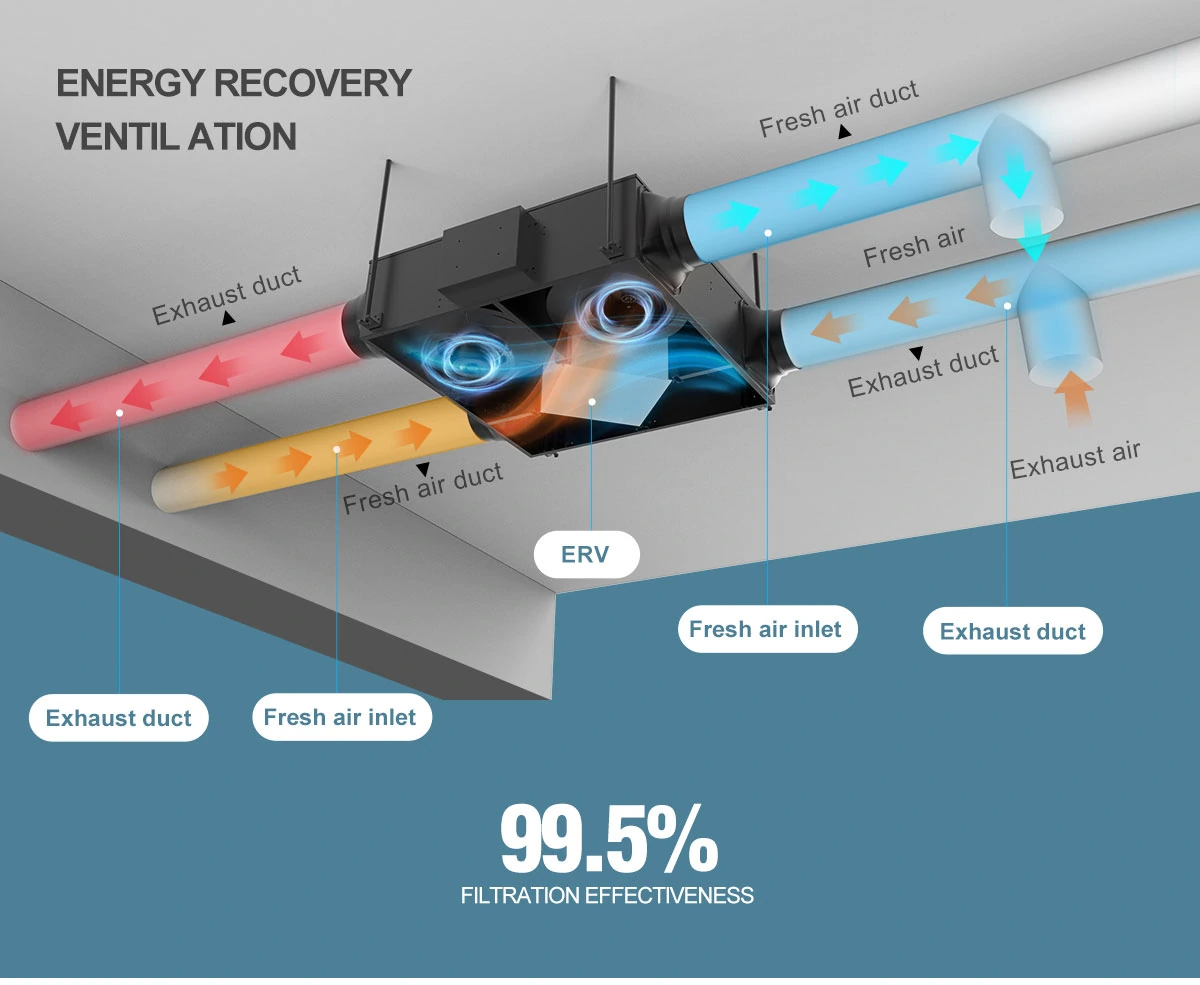
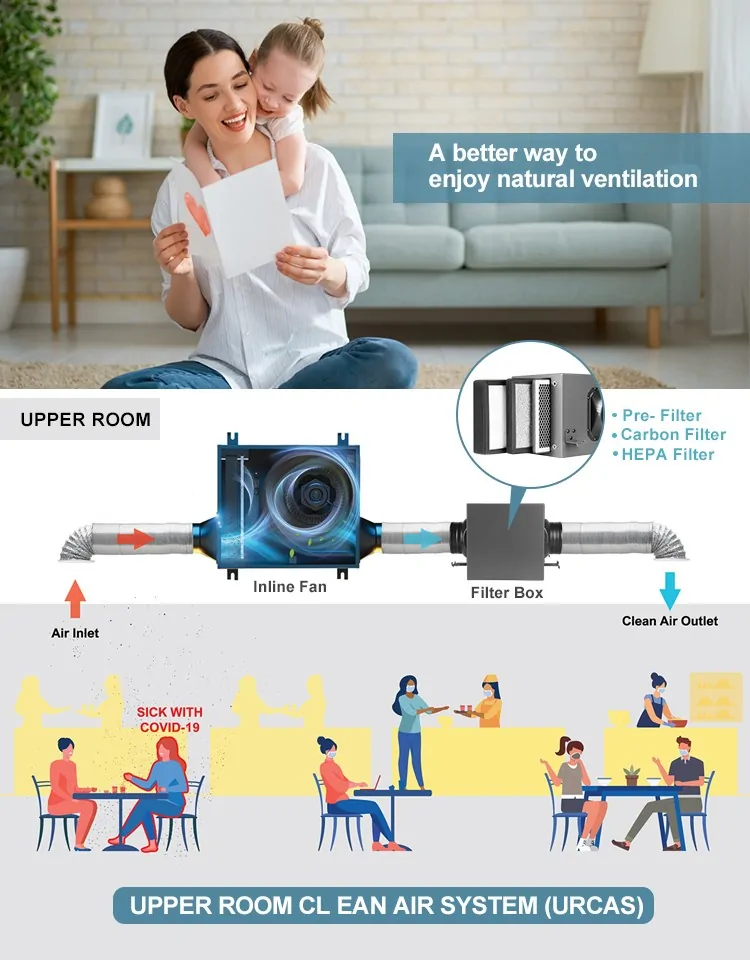
On the fresh-air intake — filters outdoor air before it enters the room; the most common position for ventilation systems.
In the supply duct — cleans air just before the supply grille.
Before sensitive equipment — protects coils, fans, and heat exchangers from dust and debris.
On the exhaust path — with an activated carbon stage, treats odors before air is released (e.g., grow rooms, kitchens).
Typical applications for a filter box:
Fresh air ventilation systems for homes, offices, and classrooms.
HVAC systems where coil fouling is a concern.
Kitchens and food areas where cooking odors need a carbon stage.
Grow rooms and controlled environment agriculture (CEA) where both particles and odors are controlled.
Any space where outdoor air quality is poor (PM2.5, pollen, smoke).
So wählen Sie die passende Filterbox aus
Selection is about matching the filter box to the airflow, the duct, and the contamination:
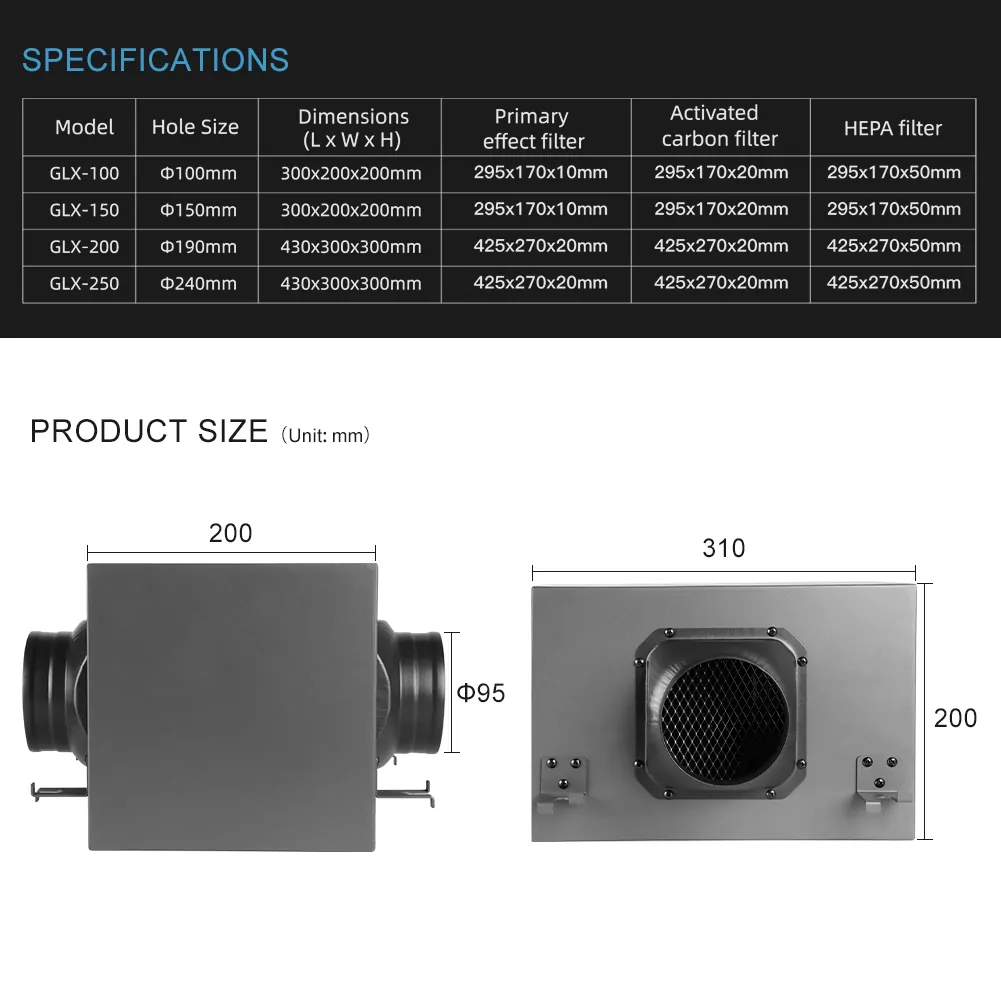
Match the duct and airflow. The filter box opening must match your duct size (e.g., 100 mm, 125 mm, 150 mm, 200 mm) and the fan’s airflow. A filter box rated for lower airflow than your fan adds excessive resistance.
Check pressure drop. Every filter stage adds static pressure. Use the filter’s pressure-drop data at your operating flow, and choose a fan with enough pressure capacity.
Choose the filter stages you need. Particles only → pre-filter + HEPA. Particles + odors → add the carbon stage. Don’t pay for stages you don’t need.
Check the seal. A filter box only works if the filter is sealed inside it. Look for a proper frame or gasket that prevents bypass airflow.
Confirm maintenance access. The box must open easily for filter changes — a filter you can’t reach is a filter that never gets changed.
Verify against the product datasheet. Use only verified specifications (airflow, filter class, pressure drop, dimensions) from the current product data.
Filter box selection checklist
[ ] Duct size and connection match the fan and ducting.
[ ] Airflow at operating static pressure is sufficient for the space.
[ ] Filter stages cover the actual contaminants (particles, odors, or both).
[ ] Filter media and replacement parts are available and affordable.
[ ] The housing seals correctly and allows easy access for maintenance.
[ ] Pressure drop at your airflow is within the fan’s capability.
Wartung der Filterbox
A filter box only performs at its rated level if the filters are replaced on time:
Pre-filter: inspect monthly; replace when visibly loaded (commonly 1–3 months, longer in clean environments).
HEPA/fine filter: replace per manufacturer (commonly 6–12 months). Never wash a HEPA filter.
Activated carbon: replace when odor breaks through (commonly 6–12 months). Washing does not restore adsorption.
Housing and seal: check the gasket and frame annually; a worn seal allows bypass.
Record service dates in a log so you can see the real replacement pattern for your environment.
Q: Does a filter box improve indoor air quality? A: A filter box removes particles (and, with a carbon stage, some gases and odors) from the air that passes through it. It is one part of indoor air quality — ventilation, source control, and humidity control also matter.
Q: What is the difference between a filter box and an air purifier? A: A filter box is a component of an HVAC or ventilation system, installed in the duct or intake to clean air as it flows. An air purifier is a standalone device that recirculates and cleans room air. Many buildings use both.
Q: Do I need a HEPA filter or an activated carbon filter? A: It depends on the contaminants. HEPA removes particles; carbon removes gases and odors. If you have both concerns (for example, dust plus cooking or plant odors), use both in a multi-stage filter box.
Q: How often should I change the filter in a filter box? A: Pre-filters commonly every 1–3 months, fine/HEPA filters every 6–12 months, and carbon when odor breaks through. The right interval depends on the environment — inspect and follow the manufacturer’s instructions.
Q: Can a filter box replace ventilation? A: No. A filter box cleans air that passes through it; it does not supply fresh outdoor air or remove stale air. Ventilation and filtration are complementary, not substitutes.
Q: Does a filter box protect HVAC equipment? A: Yes. By capturing dust and debris before they reach coils, fans, and heat exchangers, filtration reduces coil fouling, maintains heat transfer, and extends equipment life.
Inline Duct Fan — the airflow partner for a ducted filter box
Need a filter box for your HVAC or ventilation project? KCvents manufactures filter boxes, duct fans, and fresh air systems for wholesale, OEM, and private-label buyers. Request a quote with your airflow, duct size, and filtration requirements.
Newsletter Updates
Enter your email address below and subscribe to our newsletter