We use cookies to ensure that we give you the best experience on our website.
Bleiben Sie informiert mit KCVENTS Lüftungs- & HLK-Lösungen
Abonnieren Sie unseren Newsletter für die neuesten Einblicke in die Strömungstechnik, Neuigkeiten zu energieeffizienten ERV/HRV-Systemen und umweltfreundlichen HLK-Lösungen.
Erhalten Sie als Erster exklusive technische Leitfäden, Informationen zu kundenspezifischen OEM/ODM-Kapazitäten und Neuigkeiten zu weltweiten Messen direkt von KCVENTS.
Einzelraum-HRV im Jahr 2026: Warum sich das VT501-Wifi für Schlafzimmer, Wohnungen und Sanierungen eignet
Leitfaden 2026: Warum ein Einzelraum-Lüftungsgerät mit Wärmerückgewinnung wie das KCVENTS VT501-Wifi in Schlafzimmer und Wohnungen gehört – 90% Wärmerückgewinnung, unter 30 dB, HEPA- + Aktivkohlefilterung, Wi-Fi-Steuerung.
Einzelraum-HRV im Jahr 2026: Warum sich das VT501-Wifi für Schlafzimmer, Wohnungen und Sanierungen eignet
Bis 2026 haben drei Faktoren die Art und Weise, wie Wohnräume belüftet werden, grundlegend verändert: höhere Energiepreise, strengere Vorschriften zur Gebäudeenergieeffizienz, und schlechtere Außenluftqualität während der Waldbrand- und Pollensaison. Neubauten werden dichter ausgeführt als je zuvor, wodurch eine mechanische Lüftung von einem Komfortmerkmal zur Notwendigkeit wird – während den meisten Haushalten nach wie vor der Platz, das Budget oder die Genehmigung für ein komplettes kanalbasiertes System fehlt.
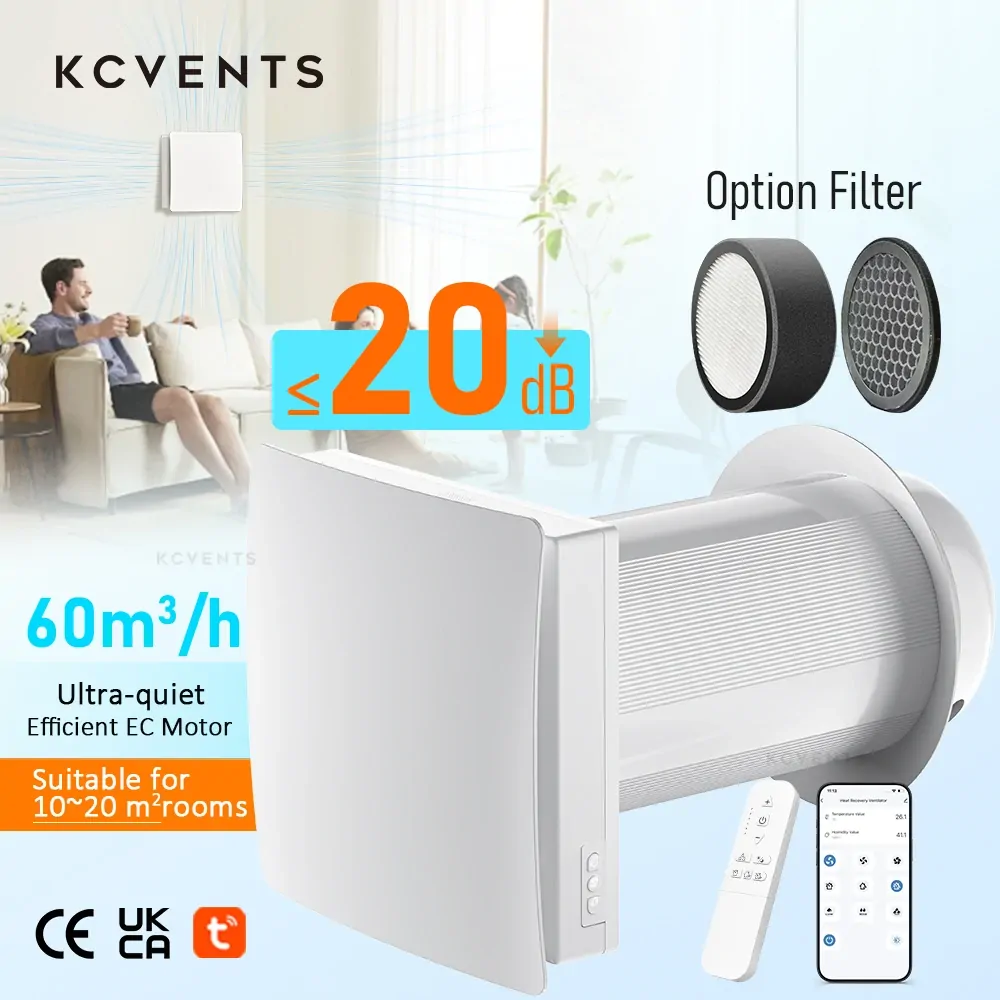
Genau diese Lücke schließen dezentrale Einzelraum-Lüftungsgeräte mit Wärmerückgewinnung (HRV). Das KCVENTS VT501-Wifi gewinnt bis zu 90% der Wärme aus der Abluft zurück, arbeitet bei unter 30 dB, filtert die Zuluft mittels HEPA und Aktivkohle und wird über eine einzige Kernbohrung in der Außenwand montiert – völlig ohne Kanalsystem. Im Folgenden analysieren wir die Trends für 2026 hinter diesem Produkt, warum es herkömmlichen Abluftventilatoren oder dem Fensterlüften überlegen ist und welche Vorteile es im alltäglichen Betrieb bietet.
Das VT501-Wifi wird durch eine einzige Außenwandöffnung installiert: Die raumseitige Abdeckung verbindet sich mit einem Teleskoprohr und dem Außengitter – ganz ohne zentrales Kanalnetz.
Drei lüftungstechnische Herausforderungen im Jahr 2026
Energiekosten und verschärfte Effizienzvorschriften
Die EU, das Vereinigte Königreich und Nordamerika verschärfen bis 2026 ihre energetischen Anforderungen an Gebäude kontinuierlich, und Sanierungsmaßnahmen müssen zunehmend die Modernisierung des Lüftungssystems beinhalten. Gleichzeitig bleiben die Energiekosten der Haushalte einer der größten Faktoren bei der Budgetplanung.
Die Rechnung ist einfach: Jeder Kubikmeter erwärmte (oder gekühlte) Luft, der ohne Wärmerückgewinnung abgeführt wird, wird doppelt bezahlt – einmal für das Heizen bzw. Kühlen und ein zweites Mal für die thermische Konditionierung der nachströmenden Luft. Ein Lüftungsgerät mit Wärmerückgewinnung nimmt diese Energie auf, bevor sie entweicht. Der Keramikwärmetauscher des VT501-Wifi erreicht einen Wirkungsgrad von bis zu 90%, und im Schlafmodus verbraucht das gesamte Gerät lediglich 5 W – weniger als ein Nachtlicht.
Rauch, Pollen und Außenluftbelastung
Rauch durch Vegetations- und Waldbrände ist kein seltenes Phänomen mehr – in vielen Regionen ist er zu einer saisonalen Belastung geworden, teils Tausende von Kilometern vom Brandherd entfernt. Zudem beginnen Pollensaisons früher und dauern länger an. In beiden Fällen führt der Reflex, zum Lüften “einfach das Fenster zu öffnen”, oft zu einer Verschlechterung statt Verbesserung der Raumluftqualität.
Ein balanciertes HRV-System gewährleistet den Luftaustausch ohne Fensteröffnung, da die Zuluft vor dem Eintritt gefiltert wird. Das VT501-Wifi ist serienmäßig ausgestattet mit einem doppelten Filtersatz – HEPA plus Aktivkohle – der Pollen, Staub, Feinstaub und zahlreiche Außengerüche abscheidet, bevor sie in den Raum gelangen. Dies bietet zuverlässigen Schutz sowohl bei Rauchbelastungen als auch während der gesamten Allergiesaison.
Dichte, CO₂-belastete Schlafzimmer
Moderne Fenster und Dämmungen halten die Wärme im Gebäude – schließen jedoch auch CO₂, Feuchtigkeit und Schadstoffe ein. Eine erhöhte CO₂-Konzentration im Schlafzimmer führt nachweislich zu schlechterer Schlafqualität, morgendlichen Kopfschmerzen und Abgeschlagenheit am Folgetag. Reine Abluftventilatoren schaffen hier nur bedingt Abhilfe, da sie dem Raum wertvolle Wärme entziehen und Geräusche verursachen; ein geöffnetes Fenster im Winter oder Sommer beeinträchtigt hingegen sowohl den thermischen Komfort als auch die Energiebilanz erheblich.
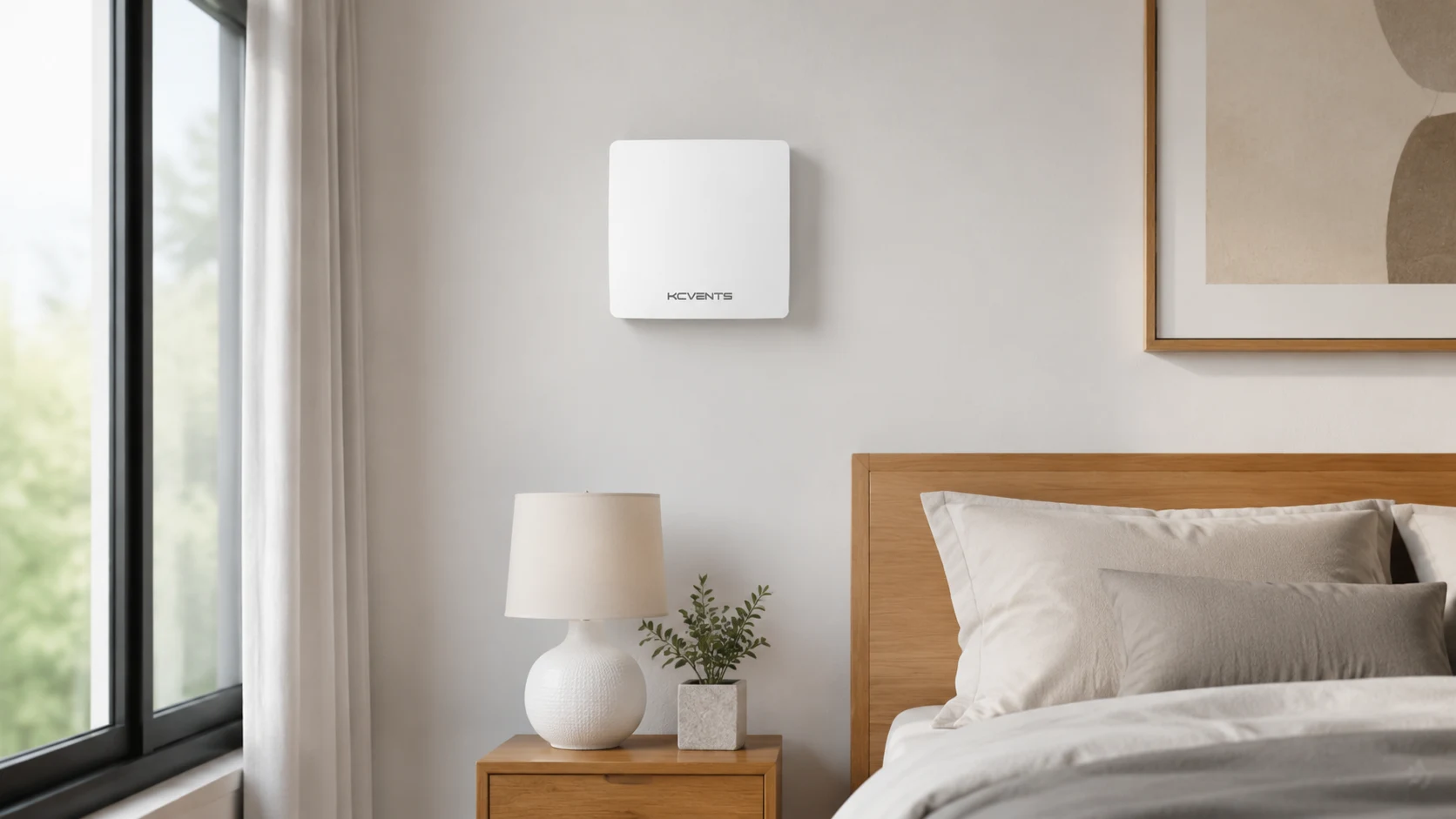
Ein leises, balanciertes Einzelraum-Wärmerückgewinnungsgerät (HRV) ist die praktische Lösung: kontinuierlicher Frischluftaustausch bei minimalem Wärmeverlust, leise genug, um direkt daneben zu schlafen.
Warum ein Einzelraum-Wärmerückgewinnungsgerät die Alternativen übertrifft
Option
Stärken
Einschränkungen
Geöffnetes Fenster
Kostenlos, keine Geräte erforderlich
Wärmeverlust, Lärm, ungefilterte Außenluft (Rauch, Pollen, Staub), Sicherheits- und Witterungsrisiken
Nur Abluftventilator
Einfach, kostengünstig
Keine Wärmerückgewinnung, keine Zuluftfiltration, laut, erzeugt Unterdruck und Zugluft
Zentrales kanalisierungsgebundenes HRV/ERV-System
Leistung für das gesamte Gebäude
Kostspielig, erfordert Kanalplanung, schwierig für Wohnungen, Mieter und Nachrüstungen
Mobiler Luftreiniger
Filtert Umluft
Führt keine Frischluft zu und entfernt kein CO₂, keine Wärmerückgewinnung
Einzelraum-Wärmerückgewinnungsgerät (VT501-Wifi)
Wärmerückgewinnung bis zu 90%, HEPA- + Aktivkohlefiltration, unter 30 dB, WLAN-Steuerung, Einlochmontage
Versorgt jeweils einen Raum (erweiterbar durch ein Master/Slave-Setup)
Für Schlafzimmer, Heimbüros, Wohnungen und Sanierungsprojekte bietet das Einzelraum-Wärmerückgewinnungsgerät in der Regel den besten Kompromiss aus Leistung, Geräuschpegel, Installationsaufwand und Kosten.
VT501-Wifi auf einen Blick
Wärmerückgewinnung von bis zu 90% — der Keramikkern gewinnt Wärme aus der Abluft sowohl in der Heiz- als auch in der Kühlperiode zurück
Leise, spezifiziert unter 30 dB — bürstenloser DC-Motor in einem schallgedämmten Gehäuse, gezielt ausgelegt für Schlafzimmer, Kinderzimmer und Homeoffices
Duale Filtration — HEPA- und Aktivkohlefilter gegen Pollen, Staub, Feinstaub und Außengerüche
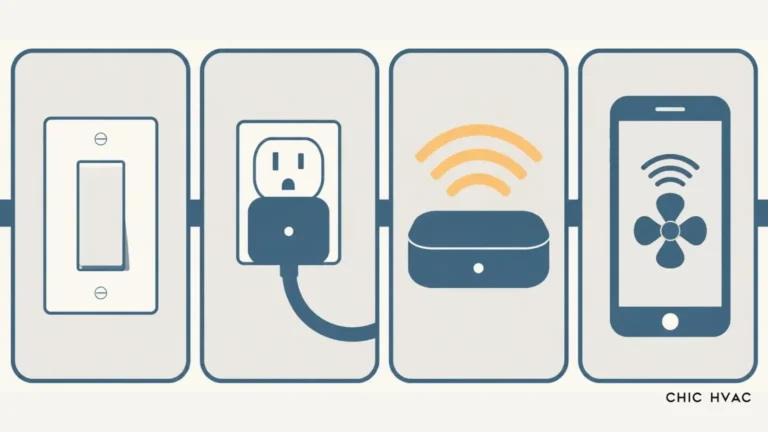
Intelligente WLAN-Steuerung — Tuya-basierte App für Betriebsmodi, Zeitpläne und Automatisierungsroutinen
Wandeinbau über Einzelbohrung — Teleskoprohr durch die Außenwand, kein zentrales Kanalsystem erforderlich
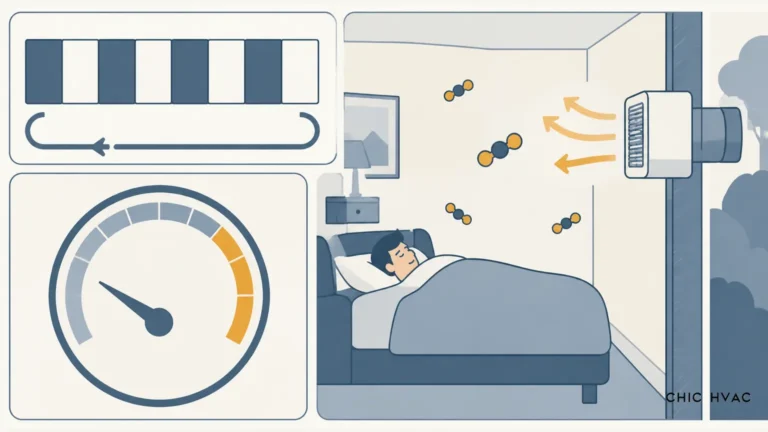
Drei Betriebsmodi — Frischluft, Abluft und 65-Sekunden-Zyklusmodus
Breiter Spannungs- und Temperaturbereich — 12 VDC oder 100–240 V, 50/60 Hz; Betrieb von -20 °C bis +50 °C
Leistungsparameter
Geschwindigkeit
Luftvolumenstrom (m³/h)
Gesamtleistung (W)
Current (A)
Motordrehzahl (RPM)
Schlafmodus
20
2.5
0.025
630
I
48
3.0
0.030
1,100
II
54
4.5
0.045
1,600
III
60
8.5
0.070
2,200
Selbst bei maximaler Drehzahl verbraucht das Gerät nur 8,5 W — ein ganzes Jahr nächtlicher Betrieb verursacht nur minimale Stromkosten, während die zurückgewonnene Wärme ein Vielfaches davon bei den Heiz- und Kühlkosten einspart.
Wie sich die Geräuschpegel nachts tatsächlich anhören
“Unter 30 dB” ist ein Spezifikationswert; worauf es ankommt, ist der Klang in einem stillen Schlafzimmer. Bei unseren eigenen Installationen an einer typischen Gipskartonwand, läuft der Sleep-Modus im unteren 20er-Bereich (dB), und Stufe I liegt im mittleren 20er-Bereich — ungefähr wie eine ruhige Bibliothek; man hört es nur, wenn man darauf achtet. Bei Stufe II wird es wahrnehmbar in einem stillen Raum, und bei Stufe III (60 m³/h) ist der Motor deutlich hörbar, eher vergleichbar mit einem kleinen Tischventilator auf mittlerer Stufe. Entscheidend ist die Klangcharakteristik: Es handelt sich um ein sanftes, tiefes Brummen statt um ein hochfrequentes Pfeifen, das Menschen tatsächlich wachhalten würde.
Ihre exakten Werte werden je nach Wandstärke und Raumakustik um einige dB abweichen; betrachten Sie dies als Richtwerte. Ein ehrlicher Hinweis für Personen mit leichtem Schlaf: Betreiben Sie das Gerät über Nacht im Frischluft-Modus auf Sleep oder Stufe I. Der 65-Sekunden-Zyklusmodus ist der einzige Modus, bei dem Sie die Richtungsumkehr des Motors etwa jede Minute bemerken – nützlich für eine schnelle Auffrischung, nicht zum Schlafen.
Drei Modi für die tägliche Steuerung
Frischluft-Modus — kontinuierliche, ausgewogene Zufuhr gefilterter Außenluft für die Grundlüftung.
Abluft-Modus — schnelle Abfuhr verbrauchter Luft, von Kochgerüchen oder Feuchtigkeitsspitzen.
65-Sekunden-Zyklusmodus — wechselt zwischen Zuluft und Abluft, um den Raum bei Bedarf rasch zu durchlüften, beispielsweise nach dem Besuch von Gästen oder vor dem Schlafen.
So funktioniert der 65-Sekunden-Zyklus: Der Keramikkern speichert Wärme. Der Ventilator saugt Abluft durch den Kern und erwärmt ihn beim Ausblasen der Luft; anschließend kehrt er die Drehrichtung um und saugt Außenluft durch denselben warmen Kern an, wodurch die einströmende Luft vorgewärmt wird (und im Sommer leicht vorgekühlt wird). Das VT501 wechselt alle 65 Sekunden die Richtung, sodass ein kompaktes Einzelrohrgerät eine echte Wärmerückgewinnung ohne sperrigen Kreuzstrom-Wärmetauscher erzielt. Für den täglichen Gebrauch fungiert der Zyklusmodus als Taste zur schnellen Auffrischung – der Frischluft-Modus ist die Betriebsart für den Dauerbetrieb.
Intelligente Steuerung mit der Tuya-/Wi-Fi-App
Lüftung nützt nur dann etwas, wenn sie tatsächlich läuft, und ein Wi-Fi-fähiges HRV beseitigt typische Bedienhürden. Mit der Tuya-basierten App können Sie Modi wechseln, die Geschwindigkeit anpassen und Zeitpläne über Ihr Smartphone festlegen: Starten Sie vor dem Kochen den Abluftmodus, nutzen Sie über Nacht die Schlafstufe oder erhöhen Sie die Frischluftzufuhr, bevor Sie nach Hause kommen. Zudem lässt es sich ohne zusätzliche Gateways in gängige Smart-Home-Routinen einbinden.
Ein praktischer Tipp aus der Praxis: Das VT501 verbindet sich über 2,4-GHz-WLAN, wie die meisten Tuya-Geräte. Wenn die Kopplung stockt, verbinden Sie Ihr Smartphone mit dem 2,4-GHz-Band (oder deaktivieren Sie vorübergehend die “Band Steering”-/Smart-Connect-Funktion Ihres Routers) und versuchen Sie es erneut – das behebt die überwiegende Mehrheit der bekannten Kopplungsprobleme.
Installation: Was Sie vor dem Bohren prüfen sollten
Das VT501-Wifi ist für eine nachrüstungsfreundliche Montage konzipiert:
Durch eine Außenwand mit einer einzelnen Kernbohrung und einem Teleskoprohr
Kein zentrales Kanalsystem – ideal für Wohnungen, Mieter und Sanierungsprojekte
Rohrlänge: 250–500 mm, zuschneidbar auf Ihre Wandstärke (Bohrungsdurchmesser 160 mm Ø)
Raumseitige Abdeckblende: 242 × 242 mm, kompakte Abmessungen für die meisten Räume
Klären Sie vor dem Bohren diese vier Punkte – hier entstehen die meisten Installationsprobleme:
Genehmigung bei Mietobjekten. Eine 160-mm-Bohrung stellt einen dauerhaften Eingriff in die Gebäudehülle dar. Prüfen Sie Ihren Mietvertrag und sprechen Sie vor dem Bohren mit dem Vermieter oder der Hausverwaltung. In der Praxis stimmen viele Eigentümer zu, sobald klar ist, dass die Öffnung bei einem Auszug fachgerecht abgedichtet und wieder verschlossen werden kann.
Beschaffenheit und Leitungsverlauf in der Wand. Stellen Sie sicher, dass keine Kabel, Rohrleitungen oder Bewehrungseisen im Bohrbereich verlaufen. Bei Beton- oder Ziegelwänden erzielt ein Fachbetrieb mit einem Kernbohrgerät das sauberste Ergebnis – der Arbeitsaufwand liegt bei etwa einer Stunde.
Wandstärke und Rohrlänge. Messen Sie die Wand vor der Bestellung aus: Das Teleskoprohr deckt 250–500 mm ab; zweischalige oder gedämmte Wände liegen meist im oberen Bereich. Ein zu kurzer Kanal ist der häufigste Montagefehler.
Die Außenfassade. Das Außengitter sollte mit einem leichten Gefälle nach außen montiert werden, damit Schlagregen abläuft, und abseits von Bereichen liegen, an denen es Laub, Vögeln oder starkem Wind direkt ausgesetzt ist. Dichten Sie den Spalt zwischen Rohr und Wand fachgerecht ab – der Dichtstoff gewährleistet den Feuchtigkeitsschutz.
Für handwerklich versierte Eigentümer ist die Montage gut im Do-it-yourself-Verfahren machbar; für alle anderen erledigt ein HLK-Fachbetrieb oder Handwerker mit Kernbohrer die Arbeit in ein bis zwei Stunden – und das saubere, fachgerecht abgedichtete Endergebnis überzeugt.
Für wen sich der VT501-Wifi eignet – und seine technischen Grenzen
Schlaf- und Kinderzimmer – leise, gefilterte Frischluft jede Nacht, spezifiziert unter 30 dB
Wohnungen und Sanierungen – Wohnraumlüftung mit Wärmerückgewinnung für Einzelräume ohne aufwendiges zentrales Kanalsystem
Home-Offices und kleinere Räume – frischere Luft, weniger verbrauchte Raumluft, reduzierte Gerüche und ein optimales Feuchteniveau beim Arbeiten
Für alle, die kalte Zugluft im Winter vermeiden möchten – kontrollierte Be- und Entlüftung mit bis zu 90% Wärmerückgewinnung anstelle von Wärmeverlusten durch geöffnete Fenster
Und für wen ist das Gerät weniger geeignet? Ein VT501 deckt etwa einen 15–20 m² großen Raum ab (ca. 160–215 sq ft). Wenn ein kompletter Luftaustausch für das gesamte Gebäude erforderlich ist, reicht ein einzelnes Gerät nicht aus – hier empfiehlt sich entweder der koordinierte Einsatz mehrerer Einheiten (über die Master-Slave-Konfiguration folgt ein zweites Gerät dem ersten) oder ein zentrales Lüftungssystem. Falls eine Kernbohrung in der Außenwand generell nicht möglich ist, kommt diese Produktkategorie nicht infrage.
Kompakte Antworten: VT501-Wifi FAQ
Wie funktioniert der 65-Sekunden-Zyklus mit Keramik-Wärmespeicher?
Der Keramik-Wärmetauscher speichert thermische Energie. In der ersten Phase jedes Zyklus wird Abluft durch den Keramikkern nach außen geführt und erwärmt diesen; anschließend wechselt der Ventilator die Drehrichtung, sodass die angesaugte Frischluft denselben erwärmten Kern durchströmt und die gespeicherte Wärme aufnimmt – im Sommer erfolgt entsprechend eine leichte Vorkühlung. Der VT501 ändert alle 65 Sekunden die Strömungsrichtung, wodurch dieses kompakte Einzelrohrgerät bis zu 90% Wärmerückgewinnung erzielt – ganz ohne voluminösen Kreuzstrom-Wärmetauscher.
Ist der VT501-Wifi leise genug für geräuschempfindliche Schläfer?
Betreiben Sie das Gerät nachts im Frischluftmodus auf der Stufe „Sleep“ oder „I“: In der Praxis liegt der Schallpegel im unteren bis mittleren 20er-Bereich (dB), was in etwa einer ruhigen Bibliothek entspricht – für die meisten Menschen tritt das Geräusch nach ein bis zwei Nächten in den Hintergrund. Das Motorgeräusch ist eher ein sanftes, tiefes Summen als ein hochfrequentes Heulen. Ein ehrlicher Hinweis: Im 65-Sekunden-Zyklusmodus hören Sie etwa jede Minute die Drehrichtungsumkehr des Motors. Personen mit leichtem Schlaf sollten diesen Modus daher nachts nicht verwenden.
Können zwei VT501-Einheiten im Push-Pull-Betrieb zusammenarbeiten?
Ja, bis zu einem gewissen Grad: Der VT501 unterstützt eine Master/Slave-Konfiguration, bei der eine zweite Einheit den Modus der ersten Einheit übernimmt, sodass zwei Räume im Push-Pull-Verfahren belüftet werden können (beispielsweise ein Schlafzimmer und ein Wohnzimmer). Dadurch lässt sich die dezentrale Wohnraumlüftung mit Wärmerückgewinnung (HRV) über einen einzelnen Raum hinaus erweitern. Die genaue Verkabelung und Konfiguration hängen von der Installation ab. Klären Sie die Details daher vor der Bestellung mehrerer Einheiten mit Ihrem Fachhändler oder direkt mit KCVENTS ab.
Welche Kernbohrungsgröße ist erforderlich – und ist die Montage in einer Mietwohnung möglich?
Die Wandöffnung beträgt 160 mm Ø und das Teleskoprohr deckt eine Wandstärke von 250–500 mm ab; die raumseitige Blende misst 242 × 242 mm. In Mietobjekten gilt in der Praxis: Vorab Rücksprache halten. Eine 160-mm-Bohrung stellt eine bauliche Veränderung dar. Prüfen Sie daher Ihren Mietvertrag und holen Sie die schriftliche Genehmigung des Vermieters ein – viele stimmen zu, sobald die Installation erläutert wurde und gewährleistet ist, dass die Öffnung beim Auszug wieder verschlossen werden kann.
Warum verbindet sich das Gerät nicht mit meinem WLAN?
Der VT501 stellt die Verbindung über ein 2,4-GHz-WLAN-Netzwerk her, was dem Standard für Tuya-basierte Geräte entspricht. Wenn Ihr Router ein kombiniertes 5-GHz- / 2,4-GHz-Netzwerk ausstrahlt, können sich Smartphone und Gerät auf unterschiedlichen Frequenzbändern befinden. Lösung: Verbinden Sie Ihr Smartphone während des Kopplungsvorgangs mit dem 2,4-GHz-Netzwerk oder deaktivieren Sie vorübergehend die Band-Steering-Funktion (Smart Connect) des Routers und wiederholen Sie die Kopplung.
Für welche Raumgröße ist eine einzelne Einheit tatsächlich ausgelegt?
Realistisch betrachtet ist ein einzelner VT501-Wifi für einen Raum von 15–20 m² geeignet – typischerweise ein Schlafzimmer, Kinderzimmer oder Heimbüro. Er ist als Einzelgerät nicht als Gesamtlösung für ein ganzes Haus oder eine vollständige Wohnung gedacht. Für mehrere Räume empfiehlt sich eine Master/Slave-Konfiguration zur synchronisierten Steuerung oder eine zentrale Kanalanlage.
Wie verhält sich das Gerät bei Kondensatbildung oder Frost im Winter?
Der VT501 ist für einen Betriebsbereich von -20 °C bis +50 °C ausgelegt. In der Praxis empfiehlt es sich bei strengem Frost, das Gerät kontinuierlich auf niedriger Stufe laufen zu lassen, damit der Keramikwärmetauscher warm bleibt, und bei erhöhtem Lüftungsbedarf den 65-Sekunden-Zyklusmodus zu nutzen – die regelmäßige Richtungsumkehr ermöglicht es dem Speicher zudem, eventuellen Frost abzutauen. Die bewährte Praxis bei dezentralen Lüftungsgeräten mit Keramik-Wärmerückgewinnung: Kontinuierlicher Betrieb auf niedriger Stufe ist langen Stillstandszeiten vorzuziehen.
Entscheiden Sie sich 2026 für leise, effiziente Lüftung
Angesichts von Energiepreisen, Rauch- und Pollenbelastungen sowie den schlaffördernden Vorteilen frischer Raumluft in Schlafbereichen hat sich die dezentrale Wohnraumlüftung mit Wärmerückgewinnung (HRV) im Jahr 2026 vom Nischenprodukt zum Standard entwickelt. Der VT501-Wifi vereint die drei wesentlichen Anforderungen für Schlafzimmer und Wohnungen: echte Wärmerückgewinnung (bis zu 90%), ausgesprochen leiser Betrieb (unter 30 dB eingestuft) und eine Filtration, die Außenluftschadstoffe zuverlässig fernhält – und das alles über eine Einzelbohrungs-Installation, die ohne zentrales Kanalnetz auskommt. Für einen einzelnen Raum ist dies die praxisgerechte, verlässliche Lösung; für größere Räume lässt sie sich über Master/Slave-Einheiten oder ein kanalbasiertes System skalieren.
Möchten Sie mehr erfahren? Lesen Sie die VT501-Wifi-Produktseite, den FAQs zur VT501-Serie, oder kontaktieren Sie KCVENTS für OEM/ODM-Support. Jede Charge wird vor dem Versand werkseitig geprüft (CE-, RoHS- und ISO9001-konform); kundenspezifische Luftstromauslegungen und Smart-Control-Integrationen sind für B2B-Projekte verfügbar.
Newsletter Updates
Enter your email address below and subscribe to our newsletter