Utilizamos cookies para garantizar que le brindamos la mejor experiencia en nuestra web.
Manténgase al día con KCVENTS Soluciones de ventilación & HVAC
Suscríbase a nuestro boletín para recibir los últimos avances en ingeniería de flujo de aire, actualizaciones de sistemas ERV/HRV energéticamente eficientes y soluciones HVAC ecológicas.
Sea el primero en recibir guías técnicas exclusivas, información sobre capacidades personalizadas de OEM/ODM y noticias sobre ferias internacionales directamente de KCVENTS.
Single-Room HRV in 2026: Why the VT501-Wifi Works for Bedrooms, Apartments and Renovations
Guía 2026: por qué un recuperador de calor para habitación individual como el KCVENTS VT501-Wifi es ideal para dormitorios y apartamentos — recuperación de calor del 90%, menos de 30 dB, filtración HEPA + carbón, control por Wi-Fi.
Single-Room HRV in 2026: Why the VT501-Wifi Works for Bedrooms, Apartments and Renovations
Para 2026, tres factores han cambiado silenciosamente la forma en que se ventilan los hogares: precios más altos de la energía, normativas de eficiencia edilicia más estrictas, y peor calidad del aire exterior durante las temporadas de incendios forestales y polen. Las viviendas nuevas se construyen más herméticas que nunca, lo que convierte la ventilación mecánica de ser algo deseable a una necesidad, mientras que la mayoría de los hogares aún no disponen del espacio, presupuesto o autorización para instalar un sistema por conductos completo.
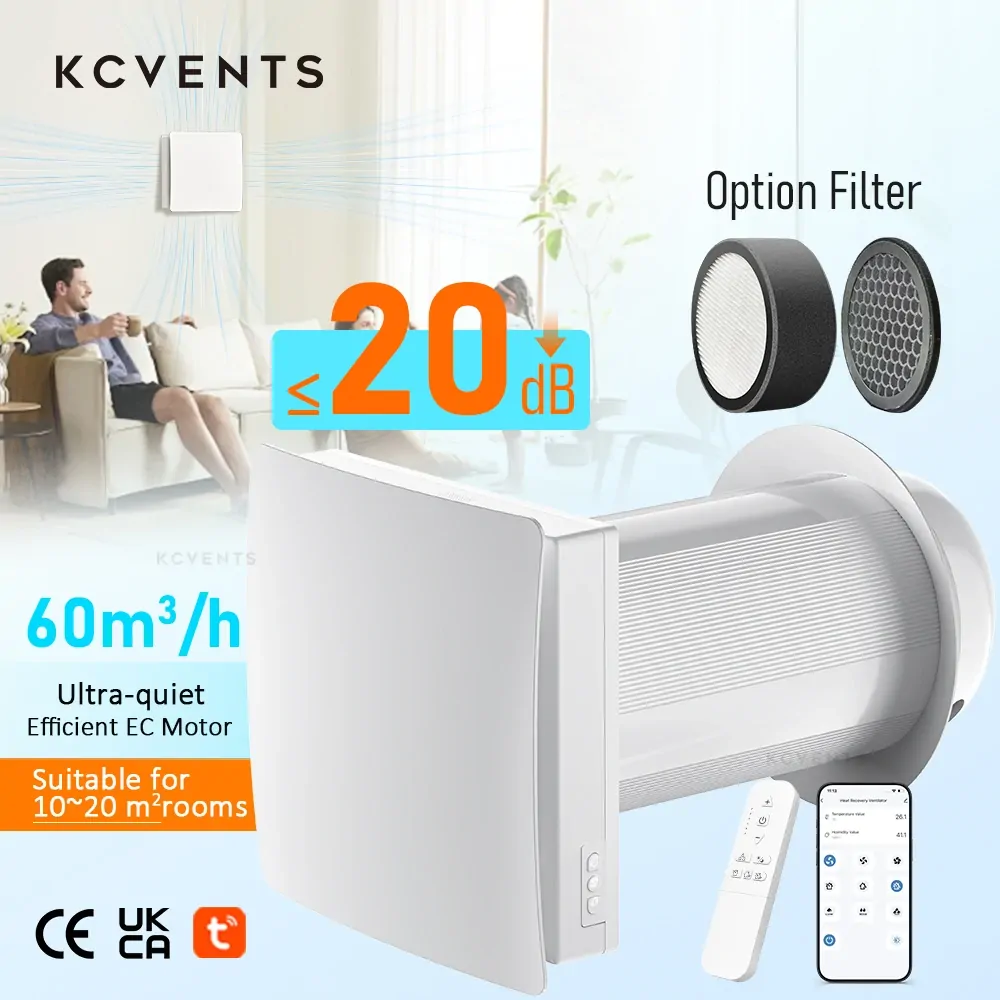
Esa brecha es exactamente la que cubren los recuperadores de calor (HRV) para una sola habitación. El KCVENTS VT501-Wifi recupera hasta un 90% del calor del aire de extracción, funciona por debajo de 30 dB, filtra el aire de impulsión con HEPA y carbón activado, y se monta a través de una única perforación en la pared, sin necesidad de conductos. A continuación, analizamos las tendencias de 2026 detrás del producto, en qué aspectos supera a una ventana abierta o a un extractor, y cómo es realmente convivir con uno de ellos en el día a día.
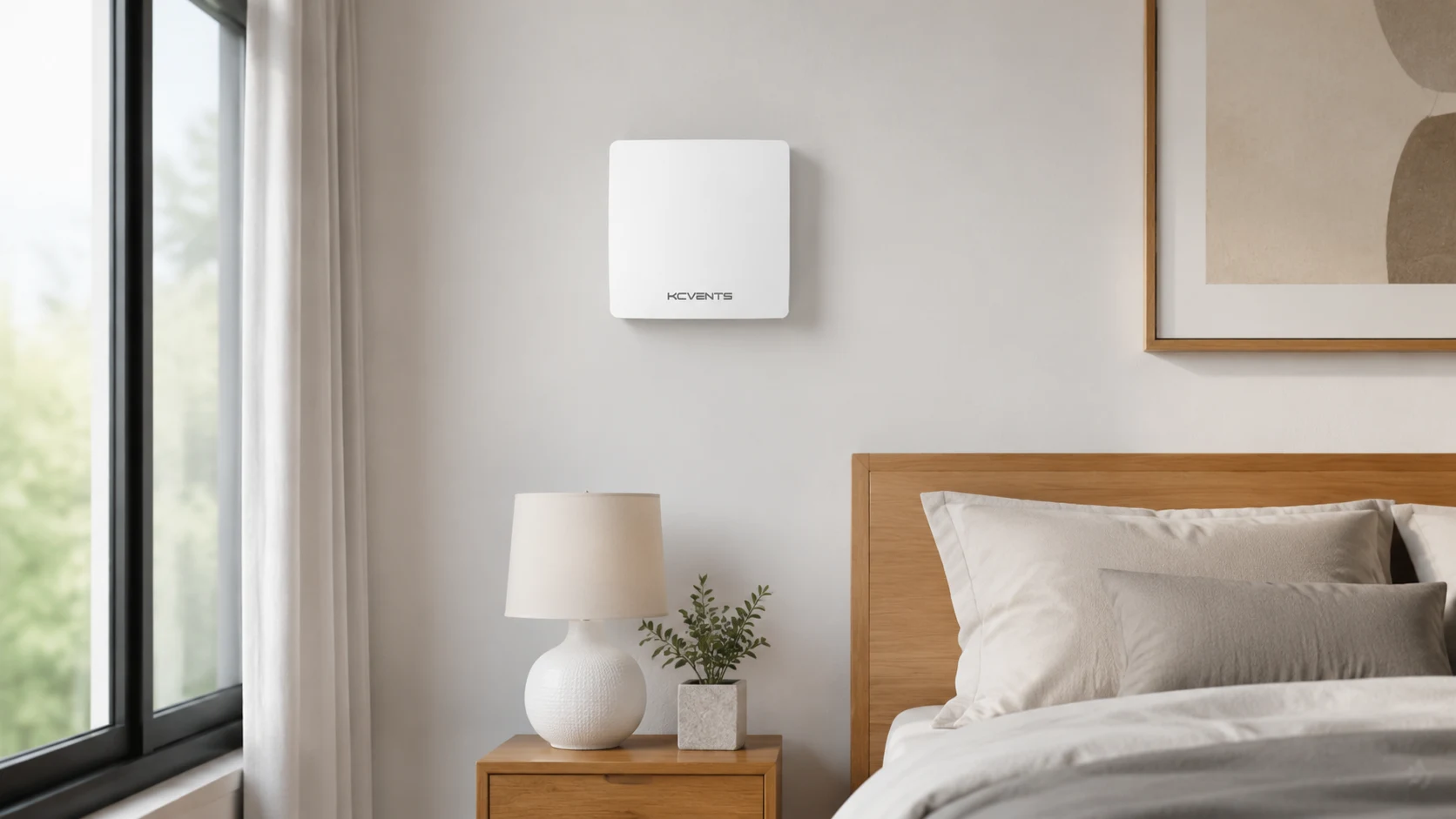
El VT501-Wifi se instala a través de una sola abertura en la pared exterior: el panel interior se conecta a un conducto telescópico y a una rejilla exterior, sin necesidad de conductos centralizados.
Tres desafíos de ventilación que marcan el 2026
Facturas de energía y normativas de eficiencia más estrictas
La UE, el Reino Unido y Norteamérica están endureciendo los requisitos de rendimiento energético para edificios de cara a 2026, y las obras de reforma deben incorporar cada vez más mejoras de ventilación. Entretanto, los precios de la energía doméstica se mantienen entre las principales preocupaciones presupuestarias de todos.
La cuenta es sencilla: cada metro cúbico de aire caliente (o frío) que se extrae sin recuperación de calor se paga dos veces: una para calentarlo o enfriarlo, y otra para reemplazarlo. Un recuperador de calor captura esa energía antes de que se pierda. El núcleo cerámico del VT501-Wifi ofrece una eficiencia de hasta el 90%, y en su modo Sleep toda la unidad consume tan solo 2,5 W — menos que una luz de noche.
Humo, polen y contaminación exterior
El humo de los incendios forestales ya no es un fenómeno aislado: en muchas regiones constituye una realidad estacional, a veces a miles de kilómetros del propio fuego. Las temporadas de polen comienzan antes y duran más. En ambos casos, el impulso instintivo de “abrir una ventana para ventilar” suele empeorar el aire interior en lugar de mejorarlo.
Un HRV equilibrado mantiene el aire en circulación sin necesidad de abrir nada, ya que el aire de impulsión pasa primero por una etapa de filtración. El VT501-Wifi se suministra con un juego de doble filtro: HEPA más carbón activado — que retiene el polen, el polvo, las partículas y numerosos olores del exterior antes de que lleguen a la estancia. Se trata de una protección eficaz tanto en episodios de humo como a lo largo de toda la temporada de alergias.
Dormitorios herméticos y con alta concentración de CO₂
Un buen acristalamiento y un aislamiento térmico eficaz retienen el calor, pero también atrapan el CO₂, la humedad y los contaminantes. Los niveles elevados de CO₂ en el dormitorio se asocian reiteradamente a una peor calidad del sueño, dolores de cabeza matutinos y fatiga al día siguiente. Los extractores eliminan parte de él, pero extraen calor y zumban toda la noche; abrir una ventana en invierno o verano perjudica tanto el confort como la factura energética.
Un HRV para una sola habitación silencioso y equilibrado es la solución práctica: renovación continua de aire fresco con una mínima pérdida de calor y un funcionamiento tan silencioso que permite dormir justo al lado.
Por qué el HRV para una sola habitación supera a las alternativas
Opción
Ventajas
Limitaciones
Ventana abierta
Gratuito, sin equipos
Pérdida de calor, ruido, aire exterior sin filtrar (humo, polen, polvo), problemas de seguridad y exposición a la intemperie
Solo extractor
Sencillo, de bajo coste
Sin recuperación de calor, sin filtración del aire de impulsión, ruidoso, genera presión negativa y corrientes de aire
HRV/ERV centralizado por conductos
Rendimiento para toda la vivienda
Costoso, requiere diseño de conductos, complejo para apartamentos, inquilinos y reformas
Purificador de aire portátil
Filtra el aire recirculado
No introduce aire fresco ni elimina el CO₂, sin recuperación de calor
HRV para una sola habitación (VT501-Wifi)
Recuperación de calor de hasta el 90%, filtración HEPA + carbón, menos de 30 dB, control por Wi-Fi, instalación mediante un solo orificio
Da servicio a una habitación a la vez (ampliable con configuración maestro/esclavo)
Para dormitorios, oficinas en casa, apartamentos y proyectos de reforma, el HRV para una sola habitación suele ser el mejor equilibrio entre rendimiento, ruido, facilidad de instalación y coste.
VT501-Wifi de un vistazo
Recuperación de calor de hasta 90% — el núcleo cerámico recupera calor del aire de extracción tanto en temporada de calefacción como de refrigeración
Silencioso, clasificado por debajo de 30 dB — motor DC sin escobillas en una carcasa con aislamiento acústico, orientado a dormitorios, habitaciones infantiles y despachos
Doble filtración — HEPA y carbón activado contra polen, polvo, partículas y olores del exterior
Control inteligente por Wi-Fi — aplicación basada en Tuya para modos, programaciones y rutinas de automatización
Instalación pasamuros de un solo orificio — conducto telescópico a través de pared exterior, sin red de conductos centralizada
Tres modos de funcionamiento — Fresh Air (Aire fresco), Exhaust (Extracción) y modo Cycle de 65 segundos
Amplio rango de tensión y temperatura de funcionamiento — 12 VDC o 100–240 V, 50/60 Hz; funciona de -20°C a +50°C
Performance Parameters
Speed
Airflow (m³/h)
Potencia total (W)
Current (A)
Velocidad del motor (RPM)
Sleep
20
2.5
0.025
630
I
48
3.0
0.030
1,100
II
54
4.5
0.045
1,600
III
60
8.5
0.070
2,200
Incluso a máxima velocidad, la unidad consume apenas 5 W — un año completo de funcionamiento nocturno representa un consumo eléctrico mínimo, mientras que el calor recuperado ahorra varias veces ese importe en climatización.
Cómo se perciben realmente los niveles de ruido por la noche
“Menos de 30 dB” es una especificación técnica; lo importante es cómo suena en un dormitorio silencioso. En nuestras propias instalaciones sobre tabiquería seca estándar, Sleep opera en el rango bajo de los 20 dB and I se sitúa en torno a la mitad de los 20 dB — similar al ambiente de una biblioteca silenciosa; solo se percibe si se presta atención. En II comienza a ser perceptible en una habitación en silencio, y en III (60 m³/h) el motor es claramente audible, aproximándose a un ventilador de sobremesa pequeño a velocidad media. El factor clave es el tono: es un zumbido suave y grave en lugar de un silbido agudo, que es lo que realmente interrumpe el descanso.
Los valores exactos pueden variar algunos dB según el espesor del muro y la acústica de la estancia, por lo que deben tomarse como referencia aproximada. Una recomendación técnica para usuarios con sueño ligero: utilice la unidad en modo Fresh Air en velocidad Sleep o I durante la noche. El modo Cycle de 65 segundos es el único en el que se percibe la inversión del motor cada minuto aproximadamente; resulta óptimo para una renovación rápida, no para el descanso nocturno.
Tres modos para el control diario
Modo Fresh Air — aporte continuo y equilibrado de aire exterior filtrado para ventilación continua.
Modo Exhaust — extracción rápida de aire viciado, olores de cocción o picos de humedad.
Modo Cycle de 65 segundos — alterna impulsión y extracción para renovar la estancia con rapidez según se requiera, por ejemplo tras visitas o antes de dormir.
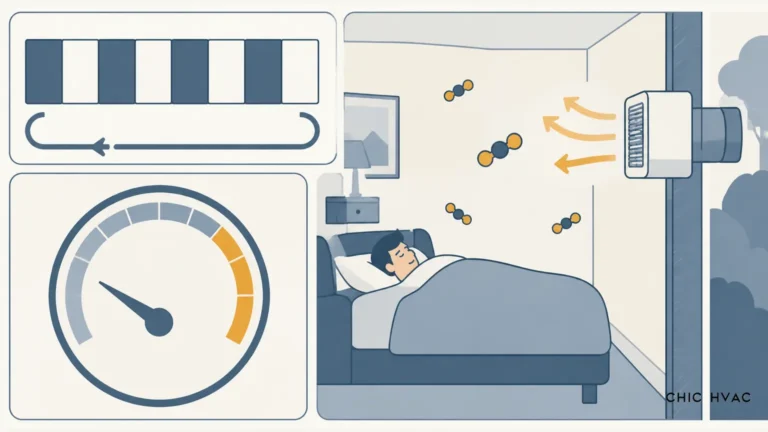
Cómo funciona el ciclo de 65 segundos: el núcleo cerámico acumula energía térmica. El ventilador extrae el aire a través del núcleo, calentándolo al salir; posteriormente invierte el giro e introduce aire exterior a través de ese mismo núcleo caliente, precalentando el aire de entrada (y preenfriándolo en verano). El VT501 cambia de sentido cada 65 segundos, logrando una recuperación de calor real en un equipo compacto monotubo sin necesidad de un intercambiador de flujo cruzado voluminoso. Para el uso cotidiano, utilice el modo Cycle para renovación rápida puntual y el modo Fresh Air para funcionamiento continuo.
Control inteligente con la aplicación Tuya / Wi-Fi
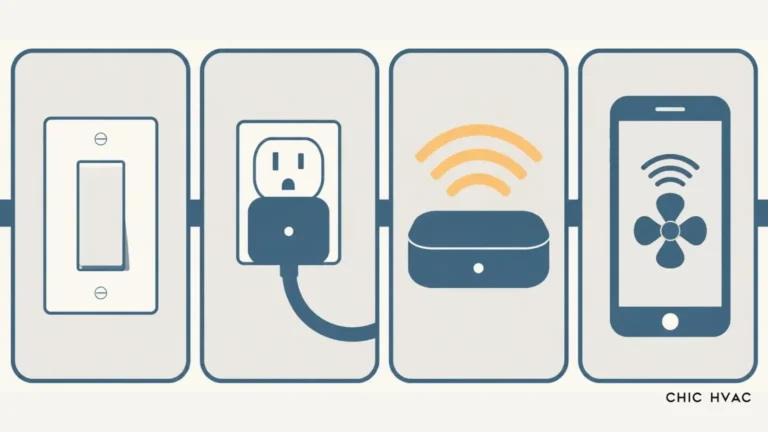
La ventilación solo es efectiva si funciona de forma continua, y un sistema HRV con Wi-Fi simplifica la gestión del sistema. Con la aplicación basada en Tuya puede cambiar de modo, ajustar la velocidad y configurar programaciones horarias desde su teléfono: activar el modo Extracción antes de cocinar, seleccionar la velocidad Sleep durante la noche o intensificar el Aire Fresco antes de llegar a casa. Además, se integra en las rutinas habituales de hogar inteligente sin necesidad de pasarelas adicionales.
Un consejo práctico basado en la experiencia de campo: el VT501 se conecta mediante Wi-Fi de 2,4 GHz, al igual que la mayoría de los dispositivos Tuya. Si el emparejamiento se detiene, conecte su teléfono a la banda de 2,4 GHz (o desactive temporalmente la función de “band steering” / conexión inteligente de su router) y vuelva a intentarlo; esto soluciona la gran mayoría de los fallos de vinculación habituales.
Instalación: qué comprobar antes de taladrar
El VT501-Wifi está diseñado para una instalación sencilla en renovaciones:
A través de una pared exterior con un solo orificio y un conducto telescópico
No central ductwork — ideal para apartamentos, inquilinos y proyectos de reforma
Longitud del conducto: 250–500 mm, cortable según el espesor de la pared (diámetro del orificio: 160 mm Ø)
Panel embellecedor interior: 242 × 242 mm, un tamaño compacto para la mayoría de las estancias
Antes de taladrar, resuelva estos cuatro aspectos: aquí es donde comienza la mayoría de los problemas de instalación:
Permisos, si vive de alquiler. Un orificio de 160 mm supone una modificación permanente de la envolvente del edificio. Revise su contrato de arrendamiento y consulte con el propietario o administrador de la finca antes de perforar. En la práctica, muchos propietarios lo autorizan al comprobar que el orificio puede sellarse y repararse adecuadamente en caso de mudanza.
Qué hay en el interior de la pared. Asegúrese de que no haya cables, tuberías ni armaduras de refuerzo en la trayectoria de perforación. En paredes de hormigón o ladrillo, un instalador con una perforadora de corona realizará el trabajo de forma óptima en aproximadamente una hora.
Espesor de la pared y longitud del conducto. Mida el espesor de la pared antes de realizar el pedido: el conducto telescópico cubre de 250 a 500 mm, y los muros con cámara de aire o aislamiento suelen situarse en el rango superior. Elegir un conducto demasiado corto es el error de instalación más frecuente.
La fachada exterior. La rejilla exterior debe instalarse con una ligera inclinación hacia abajo para evitar la entrada de agua de lluvia torrencial, y alejada de zonas expuestas a hojas, aves o fuertes rachas de viento. Selle adecuadamente el espacio entre el conducto y la pared: el sellador garantiza la estanqueidad al agua.
La instalación resulta totalmente viable como proyecto de bricolaje para usuarios experimentados; para los demás, un técnico de HVAC o instalador equipado con perforadora de corona la completará en una o dos horas, logrando un acabado sellado y profesional que merece la pena.
Para quién es idóneo el VT501-Wifi y cuáles son sus limitaciones reales
Dormitorios y habitaciones infantiles — aire fresco, filtrado y silencioso todas las noches, con un nivel sonoro inferior a 30 dB
Apartamentos y reformas — ventilación con recuperación de calor para una sola estancia sin necesidad de instalar una red centralizada de conductos
Despachos en casa y estancias pequeñas — aire más fresco, menor sensación de ambiente cargado, menos olores y un control óptimo de la humedad mientras trabaja
Cualquier usuario que desee evitar las corrientes de aire frío en invierno — ventilación equilibrada con hasta un 90% de recuperación de calor en lugar de perder energía al abrir la ventana
¿Y quién debería considerar otra opción? Una unidad VT501 cubre aproximadamente una estancia de 15–20 m² (aprox. 160–215 sq ft). Si necesita renovación de aire para toda la vivienda, una sola unidad no será suficiente; la solución práctica consiste en emplear varias unidades coordinadas (la configuración maestro/esclavo permite que una segunda unidad replique el funcionamiento de la primera) o un sistema centralizado. Asimismo, si no es posible perforar una pared exterior, esta categoría de producto no resultará adecuada para su caso.
Respuestas rápidas: Preguntas frecuentes sobre el VT501-Wifi
¿Cómo funciona el ciclo cerámico de 65 segundos?
El acumulador cerámico almacena calor. Durante una fase de cada ciclo, el aire de extracción atraviesa el núcleo y lo calienta al salir; a continuación, el ventilador invierte el giro y el aire de impulsión se introduce a través del mismo núcleo caliente, absorbiendo ese calor residual (o preenfriándose suavemente en verano). El VT501 invierte el sentido de flujo cada 65 segundos, permitiendo que una unidad compacta de un solo orificio alcance hasta un 90% de recuperación de calor sin necesidad de un intercambiador de flujo cruzado de gran tamaño.
¿Es el VT501-Wifi lo suficientemente silencioso para personas con sueño ligero?
Por la noche, utilice el modo Fresh Air en Sleep o I: en la práctica, se sitúa entre los 20 y pocos dB, similar a una biblioteca silenciosa; para la mayoría de las personas, pasa desapercibido en una o dos noches. El sonido del motor es un zumbido suave y grave en lugar de un chirrido. Una advertencia sincera: en el modo Cycle de 65 segundos escuchará la inversión del motor aproximadamente cada minuto, por lo que las personas con sueño ligero no deberían utilizar este modo durante la noche.
¿Pueden dos unidades VT501 funcionar juntas para una ventilación push-pull (impulsión-extracción)?
Sí, hasta cierto punto: el VT501 admite una configuración maestro/esclavo, en la que una segunda unidad sigue el modo de la primera para ventilar dos estancias en una disposición push-pull (por ejemplo, un dormitorio y un salón). Esto forma parte de lo que permite ampliar el HRV descentralizado más allá de una sola estancia. Los detalles de cableado y configuración dependen de la instalación, por lo que le recomendamos confirmar los datos específicos con su distribuidor o con KCVENTS antes de solicitar varias unidades.
¿Qué tamaño de orificio requiere y se puede instalar en un piso de alquiler?
La abertura en la pared es de 160 mm Ø y el conducto telescópico cubre un espesor de pared de 250 a 500 mm; el panel interior mide 242 × 242 mm. En una vivienda de alquiler, la respuesta práctica es: consulte primero. Un orificio de 160 mm constituye una modificación permanente, por lo que debe revisar su contrato de arrendamiento y obtener la aprobación por escrito del propietario; muchos la aceptan una vez que se les explica la instalación y que el orificio puede sellarse al finalizar el contrato.
¿Por qué no se conecta a mi red Wi-Fi?
El VT501 se conecta a través de Wi-Fi a 2,4 GHz, el estándar para dispositivos basados en Tuya. Si su router emite una red combinada de 5 GHz / 2,4 GHz, el teléfono y la unidad pueden quedar en bandas diferentes. Solución: conecte su teléfono a la red de 2,4 GHz durante el emparejamiento o desactive temporalmente la función de selección de banda (band steering / smart connect) en el router y vuelva a emparejarlo.
¿Qué superficie cubre realmente una unidad?
En términos prácticos, un solo VT501-Wifi es adecuado para una estancia de 15 a 20 m²: un dormitorio típico, una habitación infantil o un despacho en casa. No constituye por sí solo una solución para toda la vivienda o apartamento; para varias estancias, considere la configuración maestro/esclavo para que las unidades funcionen sincronizadas, o bien un sistema centralizado por conductos.
¿Qué ocurre con la condensación o la escarcha en inviernos fríos?
El VT501 está clasificado para operar de -20 °C a +50 °C. En la práctica, durante olas de frío intenso, resulta útil mantener la unidad en funcionamiento continuo a baja velocidad para que el núcleo cerámico conserve el calor, y utilizar el modo Cycle de 65 segundos cuando se requiera mayor ventilación; la inversión periódica también permite que el núcleo elimine la escarcha. Práctica estándar para equipos HRV con núcleo cerámico: un uso regular y continuo es preferible a periodos prolongados de inactividad.
Elija una ventilación silenciosa y eficiente en 2026
Entre los costes energéticos, las temporadas de humo y polen, y los estudios sobre la calidad del sueño en dormitorios bien ventilados, el HRV descentralizado ha pasado de ser un producto de nicho a una solución generalizada en 2026. El VT501-Wifi cubre los tres requisitos fundamentales que necesita un dormitorio o apartamento: recuperación de calor real (hasta un 90%), funcionamiento sumamente silencioso (clasificado por debajo de 30 dB) y filtración que mantiene la contaminación exterior fuera del hogar — todo detrás de una instalación de un solo orificio que funciona sin conductos centrales. Para una sola habitación, es la respuesta honesta y práctica; para espacios más grandes, amplíelo con unidades maestro/esclavo o un sistema de conductos.
¿Desea profundizar más? Lea la página del producto VT501-Wifi, la las preguntas frecuentes de la serie VT501, o póngase en contacto con KCVENTS para obtener soporte OEM/ODM. Cada lote se prueba en fábrica antes del envío (cumpliendo con CE, RoHS e ISO9001), y disponemos de diseño de flujo de aire personalizado e integración de control inteligente para proyectos B2B.
Actualizaciones del boletín
Introduce tu dirección de correo electrónico para suscribirte a nuestro boletín