Utilizamos cookies para garantizar que le brindamos la mejor experiencia en nuestra web.
Manténgase al día con KCVENTS Soluciones de ventilación & HVAC
Suscríbase a nuestro boletín para recibir los últimos avances en ingeniería de flujo de aire, actualizaciones de sistemas ERV/HRV energéticamente eficientes y soluciones HVAC ecológicas.
Sea el primero en recibir guías técnicas exclusivas, información sobre capacidades personalizadas de OEM/ODM y noticias sobre ferias internacionales directamente de KCVENTS.
Filter Box for HVAC Air Filtration: Applications, Selection, and Maintenance
How a filter box works, the three filter stages (pre-filter, HEPA, activated carbon), where it fits in an HVAC or ventilation system, how to select one, and how to maintain it.
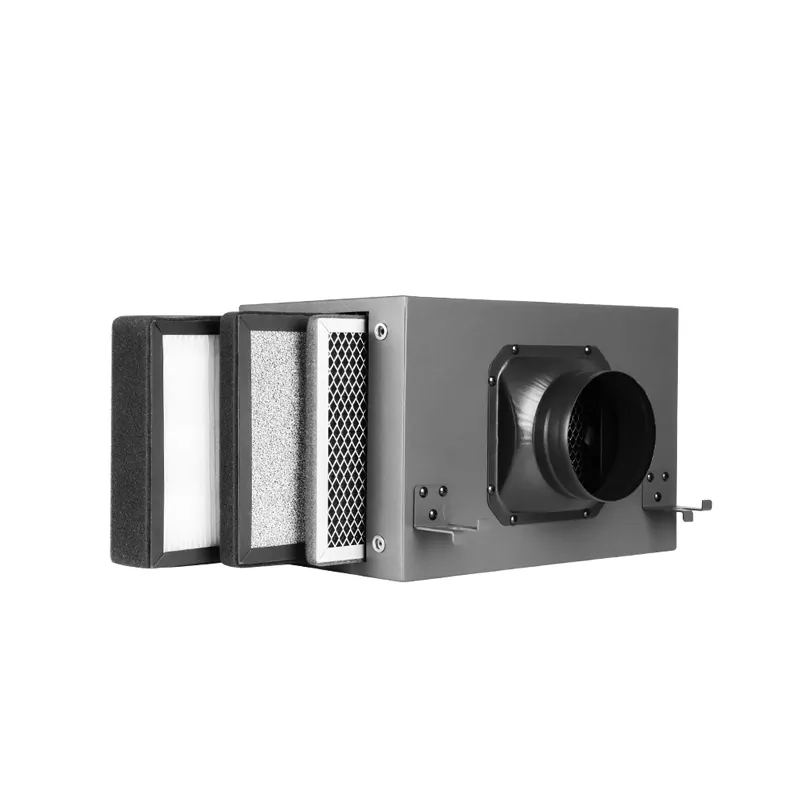
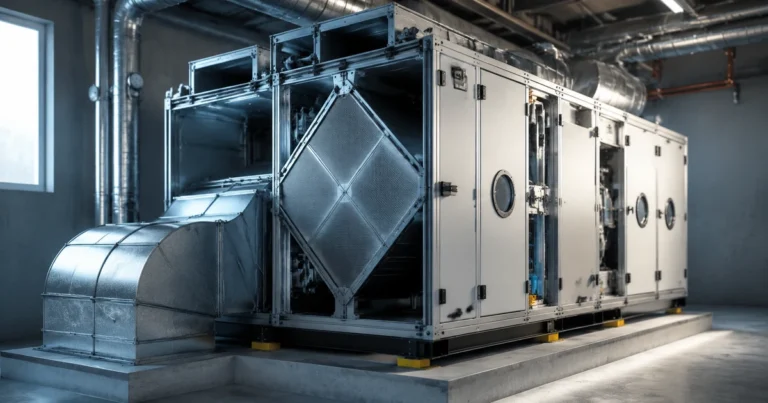
Una caja de filtración es una envolvente que aloja un filtro de aire en un sistema de HVAC o ventilación, de modo que el aire que pasa a través de ella se purifica antes de llegar a la estancia o a los equipos sensibles. Una caja de filtración típica combina un prefiltro, un filtro fino (como HEPA) y, en ocasiones, una etapa de carbón activado, lo que le permite retener tanto partículas como olores. Esta guía explica cómo funciona una caja de filtración, dónde se ubica en el sistema, cómo seleccionarla y cómo realizar su mantenimiento.
Por qué es importante una caja de filtración en climatización y ventilación
La función principal de una caja de filtración es proporcionar al filtro un alojamiento estanco y de dimensiones adecuadas en el flujo de aire. Sin una carcasa apropiada, se producen fugas de aire alrededor del filtro, el aire no tratado elude el medio filtrante (bypass) y el filtro no rinde según sus especificaciones nominales.
Según la EPA de EE. UU., las personas pasan cerca del 90% de su tiempo en interiores, y las concentraciones de algunos contaminantes interiores pueden ser de dos a cinco veces mayores que los niveles exteriores. Fuente: U.S. EPA, The Inside Story: A Guide to Indoor Air Quality. La ventilación suministra aire exterior, pero este requiere filtración antes de ingresar a los espacios ocupados; ahí es donde se integra una caja de filtración con el medio filtrante adecuado.
Una caja de filtración cumple tres funciones en un sistema de HVAC:
Mejora la calidad del aire interior. Captura partículas en suspensión como polvo, polen y alérgenos a medida que el aire circula por el sistema.
Protege los equipos. Sin filtración, el polvo y los residuos se acumulan en serpentines, ventiladores e intercambiadores de calor, reduciendo la transferencia térmica y acortando la vida útil del equipo.
Mantiene la eficiencia del sistema. Un filtro limpio y correctamente asentado mantiene el caudal de aire; un filtro colmatado o con bypass aumenta la pérdida de carga y eleva el consumo energético.
El límite operativo clave: una caja de filtración limpia el aire que pasa a través de ella. No sustituye el control de fuentes de emisión ni la ventilación con aire exterior, y no elimina todos los tipos de contaminantes. Debe formar parte de un diseño de ventilación integral y no considerarse una solución aislada.
Cómo funciona una caja de filtración: Las tres etapas de filtrado
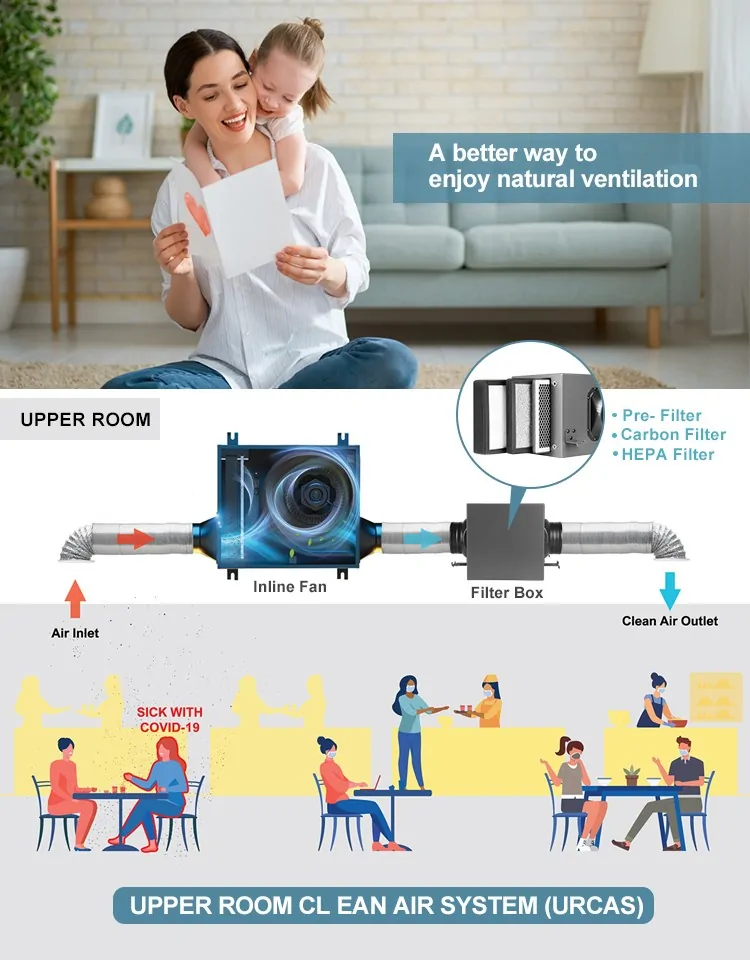
Muchas cajas de filtración están diseñadas como un sistema de filtración de 3 etapas, donde cada etapa cumple una función específica:
Etapa
Qué elimina
Medio filtrante típico
Sustitución
Prefiltro
Partículas gruesas: polvo, pelos, pelusa
Medio sintético grueso o de malla
Cada 1–3 meses, o cuando presente saturación visible
Filtro fino (HEPA)
Partículas finas: PM2.5, polen, alérgenos
HEPA o medio plisado fino
Cada 6–12 meses, según el fabricante
Carbón activado
Gases y olores: COV, olores de cocina y de plantas
Lecho de carbón activado
Cada 6–12 meses, cuando se detecte paso de olores
Prefiltro es la primera línea de defensa. Protege las etapas de mayor eficiencia situadas aguas abajo, prolongando la vida útil de los medios HEPA y de carbón, de mayor coste.
Filtro HEPA captura partículas finas. Tenga en cuenta que el filtro HEPA elimina partículas, no gases; consulte la diferencia entre carbón y HEPA más adelante.
Carbón activado adsorbe gases y olores. No retiene partículas y no puede lavarse ni reutilizarse una vez saturado.
Debido a que las tres etapas cumplen funciones diferentes, una caja de filtración que las dispone en serie ofrece una cobertura más amplia que cualquier filtro individual.
Carbón activado frente a HEPA en una caja de filtración
Un error común es pensar que “más filtros es mejor” sin saber qué función cumple cada filtro.
Capacidad
Carbón activado
HEPA
Elimina partículas (polvo, PM2.5, polen)
No
Yes
Elimina gases y olores
Sí (muchos COV y olores)
No
Mecanismo
Adsorción en la superficie del carbón
Intercepción mecánica
Se puede lavar y reutilizar
No
No (solo sustitución)
Resistencia al flujo de aire
Moderada, aumenta a medida que se satura
Alta, aumenta a medida que se carga
Para la mayoría de los espacios se necesitan ambos: un prefiltro y un filtro HEPA para partículas, además de carbón si existen fuentes de olores o gases (cocinas, mascotas, salas de cultivo, almacenamiento de productos químicos). Una caja de filtración de 3 etapas los combina en una sola carcasa. Consulte nuestro activated carbon filter guide para conocer cómo funciona la adsorción de carbón y cuándo sustituir la etapa de carbón.
Dónde se integra una caja de filtración en un sistema de ventilación
Una caja de filtración se puede instalar en varias posiciones, según el objetivo:
En la toma de aire exterior — filtra el aire exterior antes de que ingrese a la estancia; la posición más común para los sistemas de ventilación.
En el conducto de impulsión — limpia el aire justo antes de la rejilla de impulsión.
Antes de equipos sensibles — protege baterías, ventiladores e intercambiadores de calor frente al polvo y la suciedad.
En el conducto de extracción — con una etapa de carbón activado, trata los olores antes de expulsar el aire (p. ej., salas de cultivo, cocinas).
Aplicaciones habituales para una caja de filtración:
Sistemas de ventilación de aire exterior para viviendas, oficinas y aulas.
Sistemas de HVAC donde la suciedad en las baterías sea un problema.
Cocinas y zonas de preparación de alimentos donde los olores de cocción requieran una etapa de carbón.
Salas de cultivo y agricultura de ambiente controlado (CEA) donde se controlan tanto las partículas como los olores.
Cualquier espacio donde la calidad del aire exterior sea deficiente (PM2.5, polen, humo).
Cómo seleccionar una caja de filtración
La selección consiste en adaptar la caja de filtración al caudal de aire, al conducto y a los contaminantes:
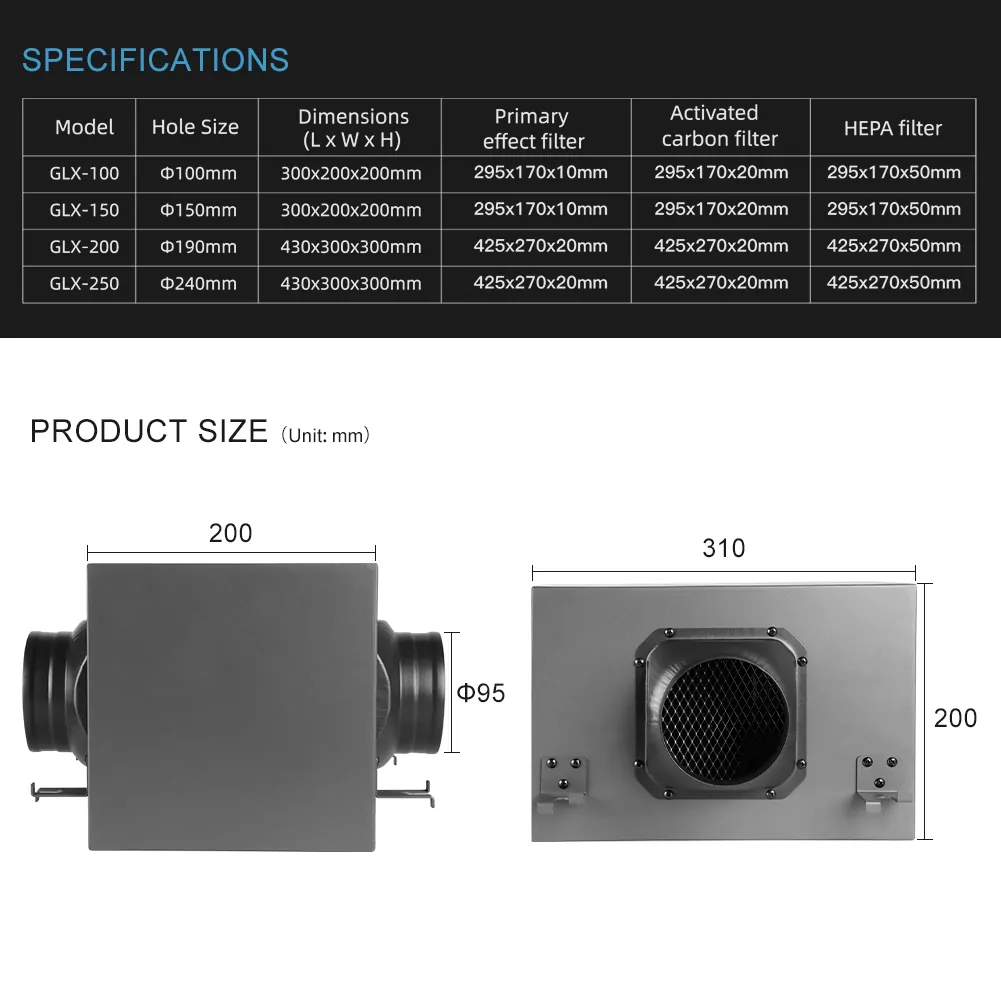
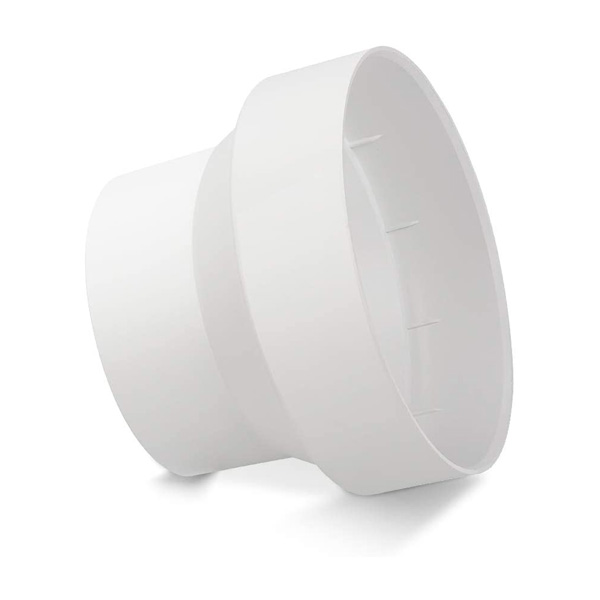
Adapte el conducto y el caudal de aire. La boca de conexión de la caja de filtración debe coincidir con el tamaño de su conducto (p. ej., 100 mm, 125 mm, 150 mm, 200 mm) y con el caudal de aire del ventilador. Una caja de filtración dimensionada para un caudal inferior al de su ventilador generará una resistencia excesiva.
Compruebe la caída de presión. Cada etapa de filtración añade presión estática. Utilice los datos de pérdida de carga del filtro a su caudal de trabajo y seleccione un ventilador con suficiente capacidad de presión.
Elija las etapas de filtración que necesita. Solo partículas → prefiltro + HEPA. Partículas + olores → añada la etapa de carbón. No pague por etapas que no necesita.
Compruebe la estanqueidad. Una caja de filtración solo es eficaz si el filtro queda sellado en su interior. Busque un marco o junta adecuados que eviten las fugas de derivación (bypass).
Confirme el acceso para el mantenimiento. La caja debe abrirse fácilmente para los cambios de filtro: un filtro al que no se puede acceder es un filtro que nunca se sustituye.
Verifique con la ficha técnica del producto. Utilice únicamente especificaciones verificadas (caudal de aire, clase de filtro, pérdida de carga, dimensiones) de los datos técnicos vigentes del producto.
Lista de comprobación para la selección de la caja de filtración
[ ] El tamaño del conducto y la conexión coinciden con el ventilador y la red de conductos.
[ ] El caudal de aire a la presión estática de trabajo es suficiente para el espacio.
[ ] Las etapas de filtración cubren los contaminantes reales (partículas, olores o ambos).
[ ] El material filtrante y los recambios están disponibles y son asequibles.
[ ] La carcasa sella correctamente y permite un fácil acceso para el mantenimiento.
[ ] La pérdida de carga a su caudal de aire está dentro de la capacidad del ventilador.
Mantenimiento de la caja de filtración
Una caja de filtración solo rinde a su nivel nominal si los filtros se sustituyen a tiempo:
Prefiltro: inspeccionar mensualmente; sustituir cuando esté visiblemente colmatado (habitualmente de 1 a 3 meses, más tiempo en entornos limpios).
Filtro HEPA/alta eficacia: sustituir según las indicaciones del fabricante (habitualmente de 6 a 12 meses). Nunca lave un filtro HEPA.
Carbón activado: reemplazar cuando se detecte el paso de olores (habitualmente de 6 a 12 meses). El lavado no restaura la adsorción.
Carcasa y sellado: inspeccionar la junta y el marco anualmente; un sellado desgastado permite el bypass.
Registrar las fechas de mantenimiento en un registro para que pueda observar el patrón de reemplazo real para su entorno.
P: ¿Mejora una caja de filtración la calidad del aire interior? R: Una caja de filtración elimina partículas (y, con una etapa de carbón, ciertos gases y olores) del aire que pasa a través de ella. Es solo una parte de la calidad del aire interior: la ventilación, el control de fuentes y el control de humedad también son fundamentales.
P: ¿Cuál es la diferencia entre una caja de filtración y un purificador de aire? R: Una caja de filtración es un componente de un sistema de HVAC o ventilación, instalado en el conducto o toma de aire para limpiar el aire a medida que fluye. Un purificador de aire es un dispositivo independiente que recircula y limpia el aire de la estancia. Muchos edificios utilizan ambos.
P: ¿Necesito un filtro HEPA o un filtro de carbón activado? R: Depende de los contaminantes. El filtro HEPA elimina partículas; el de carbón elimina gases y olores. Si tiene ambos problemas (por ejemplo, polvo más olores de cocina o plantas), utilice ambos en una caja de filtración multietapa.
P: ¿Con qué frecuencia debo cambiar el filtro de una caja de filtración? R: Los prefiltros generalmente cada 1–3 meses, los filtros finos/HEPA cada 6–12 meses y el carbón cuando se perciban olores. El intervalo adecuado depende del entorno; inspecciónelos y siga las instrucciones del fabricante.
P: ¿Puede una caja de filtración sustituir a la ventilación? R: No. Una caja de filtración limpia el aire que pasa a través de ella; no suministra aire exterior fresco ni extrae el aire viciado. La ventilación y la filtración son complementarias, no sustitutas.
P: ¿Protege una caja de filtración los equipos de HVAC? R: Sí. Al capturar polvo y residuos antes de que lleguen a los serpentines, ventiladores e intercambiadores de calor, la filtración reduce la suciedad en las baterías, mantiene la transferencia de calor y prolonga la vida útil del equipo.
Inline Duct Fan — el complemento de caudal de aire para una caja de filtración por conductos
¿Necesita una caja de filtración para su proyecto de HVAC o ventilación? KCvents fabrica cajas de filtración, ventiladores de conducto y sistemas de aire fresco para compradores mayoristas, OEM y de marca propia. Solicitar presupuesto con su caudal de aire, tamaño de conducto y requisitos de filtración.
Actualizaciones del boletín
Introduce tu dirección de correo electrónico para suscribirte a nuestro boletín