Nous utilisons des cookies pour nous assurer que nous vous offrons la meilleure expérience possible sur notre site.
Restez informé avec KCVENTS Solutions de ventilation et CVC
Abonnez-vous à notre newsletter pour recevoir les dernières analyses en ingénierie aéraulique, les mises à jour sur les systèmes ERV/HRV écoénergétiques et les solutions CVC écologiques.
Soyez les premiers à recevoir des guides techniques exclusifs, à découvrir nos capacités OEM/ODM sur mesure et les actualités des salons mondiaux directement de KCVENTS.
A commercial heat recovery ventilator (HRV) is one of the most cost-effective ways to reduce HVAC energy consumption in cold-climate commercial buildings. By capturing up to 85% of the sensible heat from exhaust air before it leaves the building and transferring it to incoming fresh air, a commercial HRV dramatically reduces the energy required to heat outdoor air to indoor comfort levels—cutting heating costs by 40–60% while maintaining code-required ventilation rates.
This guide covers how commercial heat recovery ventilators work, the key differences between HRV and ERV technology, selection criteria, sizing methodology, and what to look for when specifying an HRV for your commercial project.
What Is a Commercial Heat Recovery Ventilator?
A commercial heat recovery ventilator is an air-to-air heat exchanger specifically designed for larger buildings (typically 200–10,000+ CFM capacity) that transfers sensible heat (temperature) between exhaust and outdoor air streams without transferring moisture. Unlike an energy recovery ventilator (ERV) which transfers both heat and humidity, a commercial HRV is a sensible-only device—it recovers thermal energy but does not transfer latent energy (water vapor).
This distinction is critical: a commercial heat recovery ventilator is the right choice for cold, dry climates where humidity control isn’t the primary HVAC challenge, and where the risk of core frosting from moisture condensation can be managed through defrost strategies.
How It Works
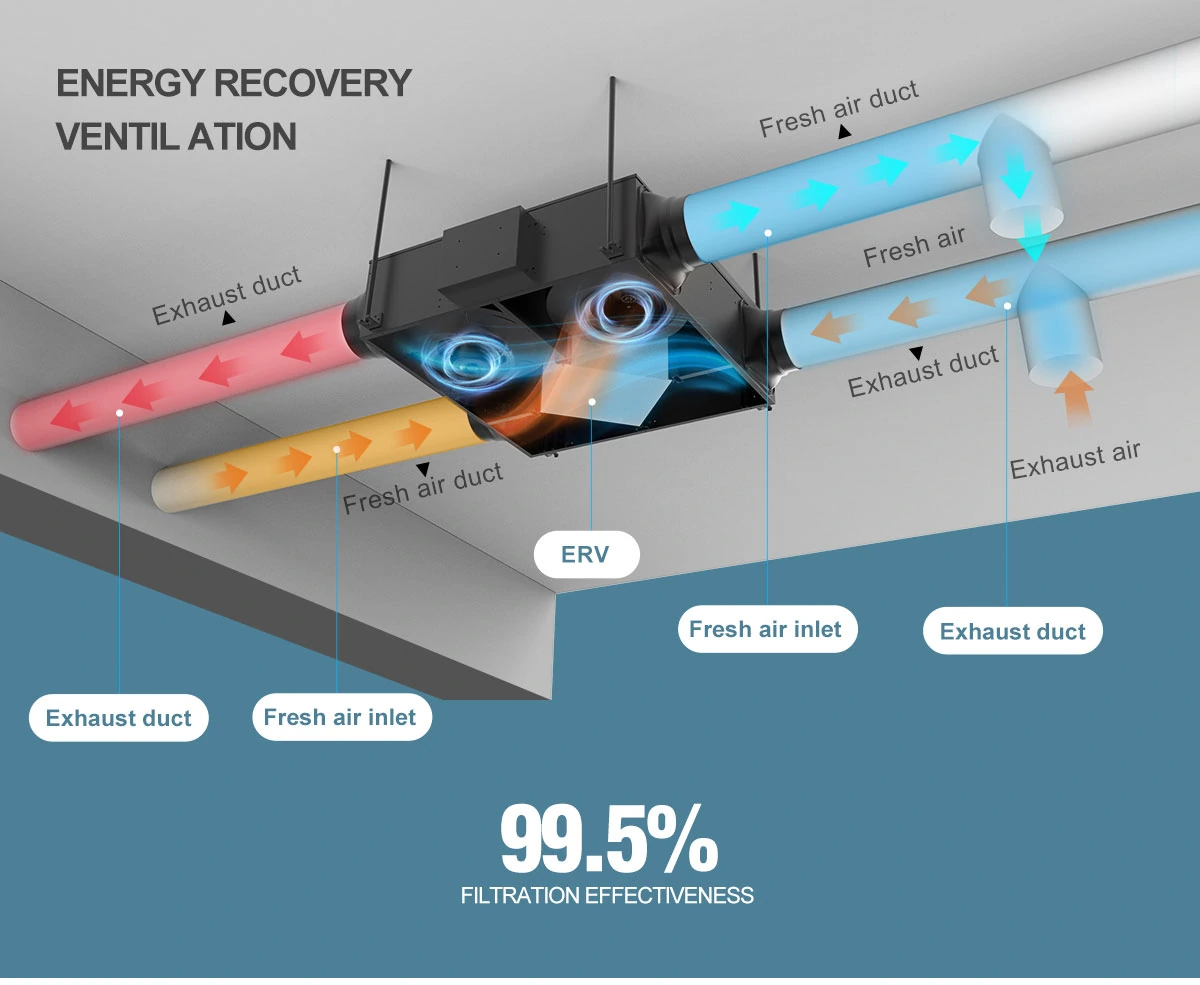
A commercial HRV typically uses a fixed-plate or rotary heat exchanger core. Exhaust air (warm, stale indoor air) and outdoor air (cold, fresh air) pass through alternating channels in the core. The two air streams never mix—they are separated by thin, thermally conductive plates or a rotating wheel matrix.
Winter mode: Warm exhaust air at 72°F transfers heat through the core to cold outdoor air at 10°F. The outdoor air is pre-heated to approximately 55–62°F before reaching the heating coil, reducing the heating load by 60–80%.
Summer mode: Cool exhaust air at 75°F pre-cools hot outdoor air at 95°F to approximately 80°F, reducing cooling load—though with less benefit than in winter since the temperature differential is smaller.
HRV vs ERV: When to Choose Which
The commercial heat recovery ventilator vs energy recovery ventilator decision is primarily climate-driven:
Feature
Commercial HRV
Commercial ERV
Energy transfer
Sensible only (temperature)
Sensible + latent (temperature + moisture)
Climat idéal
Cold, dry (Zones 5–8)
Humid, mixed (Zones 1A–4A)
Avantage en été
Pre-cools (sensible only)
Pre-cools + dehumidifies
Avantage en hiver
Pre-heats
Pre-heats + recovers humidity
Frost risk
Higher (no latent transfer)
Lower (moisture transfer reduces condensation)
Core technology
Aluminum plates, plastic plates, rotary wheel
Enthalpy wheel, membrane plates
Typical cost
Lower (10–20% less than ERV)
Higher
Efficiency
65–85% sensible
60–80% total
Choose a commercial HRV when:
Building is in Climate Zones 5–8 (cold/very cold with dry winters)
Humidity control is not a primary concern (dry climate, or separate dehumidification)
You need a lower-cost, simpler system with fewer maintenance points
Application has low internal latent loads (offices, warehouses, retail)
Choose a commercial ERV when:
Building is in Climate Zones 1A–4A (hot-humid or mixed-humid)
Humidity control is critical (hospitals, labs, museums, data centers)
Summer air conditioning load dominates annual energy costs
You need the highest possible year-round energy recovery
Types of Commercial Heat Recovery Ventilators
Fixed-Plate HRVs
The most common commercial heat recovery ventilator technology uses a cross-flow or counter-flow plate exchanger:
Cross-flow plates: Exhaust and outdoor air pass perpendicular to each other through alternating channels separated by thin aluminum or plastic plates. Effectiveness: 55–70%.
Counter-flow plates: Air streams flow in opposite directions through longer channels, maximizing the temperature difference across the entire plate surface. Effectiveness: 75–85%—the highest among non-rotary technologies.
Feature
Cross-Flow
Counter-Flow
Sensible effectiveness
55–70%
75–85%
Pressure drop
0.3–0.5 in. w.g.
0.4–0.7 in. w.g.
Physical size
Compact
Larger (longer air path)
Frost resistance
Moderate
Better (counter-flow geometry)
Rotary Heat Wheel HRVs
A rotating aluminum wheel alternately passes through exhaust and outdoor air streams, absorbing heat from the warmer stream and releasing it to the cooler stream.
Sensible effectiveness: 70–80%
Compact design relative to airflow capacity
Variable speed control for frost prevention
Small amount of cross-leakage (1–3%) between air streams
Rotary wheel commercial HRVs without desiccant coating are sensible-only devices—the aluminum matrix transfers heat but not moisture. This distinguishes them from enthalpy wheels (ERVs) which include desiccant for moisture transfer.
Heat Pipe HRVs
Heat pipes use a passive refrigerant cycle: warm exhaust air evaporates refrigerant in one coil section, refrigerant vapor travels to the cold outdoor air section, condenses releasing heat, and liquid refrigerant returns by gravity.
Sensible effectiveness: 45–65%
Zero moving parts in the heat transfer circuit
Zero cross-contamination between air streams
Very low maintenance
Larger footprint for given capacity
Heat pipe commercial HRVs excel in retrofit applications where existing ducts must remain separated and zero cross-contamination is required—laboratory exhaust, hospital isolation rooms, and industrial process ventilation.
Sizing a Commercial HRV
Step 1: Determine Outdoor Air Requirement
Calculate minimum outdoor air per ASHRAE 62.1:
Vbz = Rp × Pz + Ra × Az
For a 50,000 ft² office building with 250 occupants:
In cold climates, exhaust air moisture can freeze on the cold HRV core surfaces. Determine whether your commercial heat recovery ventilator needs active frost control:
If the exhaust air temperature downstream of the core drops below 32°F at design conditions, frost formation is likely
Fixed-plate HRVs in Climate Zones 6–8 typically require either recirculation defrost, exhaust-only defrost, or electric pre-heat
Frost Control Strategies for Cold Climates
Frost management is the most critical operational consideration for commercial heat recovery ventilators in cold climates:
Recirculation Defrost
The outdoor air intake damper closes and supply air is temporarily recirculated from the space. Warm return air passes through the cold side of the core, melting accumulated frost.
Avantages: Simple, low cost, effective
Inconvénients: No fresh air during defrost cycle (typically 5–10 minutes), slight negative pressure during defrost
Exhaust-Only Defrost
The supply fan slows or stops while the exhaust fan continues operating. Warm exhaust air flowing through the core melts frost without introducing cold outdoor air.
Avantages: More effective than recirculation, no negative pressure
Inconvénients: Supply air interruption, requires sophisticated fan control
Electric Pre-Heat
An electric resistance coil pre-heats incoming outdoor air to above freezing before it enters the HRV core, preventing frost formation entirely.
Avantages: Continuous operation, no defrost interruptions
Inconvénients: Additional energy consumption, higher operating cost
When to use: Extreme cold climates (Zone 7–8) where passive defrost strategies are insufficient
Frost Control Selection Guide
Climate Zone
Design Temperature
Recommended Strategy
Zone 5 (cold)
5°F to 20°F
Recirculation defrost or variable wheel speed
Zone 6 (cold)
-5°F to 5°F
Exhaust-only defrost or recirculation
Zone 7 (very cold)
-15°F to -5°F
Electric pre-heat + recirculation
Zone 8 (subarctic)
Below -15°F
Electric pre-heat + exhaust-only defrost
Commercial HRV Applications by Building Type
Office Buildings (Cold Climates)
A 100,000 ft² office building in Minneapolis (Zone 6) requires approximately 8,500 CFM of outdoor air per ASHRAE 62.1. A commercial heat recovery ventilator with 75% sensible effectiveness:
Reduces peak heating load by 650 MBH
Saves approximately 12,000 therms of natural gas annually
3–4 year simple payback from heating savings
Payback improves to 2–3 years when including HVAC equipment downsizing
Schools and Universities
Schools combine high ventilation requirements (15 CFM/person) with intermittent occupancy. A commercial heat recovery ventilator with demand-controlled ventilation modulates outdoor air based on CO₂ levels, maximizing savings during low-occupancy periods. ASHRAE’s Advanced Energy Design Guides recommend HRVs for K-12 schools in Climate Zones 5–8.
Multi-Family Residential
Mid-rise and high-rise apartment buildings in cold climates are excellent HRV candidates. Centralized commercial HRVs serving multiple dwelling units simplify maintenance while providing continuous fresh air per ASHRAE 62.2 ventilation requirements. Per-unit costs are typically lower than individual HRV system installations.
Industrial Facilities
Manufacturing plants, warehouses, and distribution centers with high exhaust rates (spray booths, welding exhaust, process ventilation) benefit from commercial HRVs when the exhaust air is clean enough for heat recovery. Run-around coil HRVs are preferred for dirty or contaminated exhaust streams because they maintain complete air separation.
Installation and Integration
Duct Configuration
A commercial heat recovery ventilator requires four duct connections, identical to an ERV:
Outdoor air intake: Minimum 10 ft from exhaust discharge, away from loading docks
Supply air to building: Pre-heated fresh air delivered to AHU or directly to zones
Return air from building: Drawn from occupied spaces
Exhaust air discharge: Minimum 10 ft from intake, away from operable windows
Integration with Existing HVAC
Commercial HRVs can integrate with HVAC systems in multiple configurations:
Dedicated Outdoor Air System (DOAS): HRV handles 100% of ventilation air, primary system handles space conditioning only. Preferred for new construction and major retrofits.
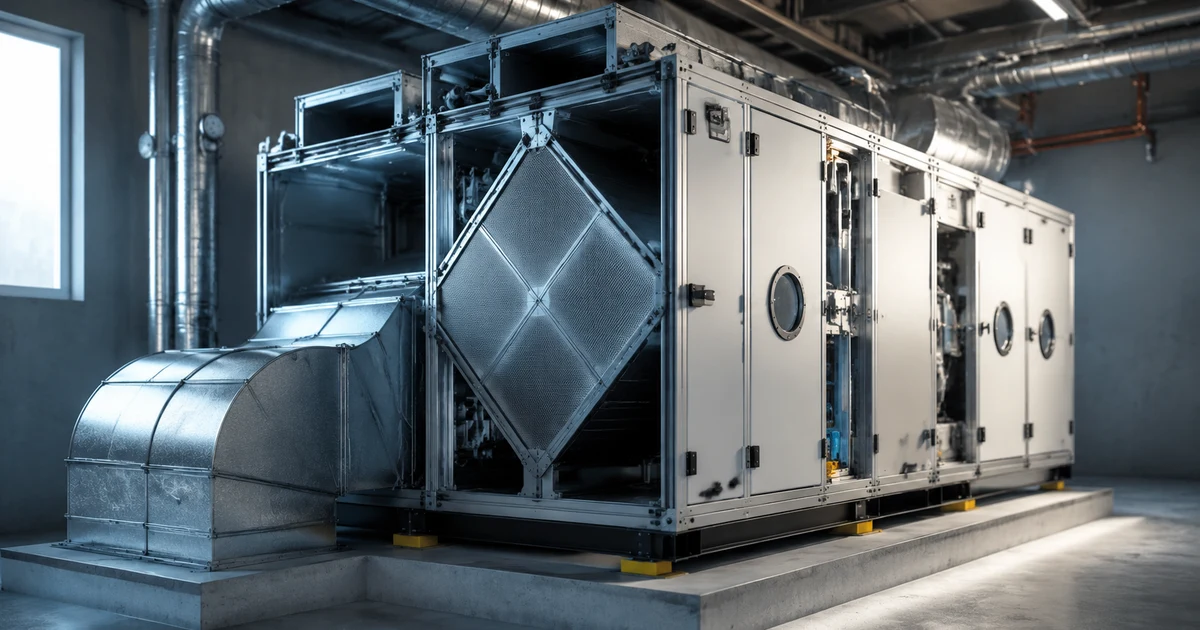
Integrated within Air Handling Unit: HRV core built into the AHU, sharing cabinet and fans. Lower first cost but more complex controls.
Stand-Alone with Duct Injection: HRV delivers pre-conditioned air directly into the return air plenum of existing AHUs. Simplest retrofit configuration.
Controls Integration
Interlock: HRV supply and exhaust fans must interlock with the building’s occupancy schedule
Temperature monitoring: Inlet and outlet temperature sensors for verifying HRV effectiveness
Frost control: Automatic activation of defrost sequence based on exhaust air temperature downstream of core
BAS integration: BACnet or Modbus for remote monitoring, alarming, and energy tracking
Maintenance Requirements
Monthly
Inspect air filters—replace if visibly dirty
Verify drain pan and condensate lines are clear
Check for unusual noise or vibration
Quarterly
Clean or replace filters (MERV 8 minimum, MERV 13 recommended)
Inspect HRV core for debris or frost damage
Verify defrost cycle operation (cold climates)
Check fan belt tension
Annually
Deep clean HRV core per manufacturer instructions (compressed air or mild detergent)
Inspect core for plate delamination or wheel seal wear
Lubricate fan and motor bearings
Verify all sensors are calibrated
Test all safety interlocks and controls
Professional fan performance verification (airflow, static pressure)
Total Cost of Ownership Analysis
Understanding the full financial picture of a commercial heat recovery ventilator investment requires analyzing all costs over the equipment’s 15-20 year lifespan.
First Cost Breakdown
For a 5,000 CFM commercial HRV installation (Minneapolis office building):
Cost Component
Fixed-Plate HRV
Rotary Wheel HRV
HRV equipment
8,000
2,000
Installation (duct, electrical, controls)
2,000
4,000
Roof curb and structural
,000
,000
Commissioning and balancing
,500
,500
Total installed cost
5,500
1,500
Annual Operating Costs
Cost Component
Annual Amount
Fan energy (supply + exhaust, 4,000 hrs/yr at /usr/bin/sh.12/kWh)
,150
Defrost energy (electric pre-heat, ~200 hrs/yr)
80
Filter replacements (quarterly, MERV 13)
00
Routine maintenance labor
00
Total annual operating cost
,030
Annual Energy Savings
Savings Source
Annual Amount
Natural gas heating reduction (12,000 therms saved at .20/therm)
Even under conservative assumptions, a commercial heat recovery ventilator pays back within its expected service life, making it a sound investment for virtually any cold-climate commercial building.
Compliance and Standards
ASHRAE Standards
ASHRAE 62.1: Ventilation for Acceptable Indoor Air Quality. Defines minimum outdoor air rates that drive HRV sizing. Energy recovery is mandatory for many systems exceeding 30% outdoor air.
ASHRAE 90.1: Energy Standard for Buildings. Sets minimum 50% sensible effectiveness for energy recovery systems and mandates HRVs in many commercial applications.
ASHRAE 84: Method of Testing Air-to-Air Heat Exchangers. Defines the standardized test procedure for measuring HRV sensible effectiveness.
AHRI 1060 Certification
AHRI Standard 1060 certifies commercial HRV performance, including:
Sensible effectiveness at rated airflow
Static pressure drop
Exhaust air transfer ratio (cross-leakage)
Fan power consumption
Always specify AHRI 1060 certified equipment—non-certified performance claims are unreliable.
HVI Certification
The Home Ventilating Institute (HVI) certifies smaller commercial and residential HRV units. HVI certification verifies:
Airflow (CFM) at specified static pressure
Sensible recovery efficiency (SRE)
Sound levels
Building Codes
IECC (International Energy Conservation Code): References ASHRAE 90.1 energy recovery requirements
IMC (International Mechanical Code): Ventilation requirements that drive HRV sizing
Local energy codes: Many jurisdictions (California Title 24, New York City Energy Code) have requirements exceeding ASHRAE 90.1
Real-World Case Study: School Retrofit
Project: 80,000 sq ft middle school in St. Paul, MN (Climate Zone 6)
Problème: The existing ventilation system brought in 100% unconditioned outdoor air. Heating costs were 8,000/year for ventilation alone. Indoor air quality was poor in winter as operators reduced outdoor air intake to control heating costs—violating ASHRAE 62.1 minimum ventilation requirements.
Pre-heat frost control added ,200 to project cost but eliminated defrost downtime during the coldest weeks
CO₂ DCV reduced operating hours by approximately 30% compared to constant-volume operation
MERV 13 filters were upgraded from MERV 8 after six months due to noticeable dust accumulation on the HRV core—the 00/year additional filter cost was justified by reduced maintenance frequency
Optimizing HRV Performance Over Time
Installing a commercial heat recovery ventilator is only the first step. Optimizing its operation over the building’s life ensures you capture the full savings potential:
Performance Monitoring
Track these metrics to verify your commercial HRV is performing to specification:
Temperature effectiveness: Measure outdoor air, supply air (post-HRV), return air, and exhaust air temperatures. Calculate: (T_supply – T_outdoor) / (T_return – T_outdoor). If this drops below 90% of the rated effectiveness, investigate core fouling, bypass damper leakage, or airflow imbalance.
Airflow balance: Supply and exhaust CFM should be within 10% of each other. Imbalance creates building pressure problems that increase infiltration and reduce energy savings.
Filter pressure drop: Track the pressure drop across filters and replace when it exceeds manufacturer recommendations (typically 0.5 in. w.g. above clean-filter reading).
Seasonal Optimization
Adjust HRV operation seasonally for maximum benefit:
Winter: Maximize HRV airflow for heating energy recovery. Activate frost control strategy. Monitor exhaust temperature downstream of the core to verify frost control effectiveness.
Summer: In mild summer conditions with cool nights, use the economizer bypass (if equipped) to bring in cool outdoor air without passing through the HRV core, saving fan energy. Consider night flushing strategies that use the HRV fans to pre-cool the building thermal mass.
Shoulder seasons: Disable HRV heat recovery when outdoor air temperature is within 5°F of indoor setpoint—the fan energy to push air through the core may exceed the minimal heat recovery benefit. Run the economizer bypass for free cooling instead.
Common Performance Issues and Solutions
Problème
Cause
Solution
Declining effectiveness over time
Core fouling
Clean core per maintenance schedule
Excessive fan energy
Clogged filters, incorrect belt tension
Replace filters, adjust belts
Occupant draft complaints
Supply air temperature too low
Increase defrost setpoint or add duct heater downstream
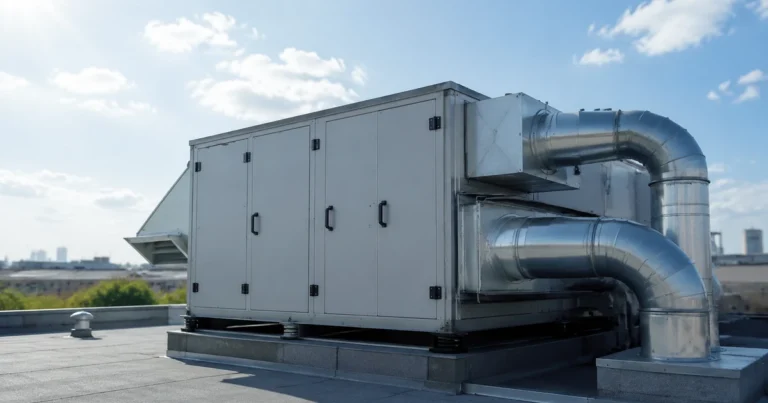
For ventilation system projects requiring récupérateur de chaleur integration, commercial HRVs are typically selected as packaged units with integrated fans, filters, and controls. For custom air handling units, HRV cores can be specified as components within the AHU cabinet.
Conclusion
A commercial heat recovery ventilator is the most cost-effective ventilation energy-saving technology for buildings in cold climates. By recovering 65–85% of exhaust heat before it leaves the building, a commercial HRV can reduce heating costs by 40–60%, downsize HVAC equipment, and maintain code-required ventilation rates without an energy penalty.
The key decisions are straightforward: select a commercial HRV (rather than ERV) for cold, dry climates; choose fixed-plate counter-flow for highest efficiency with zero cross-contamination, or rotary wheel for compact high-capacity applications; plan for frost control in Climate Zones 5+; and size the HRV for dedicated outdoor air duty—never total supply air.
With proper sizing, installation, and maintenance, a commercial heat recovery ventilator provides 15–20 years of reliable service while paying for itself through energy savings within 3–5 years—making it one of the highest-ROI HVAC investments available to commercial building owners in cold climates.
*Last updated: June 2026. Performance data based on AHRI 1060 certified ratings. Frost control recommendations reflect ASHRAE HVAC Systems and Equipment Handbook guidance for cold-climate HRV operation.*
References
Home Ventilating Institute (HVI) — certified performance ratings for heat recovery ventilators and residential/commercial ventilation products.