Nous utilisons des cookies pour nous assurer que nous vous offrons la meilleure expérience possible sur notre site.
Restez informé avec KCVENTS Solutions de ventilation et CVC
Abonnez-vous à notre newsletter pour recevoir les dernières analyses en ingénierie aéraulique, les mises à jour sur les systèmes ERV/HRV écoénergétiques et les solutions CVC écologiques.
Soyez les premiers à recevoir des guides techniques exclusifs, à découvrir nos capacités OEM/ODM sur mesure et les actualités des salons mondiaux directement de KCVENTS.
Un purificateur d'air HEPA est-il efficace ? Ce qu'il peut et ne peut pas faire
Ce qu'un purificateur d'air HEPA filtre réellement, ses applications, ses limites et en quoi il diffère de la ventilation.
Un purificateur d'air HEPA est-il efficace ? Ce qu'il peut et ne peut pas faire
Un purificateur d'air HEPA contribue à la filtration des particules : il capture les particules en suspension dans l'air telles que la poussière, le pollen, les squames d'animaux et les PM2,5, et peut les réduire considérablement dans une pièce. Toutefois, un purificateur HEPA n'apporte pas d'air neuf, n'élimine pas les gaz ni les odeurs (à moins de disposer d'un étage au charbon actif), et ne constitue ni un traitement médical ni une garantie contre les maladies. Ce guide explique le rôle exact d'un purificateur HEPA, ses domaines d'efficacité et les cas où la ventilation reste indispensable.
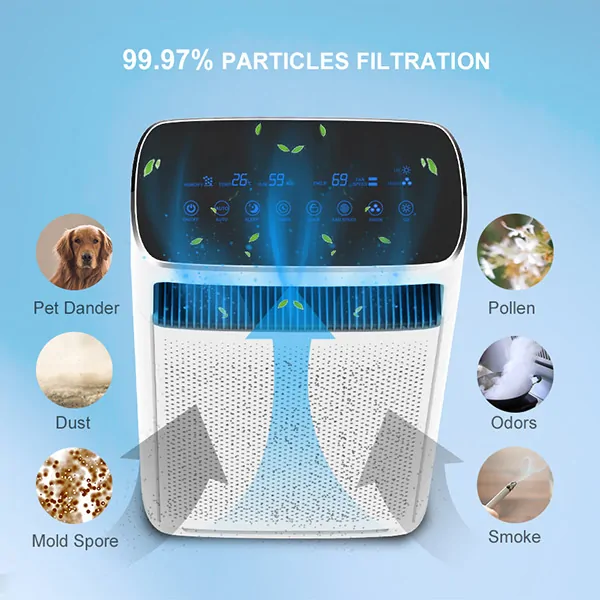
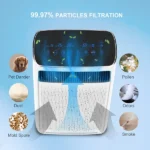
HEPA (High-Efficiency Particulate Air) est une norme désignant un média filtrant mécanique qui capture les particules par interception, impact et diffusion — et non par charge électrostatique ou action chimique. Un véritable filtre HEPA est certifié pour capturer 99.97% des particules à la taille la plus pénétrante (0,3 micron) et élimine efficacement :
La poussière et les acariens
Le pollen
Les squames d'animaux
Les spores de moisissure (déjà en suspension dans l'air)
Les PM2,5 et les particules fines de fumée/suie
Certains aérosols porteurs de virus (en tant que particules ; voir limites ci-dessous)
Un filtre HEPA capture les particules. C'est là son unique rôle. Il ne capture pas lui-même les gaz, les vapeurs ou les odeurs.
Où un purificateur HEPA s'avère efficace
Un purificateur d'air HEPA est particulièrement utile lorsque la problématique concerne les particules en suspension dans un espace déjà clos :
Saison des allergies — pollen et poussière à l'intérieur.
Présence d'animaux domestiques — squames.
Épisodes de fumée ou de brume de pollution — infiltration de particules fines venant de l'extérieur.
Locaux occupés par des personnes sensibles aux particules aéroportées.
Complément à la ventilation lors des pics de pollution.
Pour qu'un purificateur traite efficacement l'ensemble d'une pièce, son débit d'air purifié (CADR) doit être adapté au volume du local, et il doit fonctionner en continu — un appareil sous-dimensionné fonctionnant ponctuellement n'aura que peu d'effet.
Ce qu'un purificateur HEPA ne peut pas faire
Précision sur les limites de fonctionnement :
Il n'introduit pas d'air neuf. Un purificateur recycle et filtre l'air déjà présent dans la pièce. Il ne réduit pas le taux de CO₂ et ne renouvelle pas l'air vicié.
Il n'élimine pas les gaz ni les odeurs (à moins qu'il n'intègre un étage au charbon actif). Les odeurs de cuisson, les COV et les vapeurs chimiques nécessitent du charbon actif ou une ventilation.
Il ne régule pas l'humidité ni le développement des moisissures. Il peut capturer les spores en suspension, mais n'élimine pas l'humidité responsable du développement des moisissures.
Ce n'est pas un dispositif médical et il ne prévient pas les maladies. La filtration des particules permet de réduire la charge particulaire dans l'air, mais aucun purificateur ne garantit une protection contre les virus ou les pathologies. Évitez toute allégation médicale.
Un purificateur est un outil de filtration des particules, et non une solution de ventilation ou de santé.
Purificateur HEPA vs Ventilation
Besoin
Purificateur HEPA
Ventilation
Élimination des particules (poussière, pollen, PM2,5)
Yes
Partiellement (si l'insufflation est filtrée)
Apport d'air neuf extérieur
No
Yes
Réduction du CO₂
No
Yes
Évacuation de l'humidité
No
Yes
Élimination des gaz et des odeurs
Non (nécessite du charbon actif)
Oui (par dilution/extraction)
En pratique : la plupart des pièces nécessitent les deux. La ventilation (apport d'air neuf, extraction d'air vicié) est la base d'un air sain ; un purificateur HEPA assure une filtration des particules pour l'air déjà présent à l'intérieur. Les jours de forte pollution où il est déconseillé d'ouvrir les fenêtres, l'association d'un purificateur et d'un système de ventilation avec filtration constitue la solution la plus efficace — consultez notre guide de ventilation résidentielle d'air neuf.
Comment choisir un purificateur HEPA
Adaptez le CADR à la superficie de la pièce. En règle générale, recherchez un CADR suffisamment élevé pour renouveler l'air de la pièce plusieurs fois par heure. Les recommandations du fabricant concernant la taille de la pièce constituent un bon point de départ.
Vérifiez le type de filtre. Un filtre True HEPA pour les particules ; ajoutez du charbon actif pour traiter les odeurs et les gaz. Les médias filtrants de type “ HEPA-type ” ou lavables ne sont pas équivalents au True HEPA.
Tenez compte du niveau sonore et du coût d'exploitation. Un purificateur n'est efficace que lorsqu'il fonctionne ; un appareil silencieux et économe en énergie, tournant à la vitesse appropriée, s'avère bien plus utile à l'usage.
Remplacez les filtres selon les intervalles prévus. Un filtre colmaté réduit le débit d'air et les performances — respectez les intervalles préconisés par le fabricant.
Foire aux questions
Q : Un purificateur d'air HEPA est-il réellement efficace ? R : Oui, pour les particules. Un véritable purificateur HEPA doté d'un CADR adapté à la pièce réduira de manière mesurable les particules en suspension dans l'air. En revanche, il ne peut pas remplacer la ventilation ni les filtres à charbon actif.
Q : Un purificateur HEPA peut-il éliminer les odeurs ? R : Utilisé seul, non — le filtre HEPA capture les particules, pas les gaz. Seul un purificateur (ou un filtre) équipé d'un étage de filtration au charbon actif permet d'éliminer les odeurs et les COV.
Q : Un purificateur HEPA est-il efficace contre les allergies ? R : Il contribue à atténuer les allergènes en suspension dans l'air, tels que le pollen, les acariens et les squames d'animaux, en réduisant leur concentration dans l'air intérieur.
Q : Un purificateur d'air protège-t-il de la COVID-19 ou de la grippe ? R : Aucun purificateur ne peut garantir la prévention d'une maladie. La réduction de la charge de particules aéroportées constitue une couche de protection, mais la ventilation, l'hygiène et les mesures sanitaires demeurent les moyens de contrôle essentiels.
Q : Un purificateur HEPA remplace-t-il la ventilation ? R : Non. Un purificateur filtre l'air déjà présent dans la pièce, tandis que la ventilation assure le renouvellement entre l'air intérieur et l'air extérieur. Leurs fonctions sont différentes et ils sont particulièrement performants lorsqu'ils fonctionnent ensemble.
Q : Quelle puissance de purificateur choisir pour une chambre ? R : Adaptez le CADR aux dimensions de la pièce et privilégiez un appareil capable de fonctionner à une vitesse efficace et silencieuse. Consultez les recommandations du fabricant sur la superficie traitée pour les particules.
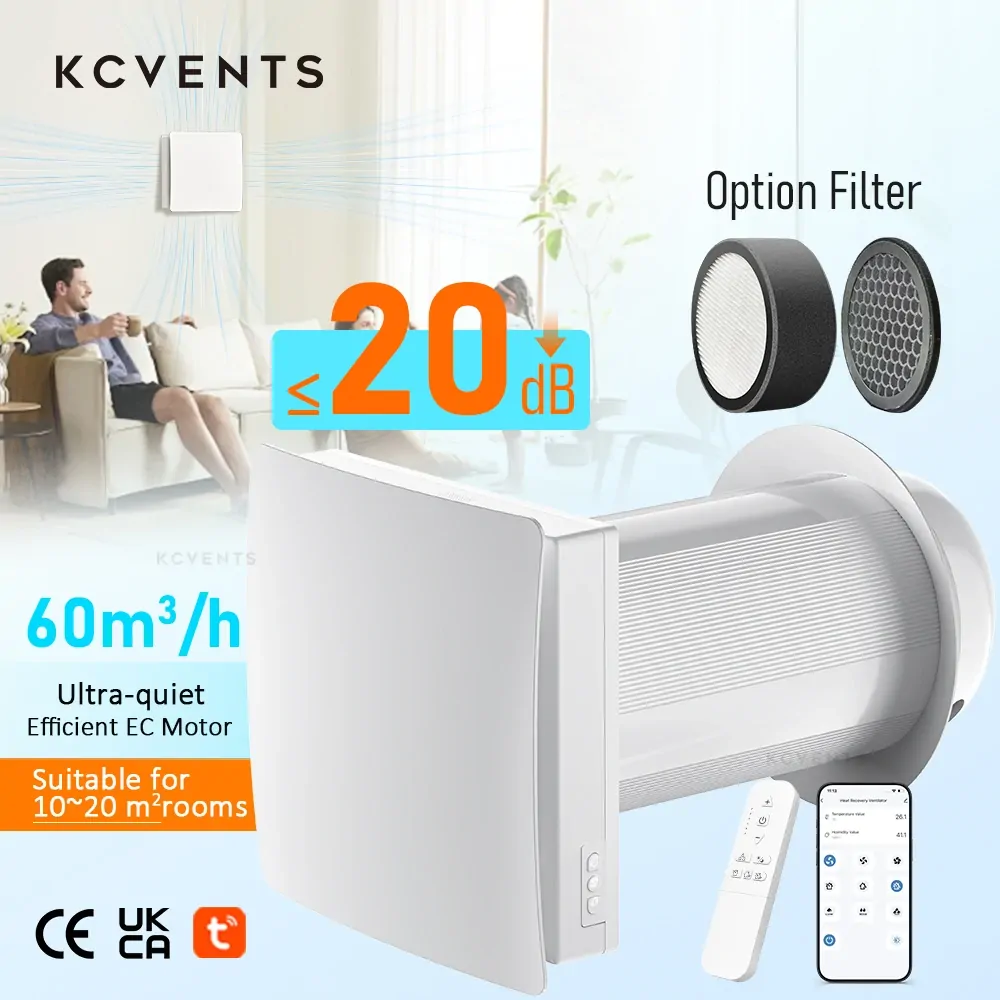
Vous souhaitez purifier l'air de votre espace ? KCvents fabrique des ventilateurs de ventilation muraux HEPA, des unités d'air neuf et des systèmes de ventilation combinant filtration et apport d'air frais pour la vente en gros, les projets OEM et en marque blanche. Request a quote en fonction de la taille de votre pièce et de vos objectifs de qualité de l'air.
Mises à jour de la newsletter
Saisissez votre adresse e-mail ci-dessous et abonnez-vous à notre newsletter