Nous utilisons des cookies pour nous assurer que nous vous offrons la meilleure expérience possible sur notre site.
Restez informé avec KCVENTS Solutions de ventilation et CVC
Abonnez-vous à notre newsletter pour recevoir les dernières analyses en ingénierie aéraulique, les mises à jour sur les systèmes ERV/HRV écoénergétiques et les solutions CVC écologiques.
Soyez les premiers à recevoir des guides techniques exclusifs, à découvrir nos capacités OEM/ODM sur mesure et les actualités des salons mondiaux directement de KCVENTS.
Comment les HRV et les produits de ventilation améliorent la qualité de l'air intérieur
Comment les HRV et les produits de ventilation améliorent la qualité de l'air intérieur en insufflant de l'air neuf, en évacuant l'air vicié et en récupérant la chaleur.
Comment les HRV et les produits de ventilation améliorent la qualité de l'air intérieur
Les ventilateurs récupérateurs de chaleur (HRV) et autres produits de ventilation améliorent la qualité de l'air intérieur en évacuant en continu l'air vicié intérieur et en insufflant de l'air extérieur neuf et filtré, tandis que les HRV récupèrent également la chaleur afin que cet échange ne gaspille pas d'énergie. Ce guide explique précisément comment les HRV et les produits de ventilation agissent, ce qu'ils peuvent et ne peuvent pas faire, et comment choisir l'appareil adapté à votre espace.
Comment les produits de ventilation améliorent la qualité de l'air intérieur
La qualité de l'air intérieur (QAI) diminue lorsque les polluants s'accumulent plus vite que l'air neuf ne les dilue. Selon l'EPA des États-Unis, les Américains passent environ 90 % de leur temps à l'intérieur, et les concentrations de certains polluants intérieurs peuvent être de deux à cinq fois supérieures aux niveaux extérieurs. Source : U.S. EPA, The Inside Story: A Guide to Indoor Air Quality. La raison est simple : sans un apport d'air neuf suffisant, les émissions provenant de la cuisson, du nettoyage, des matériaux de construction et des personnes s'accumulent.
Les produits de ventilation y remédient de quatre manières :
Supply fresh outdoor air — en réduisant la concentration de polluants intérieurs par dilution.
Évacuer l'air vicié et l'humidité — éliminant le CO₂, les odeurs et l'humidité des cuisines, des salles de bains et des pièces occupées.
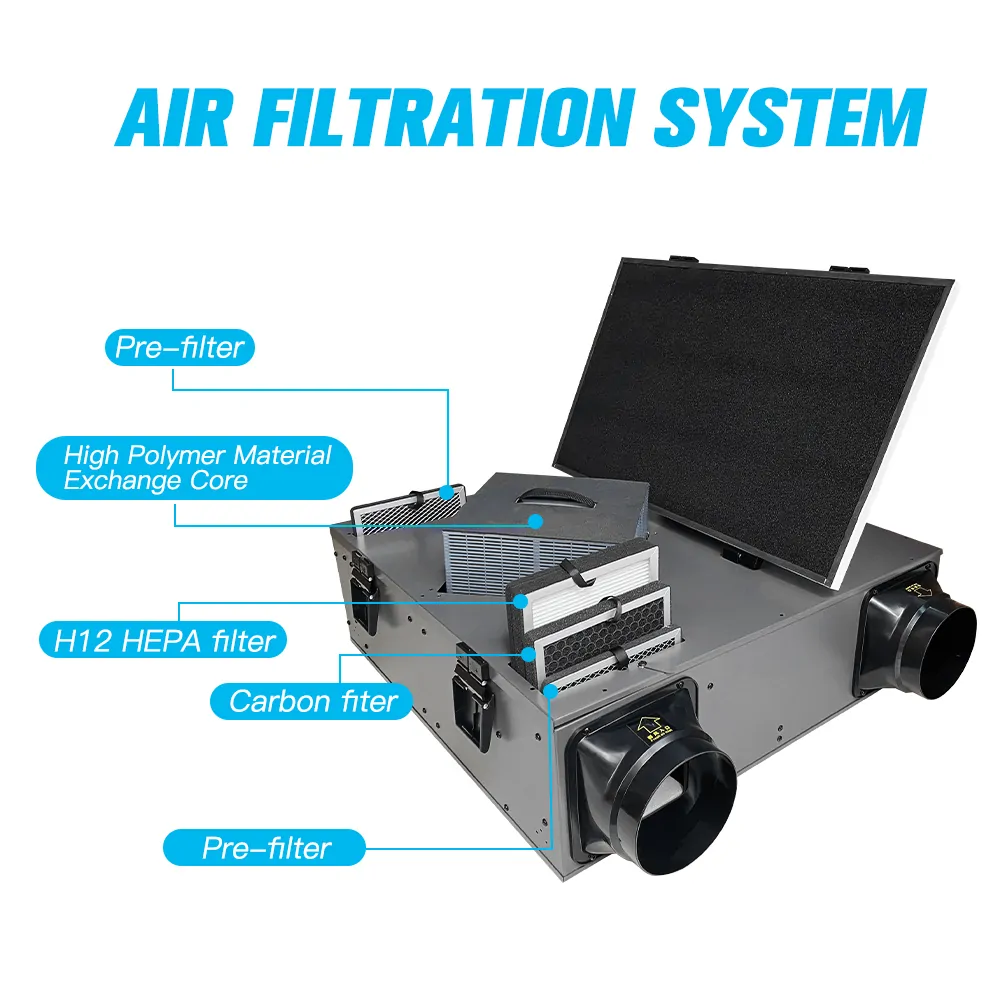
Filter the incoming air — capturant la poussière, le pollen et les PM2.5 avant qu'ils ne pénètrent dans l'espace.
Recover energy (HRV/ERV) — afin que le renouvellement d'air neuf ne fasse pas grimper votre facture de chauffage ou de climatisation.
Le résultat est un espace où les niveaux de polluants restent plus bas, l'humidité demeure maîtrisée et les occupants bénéficient d'un meilleur confort.
Ce qui différencie un HRV
Un ventilateur récupérateur de chaleur (HRV) est une unité de ventilation équilibrée : il insuffle de l'air neuf et extrait l'air vicié à des débits identiques, tout en faisant passer les deux flux d'air à travers un échangeur de chaleur. En hiver, l'air chaud extrait préchauffe l'air froid entrant ; en été, le phénomène s'inverse. Un ERV (ventilateur récupérateur d'énergie) assure également le transfert d'humidité.
HRV: transfère la chaleur. Idéal pour les climats froids et secs.
ERV: transfère la chaleur et l'humidité. Idéal pour les climats chauds et humides, ou pour les bâtiments ayant de fortes charges d'humidité.
Selon le U.S. Department of Energy, après avoir rendu un logement étanche à l'air, une ventilation contrôlée peut être nécessaire pour éviter l'accumulation d'air vicié et de polluants intérieurs — et des échangeurs de chaleur air-air spécifiques, ou ventilateurs récupérateurs de chaleur, permettent d'y répondre. Source : U.S. DOE, Guide to Home Ventilation. C'est exactement le rôle que joue un HRV : de l'air neuf sans pénalité énergétique.
HRV vs purificateur d'air vs ventilateur d'extraction
Feature
HRV/ERV
ventilateur de ventilation
purificateur d'air
Insuffle de l'air extérieur neuf
Yes
Yes (supply)
No
Évacue l'air vicié/l'humidité
Yes
Yes (exhaust)
No
Filters particles
Yes (filtered supply)
Sometimes
Yes
Recovers heat
Yes
No
No
Removes CO₂
Yes (dilutes)
Yes (dilutes)
No
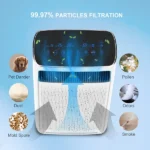
Le point essentiel : un purificateur d'air filtre l'air déjà présent dans la pièce, mais il ne peut pas apporter d'air neuf ni éliminer le CO₂. La ventilation — HRV ou ventilateur — assure quant à elle le renouvellement de l'air. De nombreux logements associent les deux : la ventilation pour le renouvellement d'air, et un purificateur d'air pour une filtration particulaire renforcée.
Q : Un HRV améliore-t-il réellement la qualité de l'air intérieur ? R : Oui — en fournissant en continu de l'air neuf filtré et en évacuant l'air vicié, un HRV réduit les concentrations de polluants et de CO₂. C'est l'une des solutions de ventilation les plus efficaces pour les espaces étanches à l'air.
Q : Un HRV est-il plus efficace que l'ouverture d'une fenêtre ? R : Par temps froid ou chaud, un HRV fournit de l'air neuf tout en récupérant la chaleur, ce qui vous permet de ventiler sans les déperditions énergétiques liées aux fenêtres ouvertes. Il filtre également l'air entrant, ce que les fenêtres ne permettent pas.
Q : Un HRV peut-il éliminer les odeurs ? R : Un HRV évacue l'air vicié (y compris les odeurs) et insuffle de l'air neuf. Pour les sources d'odeurs intenses, un filtre à charbon actif peut être ajouté — consultez notre carbon filter guide.
Q : Un HRV aide-t-il à lutter contre les allergies ? R : En filtrant l'air entrant, un HRV réduit l'intrusion de pollen et de poussières provenant de l'extérieur. Il n'élimine pas les particules déjà présentes dans la pièce, à moins que l'appareil ne filtre également le flux d'air intérieur.
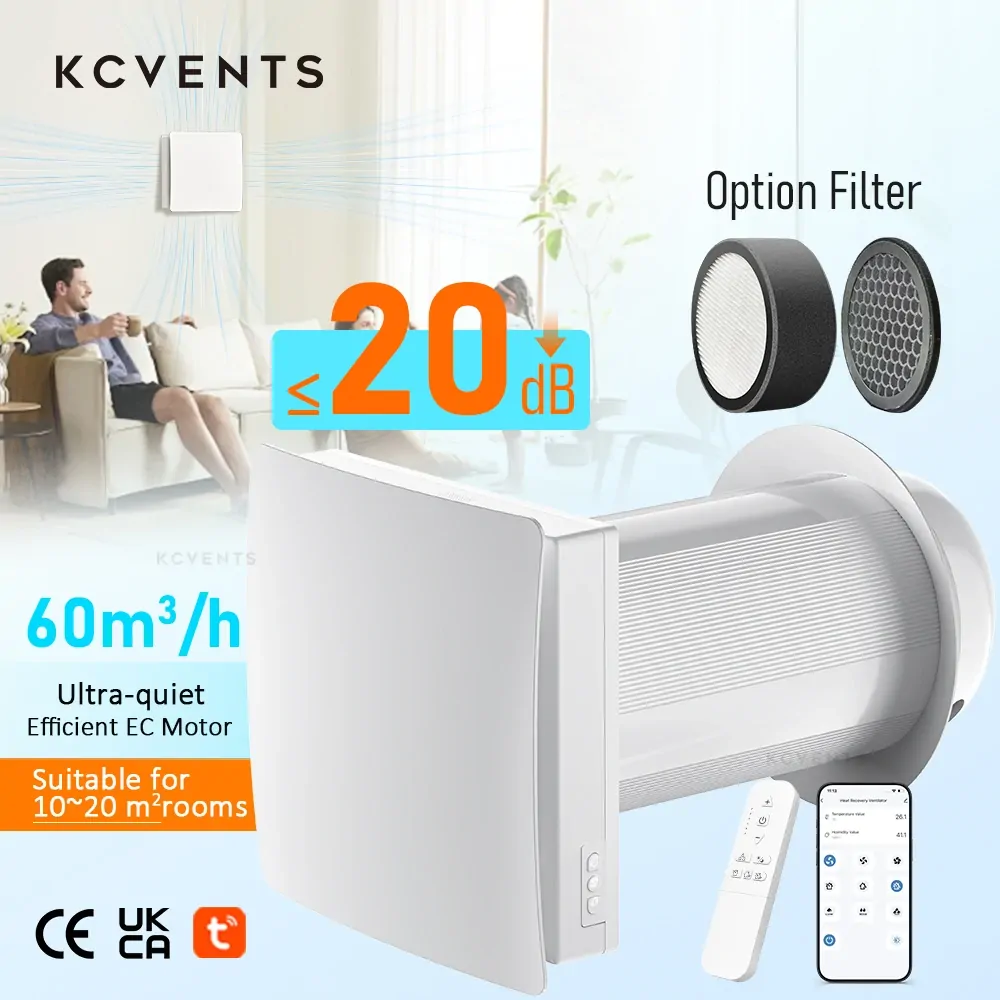
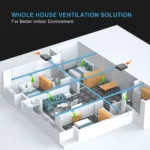
Q : Quelle taille de HRV me faut-il ? R : Dimensionnez le débit d'air en fonction du volume du local et de son occupation. Pour une pièce individuelle, optez pour une unité compacte comme le VT501 ; pour une maison complète, un HRV/ERV de plus grande capacité. Consultez notre guide HRV vs ERV pour obtenir des détails sur la sélection.
Q : Les produits de ventilation empêchent-ils l'apparition de moisissures ? R : Ils éliminent l'humidité responsable des moisissures. Une ventilation continue dans les espaces humides réduit considérablement la condensation et le risque de moisissure — conjointement à la réparation des fuites et à l'élimination des sources d'humidité.
Vous souhaitez améliorer la qualité de l'air intérieur de votre logement ou bâtiment ? KCvents fabrique des unités HRV/ERV pour pièce individuelle et maison entière, des ventilateurs d'extraction et des systèmes d'air neuf pour les projets de vente en gros, OEM et sous marque privée. Request a quote avec la superficie de votre espace et vos exigences de débit d'air.
Mises à jour de la newsletter
Saisissez votre adresse e-mail ci-dessous et abonnez-vous à notre newsletter