We use cookies to ensure that we give you the best experience on our website.
Stay Updated with KCVENTS Ventilation & HVAC Solutions
Subscribe to our newsletter for the latest airflow engineering insights, energy-efficient ERV/HRV system updates, and eco-friendly HVAC solutions.
Be the first to receive exclusive technical guides, custom OEM/ODM capabilities, and global exhibition news directly from KCVENTS.
Filter Box for HVAC Air Filtration: Applications, Selection, and Maintenance
How a filter box works, the three filter stages (pre-filter, HEPA, activated carbon), where it fits in an HVAC or ventilation system, how to select one, and how to maintain it.
Filter box adalah housing penampung filter udara dalam sistem HVAC atau ventilasi, sehingga udara yang melewatinya dibersihkan sebelum mencapai ruangan — atau sebelum mencapai peralatan sensitif. Filter box standar menggabungkan pre-filter, filter halus (seperti HEPA), dan terkadang tahap karbon aktif, sehingga dapat menangani partikel maupun bau. Panduan ini menjelaskan cara kerja filter box, penempatannya dalam sistem, cara memilih, dan cara merawatnya.
Mengapa Filter Box Penting dalam HVAC dan Ventilasi
Fungsi utama filter box adalah menyediakan wadah yang kedap dan berukuran tepat bagi filter di dalam aliran udara. Tanpa housing yang tepat, udara akan bocor di sekitar filter, udara tanpa filtrasi akan melewati (bypass) media, dan filter tidak akan bekerja sesuai kapasitas nominalnya.
According to the U.S. EPA, people spend about 90% of their time indoors, and concentrations of some indoor pollutants can be two to five times higher than outdoor levels. Source: U.S. EPA, The Inside Story: A Guide to Indoor Air Quality. Ventilasi memasok udara luar, namun udara tersebut tetap memerlukan filtrasi sebelum memasuki ruangan berpenghuni — di sinilah filter box dengan media filter yang tepat dibutuhkan.
Filter box menjalankan tiga fungsi dalam sistem HVAC:
Meningkatkan kualitas udara dalam ruangan. Menangkap partikel di udara seperti debu, serbuk sari, dan alergen saat udara bergerak melalui sistem.
Melindungi peralatan. Tanpa filtrasi, debu dan kotoran menumpuk pada koil, kipas, dan penukar panas (heat exchanger), sehingga mengurangi perpindahan panas dan memperpendek masa pakai peralatan.
Menjaga efisiensi sistem. Filter yang bersih dan terpasang dengan tepat mempertahankan aliran udara; filter yang tersumbat atau mengalami bypass meningkatkan hambatan dan menambah konsumsi energi.
Batasan penting: filter box membersihkan udara yang melewatinya. Ini bukanlah pengganti pengendalian sumber polutan atau ventilasi udara luar, serta tidak menghilangkan semua polutan. Filter box harus menjadi bagian dari desain ventilasi yang lengkap, bukan solusi yang berdiri sendiri.
Cara Kerja Filter Box: Tiga Tahap Filtrasi
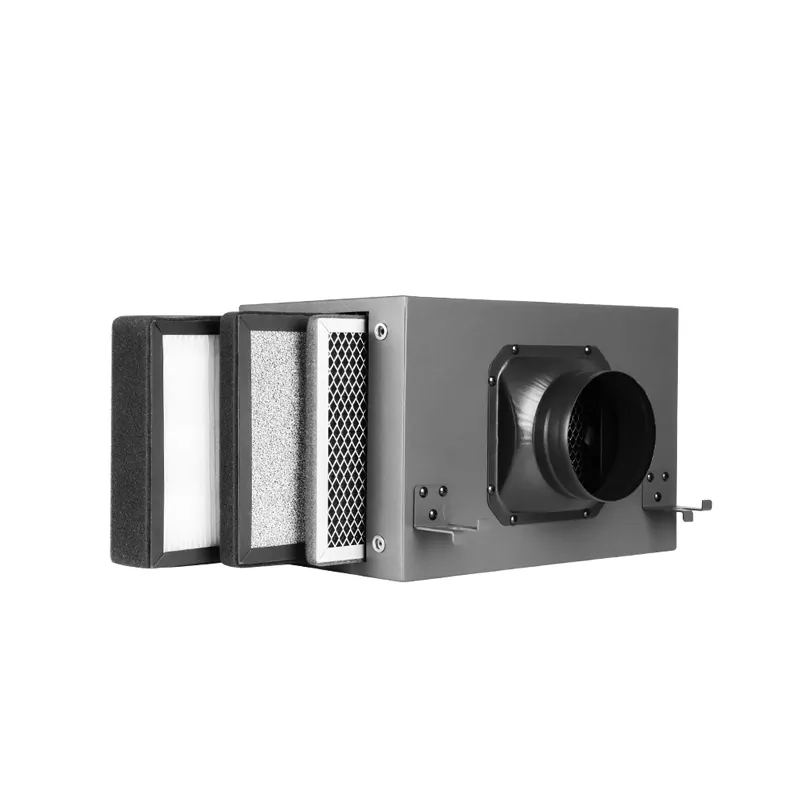
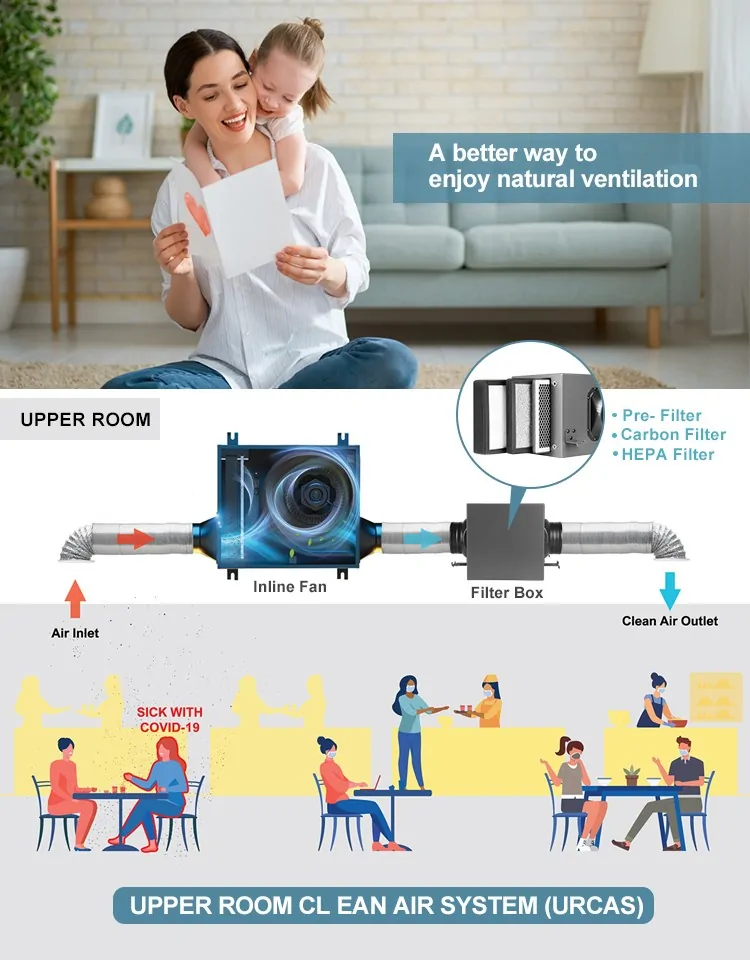
Banyak filter box dibuat sebagai sistem filtrasi 3 lapis, dengan masing-masing tahap menjalankan fungsi yang berbeda:
Tahap
Yang disaring
Media tipikal
Penggantian
Pra-filter
Partikel besar: debu, rambut, serat kain
Media sintetis kasar atau mesh
Setiap 1–3 bulan, atau saat terlihat kotor
Filter halus (HEPA)
Partikel halus: PM2.5, serbuk sari, alergen
HEPA atau media lipit halus
Setiap 6–12 bulan, sesuai anjuran produsen
Karbon aktif
Gas dan bau: VOC, bau masakan dan tanaman
Lapisan karbon aktif (carbon bed)
Setiap 6–12 bulan, saat bau mulai lolos
Pra-filter adalah garis pertahanan pertama. Lapisan ini melindungi tahap yang lebih halus di belakangnya, sehingga media HEPA dan karbon yang bernilai tinggi lebih tahan lama.
Filter HEPA menangkap partikel halus. Perhatikan bahwa HEPA menyaring partikel, bukan gas — lihat perbedaan antara karbon dan HEPA di bawah ini.
Karbon aktif mengadsorpsi gas dan bau. Lapisan ini tidak menyaring partikel, dan tidak dapat dicuci maupun digunakan kembali setelah jenuh.
Karena ketiga tahap ini menjalankan fungsi yang berbeda, filter box yang menyusunnya secara seri memberikan perlindungan yang lebih menyeluruh dibandingkan filter tunggal mana pun.
Karbon Aktif vs HEPA dalam Filter Box
Kesalahpahaman yang sering terjadi adalah mengira “semakin banyak filter semakin baik” tanpa mengetahui fungsi dari masing-masing filter tersebut.
Kemampuan
Karbon aktif
HEPA
Menyaring partikel (debu, PM2.5, serbuk sari)
No
Yes
Menyaring gas dan bau
Ya (banyak VOC dan bau)
No
Mekanisme
Adsorpsi ke permukaan karbon
Intersepsi mekanis
Dapat dicuci dan digunakan kembali
No
Tidak (hanya ganti)
Resistansi aliran udara
Sedang, meningkat seiring kejenuhan
Tinggi, meningkat seiring bertambahnya beban
Untuk sebagian besar ruangan, Anda memerlukan keduanya: pre-filter dan HEPA untuk partikel, ditambah karbon jika terdapat sumber bau atau gas (dapur, hewan peliharaan, grow room, penyimpanan bahan kimia). Filter box 3 lapis menggabungkannya dalam satu housing. Lihat activated carbon filter guide untuk mengetahui cara kerja adsorpsi karbon dan kapan harus mengganti tahap karbon.
Posisi Filter Box dalam Sistem Ventilasi
Filter box dapat dipasang di beberapa posisi, tergantung pada tujuannya:
Pada intake udara segar — menyaring udara luar sebelum masuk ke dalam ruangan; posisi paling umum untuk sistem ventilasi.
Di dalam ducting supply — membersihkan udara tepat sebelum grille supply.
Sebelum peralatan sensitif — melindungi coil, fan, dan heat exchanger dari debu dan kotoran.
Pada jalur exhaust — dengan tahap karbon aktif, menangani bau sebelum udara dibuang (misalnya grow room, dapur).
Aplikasi umum untuk filter box:
Sistem ventilasi udara segar untuk rumah, kantor, dan ruang kelas.
Sistem HVAC di mana pengotoran coil (coil fouling) menjadi perhatian.
Dapur dan area makanan di mana bau memasak memerlukan tahap karbon.
Grow room dan controlled environment agriculture (CEA) di mana partikel maupun bau dikendalikan.
Ruangan apa pun dengan kualitas udara luar yang buruk (PM2.5, serbuk sari, asap).
Cara Memilih Filter Box
Pemilihan adalah tentang mencocokkan filter box dengan airflow, ducting, dan kontaminasi:
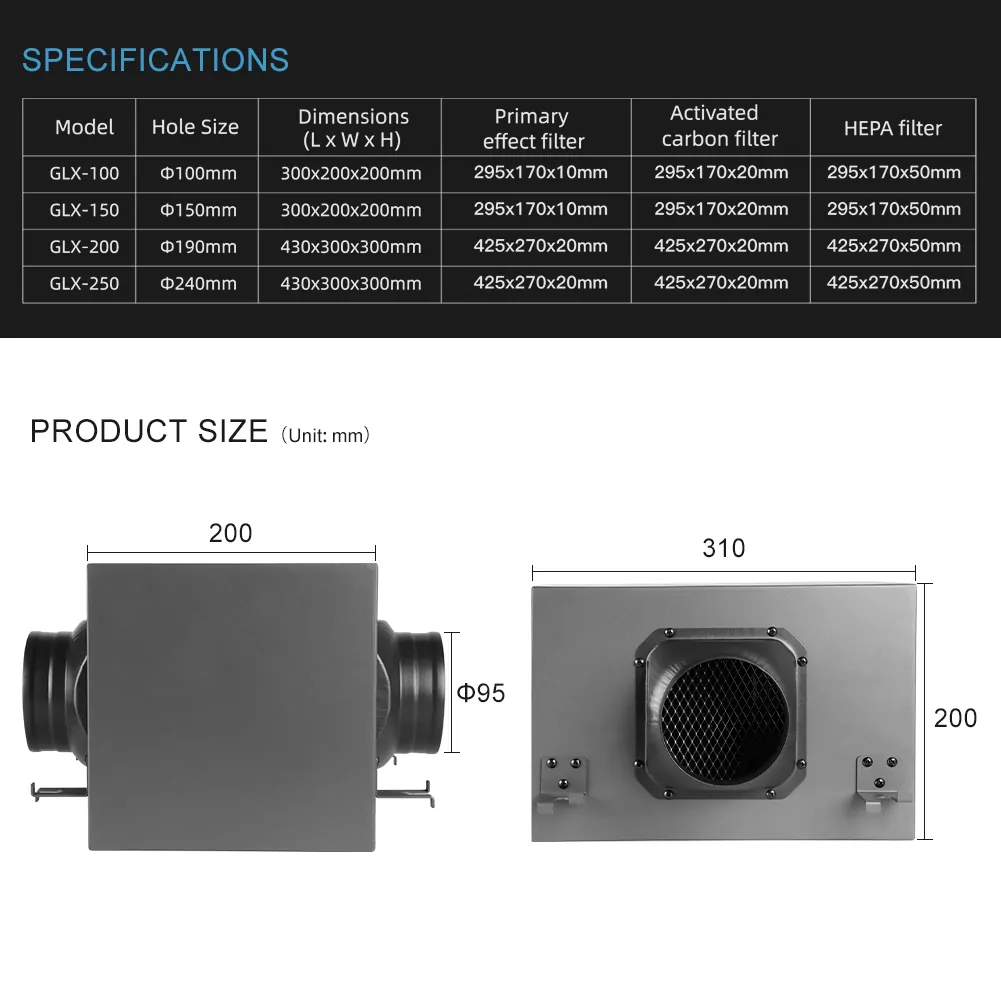
Sesuaikan dengan ducting dan airflow. Bukaan filter box harus sesuai dengan ukuran ducting Anda (misalnya 100 mm, 125 mm, 150 mm, 200 mm) dan airflow fan. Filter box yang dirancang untuk airflow lebih rendah daripada fan Anda akan menambah resistansi berlebih.
Periksa penurunan tekanan (pressure drop). Setiap tahap filter menambah tekanan statis. Gunakan data pressure drop filter pada aliran operasi Anda, dan pilih fan dengan kapasitas tekanan yang memadai.
Pilih tahapan filter yang Anda butuhkan. Hanya partikel → pre-filter + HEPA. Partikel + bau → tambahkan tahap karbon. Jangan membayar untuk tahapan yang tidak Anda butuhkan.
Periksa kerapatan seal. Filter box hanya berfungsi jika filter tersegel rapat di dalamnya. Pastikan terdapat rangka atau gasket yang tepat untuk mencegah kebocoran aliran udara (bypass airflow).
Pastikan akses perawatan. Box harus dapat dibuka dengan mudah untuk penggantian filter — filter yang tidak dapat dijangkau adalah filter yang tidak akan pernah diganti.
Verifikasi terhadap datasheet produk. Gunakan hanya spesifikasi terverifikasi (airflow, kelas filter, pressure drop, dimensi) dari data produk terkini.
Checklist pemilihan filter box
[ ] Ukuran dan sambungan duct sesuai dengan fan dan ducting.
[ ] Airflow pada tekanan statis operasi mencukupi untuk ruangan.
[ ] Tahapan filter mencakup kontaminan sebenarnya (partikel, bau, atau keduanya).
[ ] Media filter dan suku cadang pengganti tersedia serta terjangkau.
[ ] Housing tersegel dengan benar dan memungkinkan akses mudah untuk perawatan.
[ ] Pressure drop pada airflow Anda berada dalam kapasitas fan.
Pemeliharaan Filter Box
Filter box hanya bekerja pada kinerja nominalnya jika filter diganti tepat waktu:
Pra-filter: periksa setiap bulan; ganti saat terlihat penuh kotoran (umumnya 1–3 bulan, lebih lama di lingkungan bersih).
Filter HEPA/filter halus: ganti sesuai anjuran produsen (umumnya 6–12 bulan). Jangan pernah mencuci filter HEPA.
Karbon aktif: ganti saat bau mulai lolos (umumnya 6–12 bulan). Pencucian tidak memulihkan daya adsorpsi.
Housing dan segel: periksa gasket dan rangka setiap tahun; segel yang aus memungkinkan terjadinya bypass.
Catat tanggal servis dalam log agar Anda dapat melihat pola penggantian aktual untuk lingkungan Anda.
T: Apakah filter box meningkatkan kualitas udara dalam ruangan? J: Filter box menghilangkan partikel (dan, dengan tahap karbon, sebagian gas dan bau) dari udara yang melewatinya. Ini merupakan salah satu bagian dari kualitas udara dalam ruangan — ventilasi, pengendalian sumber polutan, dan kontrol kelembapan juga penting.
T: Apa perbedaan antara filter box dan air purifier? J: Filter box adalah komponen dari sistem HVAC atau ventilasi, yang dipasang di saluran udara (duct) atau intake untuk membersihkan udara saat mengalir. Air purifier adalah perangkat mandiri yang menyirkulasikan ulang dan membersihkan udara ruangan. Banyak gedung menggunakan keduanya.
T: Apakah saya memerlukan filter HEPA atau filter karbon aktif? J: Tergantung pada kontaminannya. HEPA menyaring partikel; karbon menyerap gas dan bau. Jika Anda memiliki kedua masalah tersebut (misalnya, debu ditambah bau masakan atau tanaman), gunakan keduanya dalam filter box bertingkat (multi-stage filter box).
T: Seberapa sering saya harus mengganti filter pada filter box? J: Pra-filter biasanya setiap 1–3 bulan, filter halus/HEPA setiap 6–12 bulan, dan karbon saat bau mulai tercium kembali. Interval yang tepat bergantung pada kondisi lingkungan — periksa dan ikuti petunjuk pabrikan.
T: Bisakah filter box menggantikan ventilasi? J: Tidak. Filter box membersihkan udara yang melewatinya; perangkat ini tidak memasok udara segar dari luar atau membuang udara pengap. Ventilasi dan filtrasi saling melengkapi, bukan saling menggantikan.
T: Apakah filter box melindungi peralatan HVAC? J: Ya. Dengan menangkap debu dan kotoran sebelum mencapai koil, kipas, dan penukar panas (heat exchanger), filtrasi mengurangi penyumbatan pada koil, menjaga efisiensi perpindahan panas, dan memperpanjang masa pakai peralatan.
Inline Duct Fan — pasangan aliran udara untuk filter box bersaluran (ducted filter box)
Membutuhkan filter box untuk proyek HVAC atau ventilasi Anda? KCvents memproduksi filter box, duct fan, dan sistem udara segar untuk pembeli grosir, OEM, dan private-label. Minta penawaran harga dengan kebutuhan aliran udara, ukuran saluran udara, dan filtrasi Anda.
Pembaruan Buletin
Masukkan alamat email Anda di bawah ini dan berlangganan buletin kami