Stay Updated with KCVENTS
Ventilation & HVAC Solutions

Subscribe to our newsletter for the latest airflow engineering insights, energy-efficient ERV/HRV system updates, and eco-friendly HVAC solutions.

Be the first to receive exclusive technical guides, custom OEM/ODM capabilities, and global exhibition news directly from KCVENTS.

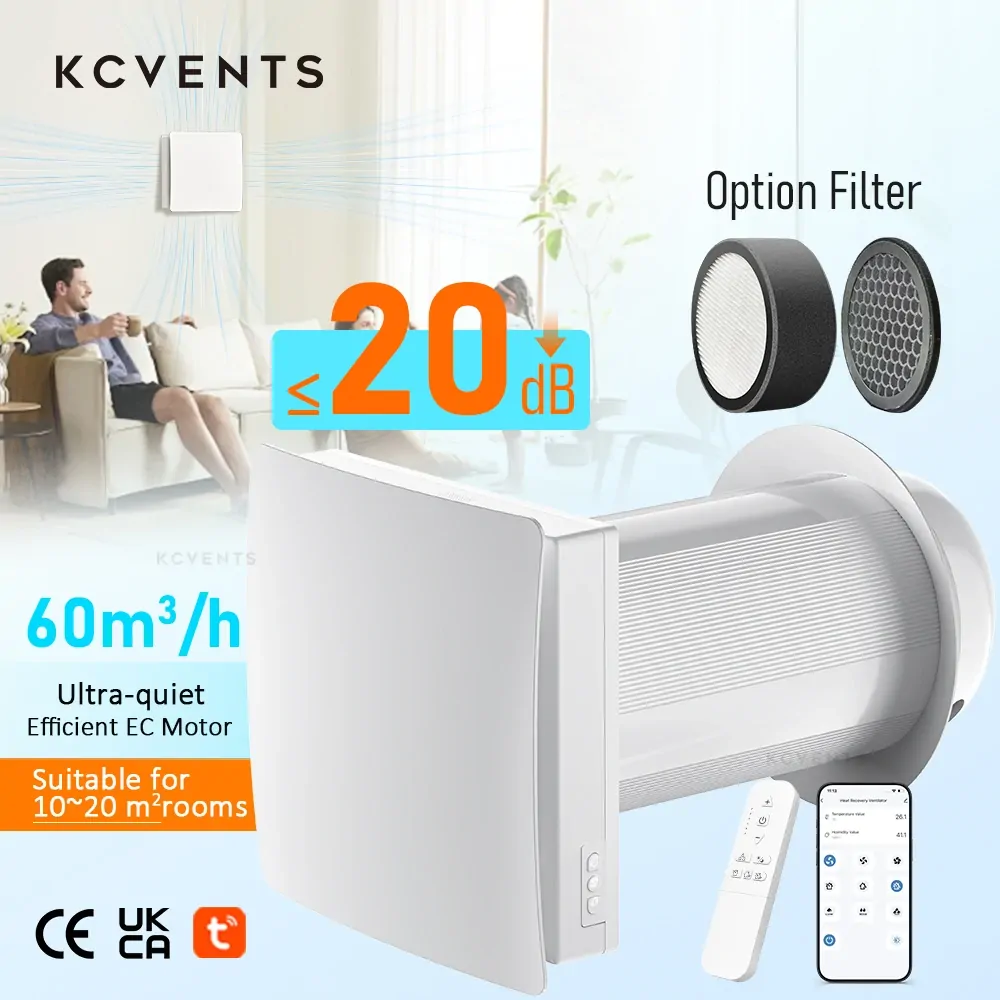
Single room heat recovery ventilator for classroom ventilation

Classroom Ventilation: How to Improve Indoor Air Quality in Schools

Why classroom air quality matters, the four common problems, how much ventilation a classroom needs, and which equipment — HRV, fresh-air blower, or exhaust fan — fits a school.

Classroom Ventilation: How to Improve Indoor Air Quality in Schools

In This Guide

Good classroom ventilation means continuously replacing stale indoor air with clean outdoor air, controlling CO₂, and filtering particles — so students can concentrate and stay comfortable. A classroom of 25–35 people generates CO₂, moisture, and particles faster than most people expect, and windows alone cannot always keep up, especially in cold or noisy weather. This guide explains why classroom air quality matters, what the problems are, how to plan ventilation for a classroom, and which equipment fits.

Why Classroom Air Quality Matters

Single room heat recovery ventilator for classroom ventilation

A classroom is one of the most densely occupied indoor spaces in a building. Students spend hours in the same room, breathing the same air, and the CO₂ level climbs quickly after the room fills up.

According to the U.S. EPA, Americans spend about 90% of their time indoors, and concentrations of some indoor pollutants can be two to five times higher than outdoor levels. 出典:U.S. EPA『The Inside Story: A Guide to Indoor Air Quality』. Schools are no exception — and the people inside are children, whose developing bodies and higher breathing rates make them more sensitive.

“Good ventilation is essential to maintaining a healthy indoor environment and protecting building occupants from respiratory infections.” — U.S. Centers for Disease Control and Prevention (CDC), Improving Ventilation In Buildings

The CDC guidance for building rooms is to aim for 5 or more air changes per hour (ACH) of clean air, and to use dilution with outdoor air as one of the key engineering controls. Source: CDC. These are design goals for building systems — they are not a certification of any single product.

The Four Common Classroom Air Problems

The old KCVENTS article “How to improve classroom air quality?” listed the practical problems teachers and facility managers see:

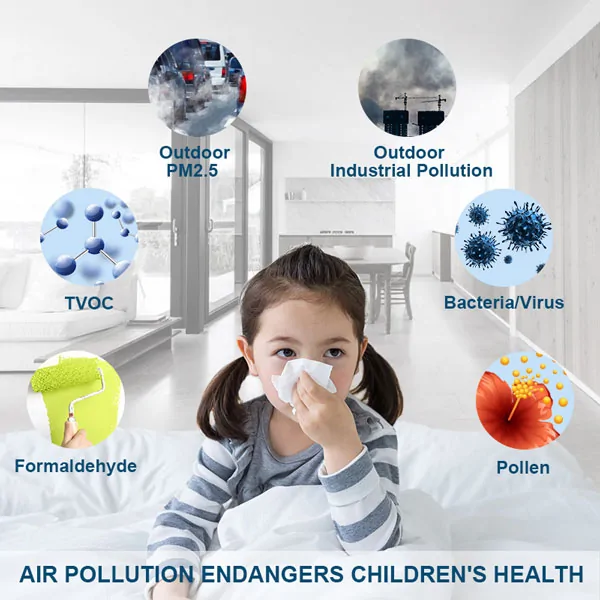
  1. Outdoor PM2.5 infiltration. On hazy or polluted days, fine particles enter the classroom through door and window gaps even when windows are closed. Opening windows can make this worse.
  2. High CO₂ concentration. A full classroom pushes CO₂ up within an hour of occupancy; high CO₂ is linked to drowsiness and reduced concentration.
  3. Spreading of airborne particles. Dense occupancy means more people breathing in the same air; ventilation dilutes airborne particles.
  4. Formaldehyde and other indoor emissions. Furniture, flooring, and cleaning products release VOCs, which build up when the room is sealed.

The lesson from these four problems: ventilation for a classroom has to bring in outdoor air, dilute indoor pollutants, and filter what comes in — not just open a window and hope.

How Much Ventilation Does a Classroom Need?

There is no single “classroom number” that fits every country, but two widely used references set the design frame:

  • CDC: 5+ ACH of clean air as a building-level goal for rooms. Source
  • ASHRAE 62.1 sets outdoor-air ventilation rates for commercial and institutional buildings including classrooms, based on occupancy and floor area.

In practical planning terms, you should calculate:

  • Room volume (m² × ceiling height).
  • Occupancy — number of students and teacher.
  • Target air changes per hour — the ventilation design rate for the room.
  • Outdoor-air supply — the fresh air delivered by the system, after accounting for filter and duct resistance.
Planning inputWhat to note
Room size (m²)Floor area drives floor-area component of the ventilation rate
Ceiling heightRoom volume determines ACH for a given airflow
OccupancyPeople count drives the per-person outdoor-air requirement
Noise limitSchool equipment should stay within acceptable classroom noise levels
Filter stageAt least a coarse filter on incoming air; consider finer filtration for polluted areas

A room-by-room planning checklist is more useful than a fixed number, because classroom size, occupancy, and local air quality differ. The right approach: decide the target ACH, calculate the airflow, then choose equipment that can deliver it at acceptable noise.

Which Ventilation Equipment Fits a Classroom

Different classrooms have different constraints, so the right equipment depends on the situation:

  • Balanced HRV/ERV unit — supplies filtered fresh air and exhausts stale air while recovering heat. The best fit where heating or cooling energy matters (cold winters, hot summers) and where a ducted system can be installed. A single-room HRV such as the VT501 can serve one classroom; a larger commercial heat recovery unit serves multiple rooms.
  • Fresh-air blower with filtration — supplies filtered outdoor air without exhaust. Simpler to install; used where the room already has exhaust (toilet or corridor exhaust) or where pressurization is acceptable.
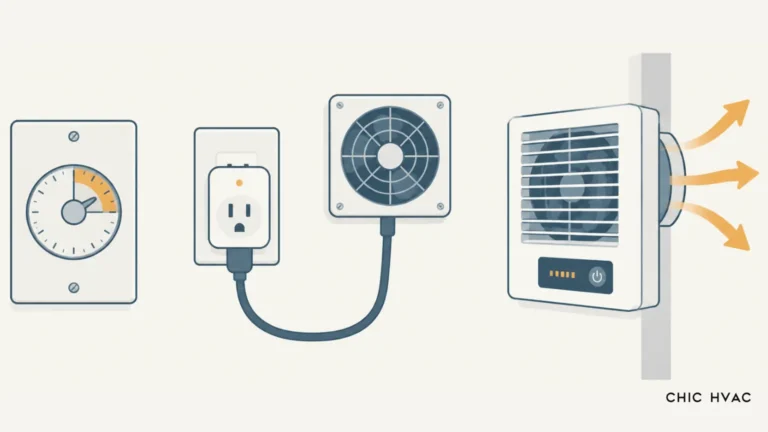
  • Exhaust fan — removes stale air and relies on natural supply. Cheapest, but it does not filter the incoming air and does not recover heat.
  • Air purifier with HEPA — filters indoor air but does not provide fresh outdoor air; a supplement, not a ventilation solution.

多くの VT501 school fresh air system was designed for this kind of application: continuous supply of filtered fresh air, quiet operation, and heat recovery so the room stays comfortable in winter without wasting heating energy.

VT501 single room heat recovery ventilator

Classroom ventilation quick checklist

  • [ ] Measure the room and set a target ACH (for example, a design rate appropriate to the room type).
  • [ ] Calculate the outdoor-air airflow needed, then add margin for filter and duct resistance.
  • [ ] Choose equipment that can deliver that airflow at an acceptable noise level.
  • [ ] Add filtration on the incoming air (coarse filter minimum; consider fine filtration in polluted areas).
  • [ ] Plan CO₂ monitoring so staff can see when ventilation is insufficient.
  • [ ] Schedule filter checks and cleaning — a clogged filter reduces airflow and defeats the design.

CO₂ Monitoring and Operation Tips

CO₂ concentration is the easiest practical signal of whether ventilation is keeping up with occupancy. When CO₂ climbs toward the high end of the recommended range, the room needs more outdoor air — either more ventilation or fewer occupants.

Operation tips that cost nothing:

  • Run the ventilation system during occupied hours, and start it a few minutes before class begins.
  • Keep supply grilles and return paths unobstructed — furniture against a grille kills the airflow.
  • Clean or replace filters on schedule; a clogged filter silently reduces ventilation.
  • In mild weather, use natural ventilation as a supplement where noise and outdoor air quality allow.

Frequently Asked Questions

Q: What is the best way to improve classroom air quality? A: Continuously supply filtered outdoor air, exhaust stale air, monitor CO₂, and keep the system maintained. The best equipment depends on the room: an HRV/ERV for balanced supply and exhaust with heat recovery, or a filtered fresh-air blower where only supply is needed.

Q: Does opening a window solve classroom ventilation? A: Sometimes, but not reliably. Windows bring in unfiltered outdoor air (including PM2.5 and noise), depend on weather, and are often closed in winter or summer. Mechanical ventilation with filtration provides consistent, filtered outdoor air.

Q: How many air changes per hour should a classroom have? A: The CDC recommends aiming for 5 or more air changes per hour of clean air in building rooms. The appropriate design rate for a specific classroom should be set by the ventilation designer based on occupancy, room size, and local requirements.

Q: Can a single-room HRV ventilate one classroom? A: Yes. A single-room heat recovery ventilator can supply filtered fresh air and exhaust stale air for one room while recovering heat, which keeps the classroom comfortable without high heating costs. Match the unit’s airflow to the calculated requirement.

Q: Does ventilation prevent flu or other illnesses? A: Ventilation dilutes airborne particles and is an important engineering control, but it is not a treatment and does not guarantee protection from any illness. It is one part of a healthy indoor environment.

Related KCvents Products and Guides

Planning classroom ventilation for a school project? KCvents supplies single-room and commercial heat recovery units for schools, wholesale, OEM, and private-label projects. Request a quote with your room sizes, occupancy, and target airflow.

ニュースレター最新情報

以下にメールアドレスを入力し、ニュースレターをご購読ください

返信を残す

メールアドレスが公開されることはありません。 が付いている欄は必須項目です