Heat Recovery Units Explained: How an HRU Saves Energy and Improves Air Quality
A heat recovery unit (HRU) — also called a heat recovery ventilator (HRV) or, when it also transfers moisture, an energy recovery ventilator (ERV) — is a ventilation system that supplies fresh air and exhausts stale air while transferring heat between the two streams. It improves indoor air quality without the energy penalty of conventional ventilation, which is why it is central to airtight, energy-efficient buildings. This guide explains how heat recovery units work and how to choose one.
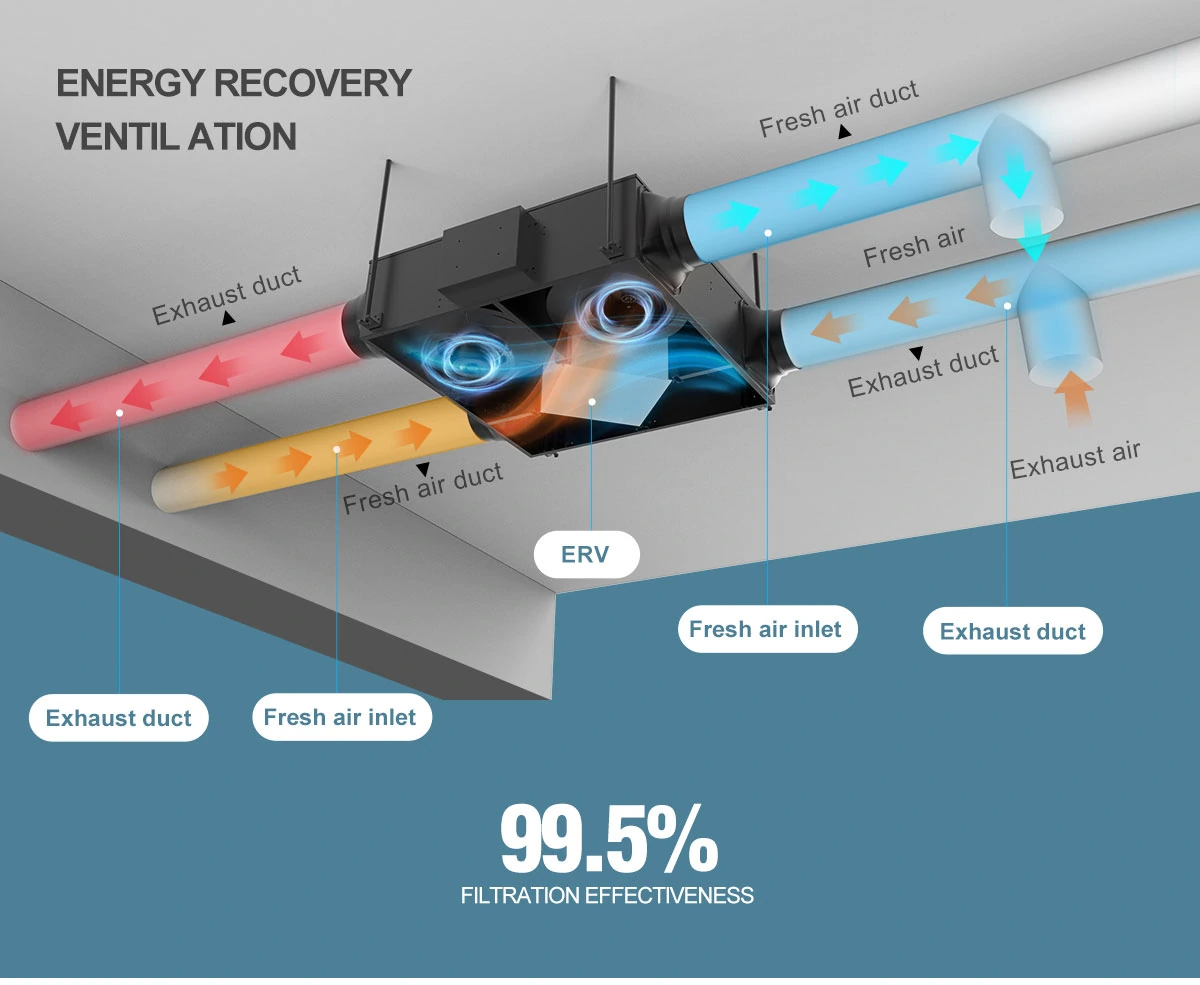
A heat recovery unit is a balanced ventilation appliance: it has two fans and a heat-exchange core.
Supply fan — draws fresh outdoor air in, filters it, and delivers it to living spaces.
Exhaust fan — pulls stale indoor air out.
Heat recovery core — transfers heat from the outgoing air to the incoming air (in winter), or the reverse (in summer), without mixing the two airstreams.
Newer units use a reversing or bypass mode in summer so you can ventilate without unwanted heat recovery. The result is fresh air 24/7 at a fraction of the energy cost of plain ventilation.
How Heat Recovery Works
In winter, the outgoing warm indoor air passes beside the incoming cold outdoor air in the core. Heat moves from the warm stream to the cold stream, so the fresh air enters the room already warm. In summer, the process reverses and the fresh air is pre-cooled by air-conditioned exhaust air.
The core itself never mixes the two airstreams — heat (and for ERVs, moisture) transfers through the heat-exchange material. This is why an HRV is safe even where indoor air may carry pollutants: the streams are separate.
Heat recovery systems typically recover 60%–95% of the heat from exhaust air, according to technical industry references; the Passive House standard calls for at least 75% dry heat recovery efficiency. The exact efficiency depends on the unit, the installation, and the climate.
HRV vs ERV vs Heat Pump Ventilation
Type
Transfers
Best climate
Best use
HRV
Heat only
Cold, dry
Homes in cold climates, moisture control
ERV
Heat + moisture
Warm, humid
Humid climates; reduces incoming humidity
Heat recovery + heat pump
Heat (and can add heating)
All
High-efficiency whole-home systems
HRV is the classic choice for cold, dry climates where you want to keep indoor moisture in.
ERV suits warm, humid climates or rooms with high moisture (the moisture transfer keeps excess humidity out).
Units with heat pumps add active heating; these are a premium whole-home option.