Ventilation for Greenhouses and Indoor Grow Rooms: Temperature and Humidity Control
Greenhouse and indoor grow-room ventilation controls the environment plants grow in: temperature, humidity, and air exchange. A well-ventilated space removes heat, replaces humid air with fresh air, and keeps CO₂ available — while a poorly ventilated one swings in temperature and climbs in humidity until mold and heat stress take over. This guide explains the ventilation requirements and how to build a system that keeps conditions stable.
Why Greenhouse and Grow-Room Ventilation Is Different
A house needs ventilation for people; a grow space needs it for plants, and the demands are more aggressive. Plants transpire constantly, lights and pumps add heat, and CO₂ is consumed by photosynthesis. The result is that a growing space can swing from too humid to too hot within minutes if ventilation is undersized or off.
The three goals of grow-space ventilation:
Temperature control — remove heat from lighting (especially HPS/HID) and equipment.
Humidity control — remove transpired moisture so mold and mildew cannot take hold.
Air exchange — replenish CO₂ consumed by photosynthesis and remove ethylene/exhaust air.
The same ventilation system serves all three: exhaust fans pull out hot, humid, depleted air and draw in cooler, drier, fresher air.
What Plants Need: Temperature, Humidity, and Air Exchange
While exact ranges depend on crop and stage, the principles are consistent:
Temperature — most crops grow in a moderate range; heat stress appears fast when ventilation fails. Temperature control is the primary reason a greenhouse needs active ventilation in summer.
Relative humidity — high humidity promotes mold and reduces transpiration. Ventilation brings in drier air to keep humidity in a manageable band.
Air exchange / CO₂ — plants draw down CO₂ in a sealed space; fresh air keeps photosynthesis supplied.
Air movement matters too: leaf-level airflow (circulation fans) prevents stagnant microclimates where mildew starts, even when overall ventilation is adequate.
Natural vs Mechanical Ventilation
Natural ventilation (open roof vents, side vents, screens) works in a greenhouse in mild weather with wind. It is cheap and low-energy.
Its limits:
Stops working when there is no wind or temperature difference.
Brings in unfiltered, unpredictable air.
Cannot control humidity or temperature tightly.
In hot, still weather, natural ventilation alone is often not enough.
Mechanical ventilation (fans + intake) delivers controlled air exchange regardless of weather. It is the reliable option for a productive greenhouse and essential for sealed indoor grow rooms.
Indoor grow rooms (tents, rooms, basements) have no usable natural ventilation — they are essentially sealed boxes that must have mechanical exhaust and intake.
Mechanical Ventilation Components
A complete mechanical system has several parts:
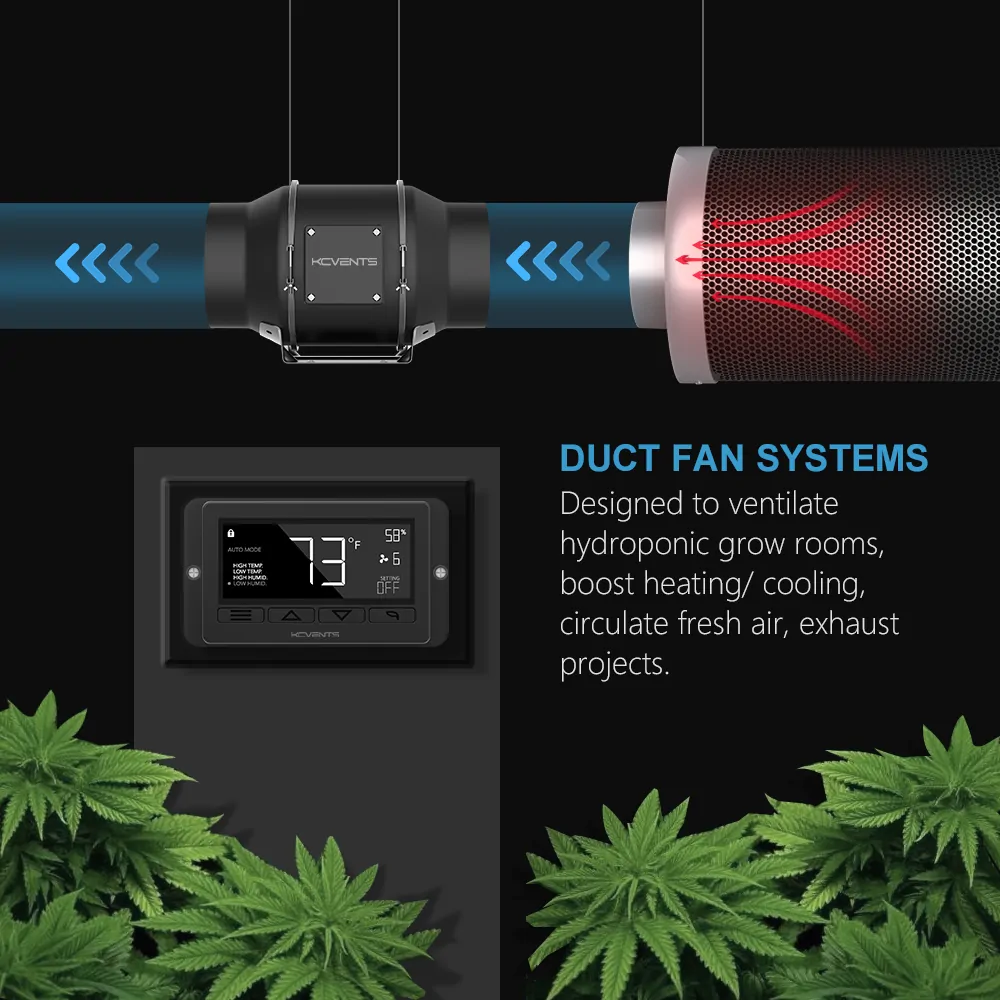
Exhaust fans — pull hot, humid air out (inline duct fans are the standard tool, see our inline duct fan guide).
Intake / fresh air supply — passive vents or an active intake fan.
Circulation fans — keep leaf-level air moving.
Filters — activated carbon for odor control on exhaust; intake filters where outdoor air is dusty (see our carbon filter guide).
Controls — sensores de temperatura/humidade e controlo de velocidade (ventiladores EC) para que o sistema aumente a velocidade apenas quando necessário (consulte o nosso guia de motores EC).
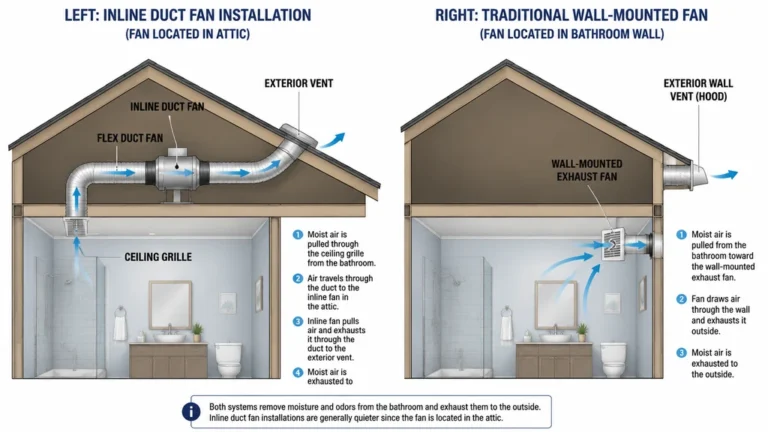
Para uma estufa, a exaustão situa-se habitualmente no topo da empena ou parede lateral com admissão a um nível inferior no lado oposto, criando fluxo cruzado. Numa tenda de cultivo, a exaustão normalmente puxa o ar através de um filtro de carvão para o exterior, com admissão passiva ou ativa na parte inferior da tenda.
Sizing a Ventilation System
Dimensione o caudal de ar de exaustão a partir do volume do espaço e da carga térmica/humidade:
Calcule o volume — comprimento × largura × altura média do espaço de cultivo.
Escolha as renovações de ar por minuto — os espaços de cultivo têm frequentemente como meta uma renovação de volume por minuto ou mais, dependendo da carga térmica, densidade das plantas e resistência do filtro.
Adicione a resistência do filtro e da conduta — o caudal de ar de um ventilador em linha (inline fan) na pressão estática do sistema é o que conta, não a taxa de descarga livre.
Sobredimensione ligeiramente + controle a velocidade — um ventilador EC ligeiramente sobredimensionado a funcionar a velocidade reduzida oferece margem para picos de calor, mantendo-se silencioso e eficiente em condições normais.
Equilibre a admissão de ar — a admissão deve ser suficientemente ampla para não estrangular o ventilador (o que reduziria o caudal de ar e aumentaria o desgaste do filtro).
Espaço
Abordagem típica de caudal de ar
Tenda pequena (ex.: 1×1×2 m)
Ventilador em linha de 100–150 mm, uma renovação de volume/min, filtro de carvão
Sala de cultivo (ex.: 3×3×2,5 m)
150–200 mm + admissão, velocidade variável EC
Estufa
Parede de ventiladores (fan wall) / exaustão de maior dimensão baseada na carga térmica, múltiplas unidades
Frequently Asked Questions
P: De quanta ventilação necessita uma sala de cultivo? R: Comece com uma renovação de volume da tenda/sala por minuto e ajuste de acordo com a carga térmica, densidade das plantas e resistência do filtro. O caudal de ar real fornecido na pressão estática de funcionamento é o que realmente importa.
P: Uma estufa deve dispor de ventilação mecânica? R: Em climas amenos e ventosos, a ventilação natural (aberturas) pode ser suficiente na primavera/outono, mas para manter condições consistentes de cultivo — especialmente no calor do verão — a exaustão mecânica é a solução mais fiável.
P: O que controla a humidade num espaço de cultivo? R: A renovação do ar é a principal ferramenta: os ventiladores de exaustão substituem o ar húmido por ar de admissão mais seco. Os ventiladores de circulação evitam zonas de estagnação local. Um desumidificador é uma ferramenta adicional para culturas ou climas de elevada humidade.
P: Preciso de um filtro de carvão? R: Para controlo de odores, sim — um ventilador em linha a puxar o ar através de um filtro de carvão ativado devidamente dimensionado trata o ar de exaustão. Consulte o nosso carbon filter guide.
P: Posso utilizar um ventilador doméstico comum numa sala de cultivo? R: Um ventilador doméstico apenas faz circular o ar; não faz a exaustão de calor ou humidade nem introduz ar novo. Necessita de um sistema adequado de exaustão/admissão (ventiladores em linha) além de ventiladores de circulação.
P: Como controlo a ventilação automaticamente? R: Utilize sensores de temperatura/humidade ligados ao controlador do ventilador. Um ventilador EC pode ajustar a velocidade automaticamente com base nas condições; abordamos isto no nosso guia de motores EC.
A projetar a ventilação para uma estufa ou sala de cultivo? A KCvents fabrica ventiladores de conduta em linha EC (inline duct fans), ventiladores de exaustão e filtros de carvão ativado para cultivo indoor e agricultura em ambiente controlado, para distribuidores, clientes OEM e marcas próprias. Solicite um orçamento com as dimensões do seu espaço e requisitos de ventilação.
Atualizações da newsletter
Enter your email address below and subscribe to our newsletter