Nous utilisons des cookies pour nous assurer que nous vous offrons la meilleure expérience possible sur notre site.
Restez informé avec KCVENTS Solutions de ventilation et CVC
Abonnez-vous à notre newsletter pour recevoir les dernières analyses en ingénierie aéraulique, les mises à jour sur les systèmes ERV/HRV écoénergétiques et les solutions CVC écologiques.
Soyez les premiers à recevoir des guides techniques exclusifs, à découvrir nos capacités OEM/ODM sur mesure et les actualités des salons mondiaux directement de KCVENTS.
Comment prévenir la moisissure sur les murs dans les appartements et les maisons
Pourquoi la moisissure murale se développe et comment la prévenir grâce à la ventilation, au contrôle de la condensation et au traitement des sources d'humidité.
Comment prévenir la moisissure sur les murs dans les appartements et les maisons
La moisissure sur les murs est presque toujours un problème d'humidité : les spores de moisissure sont omniprésents et un mur devient un terrain propice dès lors qu'il reste humide. Le moyen de prévenir la moisissure murale est d'éliminer l'humidité — en ventilant les pièces humides, en réparant les fuites, en contrôlant l'hygrométrie et en empêchant la condensation sur les parois froides. Ce guide explique pourquoi la moisissure apparaît sur les murs et comment y remédier efficacement, y compris ce que la ventilation peut ou ne peut pas résoudre.
La moisissure nécessite trois conditions : de l'humidité, de la chaleur et de la matière organique. Les murs fournissent la chaleur et la matière organique (peinture, plâtre, papier peint, poussière), le facteur déterminant est donc presque toujours l'humidité.
L'humidité atteint un mur de deux manières :
Condensation — l'air intérieur humide entre en contact avec un mur ou une fenêtre froide et la vapeur d'eau se condense sous forme d'eau liquide. Il s'agit de la cause la plus fréquente, en particulier sur les murs extérieurs, derrière les meubles et dans les angles.
Infiltrations ou remontées capillaires — fuites de canalisations, de toitures ou de menuiseries, ou humidité du sol absorbée par capillarité dans le mur.
Dans un bâtiment mal ventilé, l'humidité à l'origine de la condensation s'accumule rapidement sous l'effet des douches, de la cuisson, du séchage du linge et de la respiration.
Signes d'un problème de moisissure
Taches sombres sur les murs, les plafonds ou les dormants de fenêtres (souvent dans les angles ou derrière les meubles).
Odeur de moisi ou de terre dans une pièce.
Peinture qui s'écaille ou cloque — signe d'humidité sous la surface.
Traces noires sur les joints en silicone autour des baignoires et des douches.
Condensation qui ruisselle sur les fenêtres ou les murs le matin.
Plus vous la détectez tôt, plus elle est facile à traiter. La moisissure qui s'est infiltrée dans les plaques de plâtre ou le bois nécessite généralement une intervention professionnelle.
Le rôle de la ventilation dans la prévention des moisissures murales
La ventilation constitue le premier et le plus efficace moyen de contrôle face à la cause la plus fréquente : la condensation due à l'humidité intérieure.
Évacuer l'air humide à la source. Les extracteurs d'air dans les salles de bains et les cuisines évacuent la vapeur avant qu'elle ne se propage et ne se condense sur les murs.
Réduire l'hygrométrie intérieure. Un renouvellement d'air neuf continu maintient l'humidité relative sous le seuil d'humidification permanente des murs.
Maintenir l'air en mouvement. La ventilation et le brassage d'air empêchent la formation d'un microclimat stagnant et humide derrière les meubles et dans les angles, point de départ des moisissures.
En pratique :
Faites fonctionner le ventilateur de salle de bain pendant et après les douches.
Ventilez la cuisine pendant la cuisson et l'ébullition.
Séchez le linge dans un espace ventilé permettant l'évacuation de l'humidité, ou utilisez un sèche-linge à évacuation.
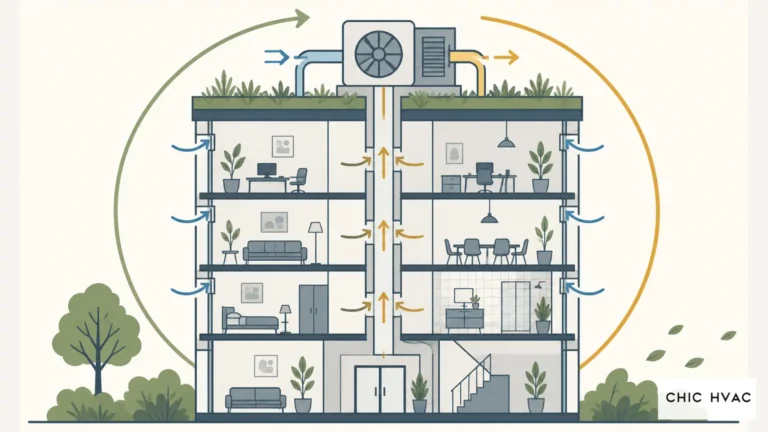
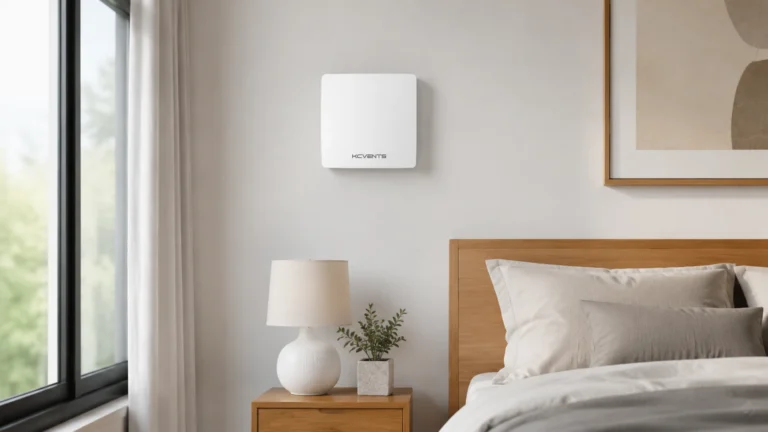
Dans un bâtiment étanche à l'air, utilisez un système de ventilation double flux ou HRV/ERV pour renouveler l'air toute l'année sans déperdition thermique — voir notre guide HRV vs ERV.
La ventilation réduit l'humidité, mais la condensation est également causée par les surfaces froides. Réduisez les zones propices à la formation d'eau :
Améliorer l'isolation sur les murs extérieurs afin de réduire les ponts thermiques.
Éloigner les meubles des murs froids — un espace d'air de quelques centimètres supprime le microclimat humide derrière une armoire.
Essuyer la condensation le matin afin que l'eau ne pénètre pas dans les matériaux.
Maintenir un léger chauffage en hiver — les surfaces plus chaudes génèrent moins de condensation.
Aérer la pièce pour que l'air circule ; les portes de chambre fermées retiennent l'humidité dégagée pendant le sommeil.
Autres causes à traiter en complément de la ventilation
La ventilation seule ne permet pas d'éliminer les moisissures causées par :
Les fuites — une toiture qui fuit, un tuyau percé ou une fenêtre non étanche maintiendront un mur humide, quelle que soit la qualité de la ventilation. Réparez d'abord la fuite.
Les remontées capillaires — l'humidité du sol qui remonte dans un mur nécessite une barrière / membrane d'étanchéité, et pas seulement de la ventilation.
Une humidité extérieure élevée — dans les climats très humides, un déshumidificateur aide à extraire l'humidité de l'air en complément de la ventilation.
Une coulisse obstruée ou un solin défaillant — les voies d'infiltration structurelle de l'humidité doivent être inspectées.
Si les moisissures réapparaissent constamment au même endroit après avoir régulé la ventilation et l'humidité, faites inspecter le mur pour détecter une fuite cachée ou un problème d'humidité.
Foire aux questions
Q : Quel taux d'humidité permet d'éviter les moisissures murales ? R : Maintenez l'humidité relative intérieure en dessous d'environ 60%, idéalement entre 30 et 50%. Un hygromètre permet de la surveiller ; des valeurs élevées indiquent un problème de ventilation ou d'humidité.
Q : Ouvrir une fenêtre peut-il prévenir les moisissures sur les murs ? R : Cela peut aider à réduire l'humidité, mais cette méthode reste peu fiable par temps froid ou pollué et ne fonctionne pas dans les pièces sans circulation d'air. Un système d'extraction mécanique ou de ventilation est bien plus constant et efficace.
Q : Les moisissures murales sont-elles dangereuses ? R : Les moisissures peuvent irriter les voies respiratoires et provoquer des réactions allergiques chez les personnes sensibles. Si la surface touchée est étendue ou si les moisissures se développent dans les cavités murales, une décontamination professionnelle est recommandée.
Q : Comment éliminer les moisissures murales en toute sécurité ? R : Pour les petites surfaces dures, nettoyez avec de l'eau et du détergent (ou un nettoyant antimoisissure spécifique), séchez soigneusement et traitez la source d'humidité. Ne peignez pas sur les moisissures — l'humidité finira par traverser à nouveau.
Q : La ventilation peut-elle éliminer les moisissures existantes ? R : La ventilation élimine l'humidité qui favorise la prolifération des moisissures ; elle n'élimine pas les moisissures déjà installées. Nettoyez les moisissures, supprimez la source d'humidité et ventilez pour éviter toute récidive.
Q : Un HRV permet-il de lutter contre les moisissures murales ? R : Oui. Un système HRV/ERV remplace en continu l'air intérieur humide par de l'air neuf plus sec tout en récupérant la chaleur, ce qui vous permet de ventiler tout au long de l'année — la solution la plus fiable pour empêcher un mur de rester humide.
Vous souhaitez prévenir l'humidité et les moisissures dans votre habitat ou pour votre projet ? KCvents fabrique des extracteurs d'air pour salle de bains, des HRV décentralisés pièce par pièce et des systèmes de ventilation pour l'ensemble du bâtiment, destinés aux grossistes, équipementiers (OEM) et projets sous marque de distributeur. Request a quote avec vos pièces et vos problématiques d'humidité.
Mises à jour de la newsletter
Saisissez votre adresse e-mail ci-dessous et abonnez-vous à notre newsletter