Nous utilisons des cookies pour nous assurer que nous vous offrons la meilleure expérience possible sur notre site.
Restez informé avec KCVENTS Solutions de ventilation et CVC
Abonnez-vous à notre newsletter pour recevoir les dernières analyses en ingénierie aéraulique, les mises à jour sur les systèmes ERV/HRV écoénergétiques et les solutions CVC écologiques.
Soyez les premiers à recevoir des guides techniques exclusifs, à découvrir nos capacités OEM/ODM sur mesure et les actualités des salons mondiaux directement de KCVENTS.
Pourquoi vous avez besoin d'un ventilateur d'aération pour équilibrer l'air intérieur
Comment un ventilateur équilibre l'air intérieur en évacuant l'air vicié et humide et en insufflant de l'air neuf — et là où les ventilateurs jouent le rôle le plus crucial.
Pourquoi vous avez besoin d'un ventilateur d'aération pour équilibrer l'air intérieur
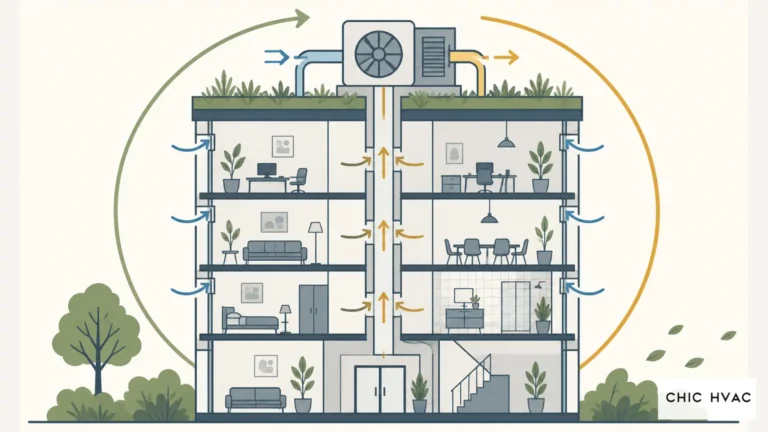
Un ventilateur de ventilation maintient l'équilibre de l'air intérieur en extrayant en continu l'air vicié, humide et pollué tout en introduisant de l'air neuf extérieur, évitant ainsi l'accumulation d'humidité, de CO₂, d'odeurs et de polluants. Sans cela, un logement ou une salle de bain étanche à l'air emprisonne l'humidité et les contaminants, entraînant condensation, moisissures et dégradation de la qualité de l'air. Ce guide explique ce que signifie “ l'équilibre aéraulique ”, pourquoi les ventilateurs sont essentiels et où les installer.
Que signifie “ l'équilibre aéraulique ” dans une maison ?
L'air intérieur est constamment altéré par ses occupants. La respiration dégage du CO₂ et de l'humidité. La cuisson, les douches et le linge augmentent l'hygrométrie. Les produits d'entretien et le mobilier émettent des gaz. Sans renouvellement d'air, ces éléments s'accumulent bien plus vite qu'on ne le pense.
Selon l'U.S. EPA, les Américains passent environ 90% de leur temps à l'intérieur, et les concentrations de certains polluants intérieurs peuvent être deux à cinq fois plus élevées qu'à l'extérieur. Source : U.S. EPA, The Inside Story: A Guide to Indoor Air Quality. Un espace déséquilibré et mal ventilé tend vers une humidité élevée et une forte concentration de polluants.
“Un environnement intérieur ” équilibré » signifie que l'air est renouvelé suffisamment souvent pour maintenir l'humidité, le CO₂ et les polluants à des niveaux confortables et sûrs, et non que les débits d'insufflation et d'extraction soient strictement identiques dans chaque pièce.
Le rôle réel d'un ventilateur de ventilation
Un ventilateur de ventilation remplit quatre fonctions clés :
Évacuer l'air vicié, les polluants et les odeurs — les fumées de cuisson, les produits chimiques de nettoyage et les odeurs sont évacués au lieu de stagner.
Réguler l'humidité — la fonction la plus cruciale dans les salles de bain et les cuisines. L'évacuation de l'air humide empêche la condensation sur les fenêtres et les moisissures sur les murs.
Améliorer la qualité de l'air intérieur — le renouvellement continu réduit la concentration de polluants en suspension dans l'air et de CO₂.
Prévenir la condensation et les moisissures — en limitant l'humidité, la ventilation réduit les conditions propices au développement des moisissures et à la dégradation du bâti.
Un extracteur d'air standard (par exemple, un ventilateur de salle de bain) extrait l'air d'une seule pièce humide. Un système équilibré équipé de ventilateurs d'insufflation et d'extraction, ou un récupérateur de chaleur (HRV), gère l'ensemble du logement.
Où les ventilateurs de ventilation sont-ils les plus essentiels ?
Space
Problème principal
Solution recommandée
Bathroom
Forte humidité, condensation, moisissures
Extracteur d'air (idéalement hygroréglable)
Kitchen
Odeurs de cuisson, graisses, humidité
Extracteur d'air de cuisine ou hotte aspirante
Laundry room
Humidité issue du séchage
Extracteur d'air ou sèche-linge à évacuation
Chambre
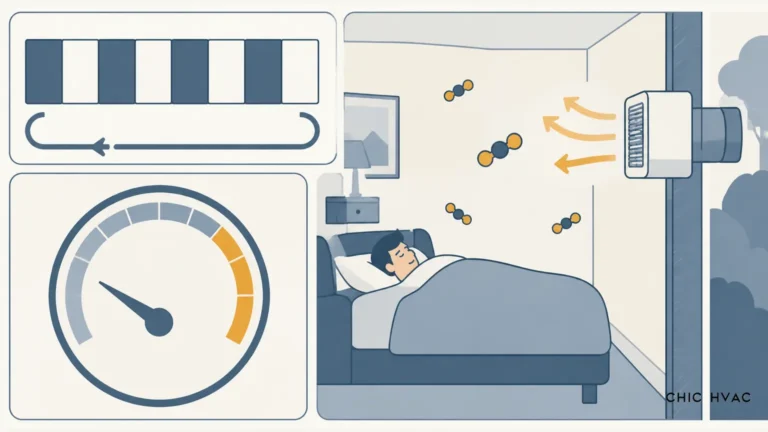
CO₂ et air vicié pendant la nuit
Ventilateur d'insufflation ou HRV décentralisé pour pièce unique
Logement complet
Accumulation de polluants, renouvellement d'air hétérogène
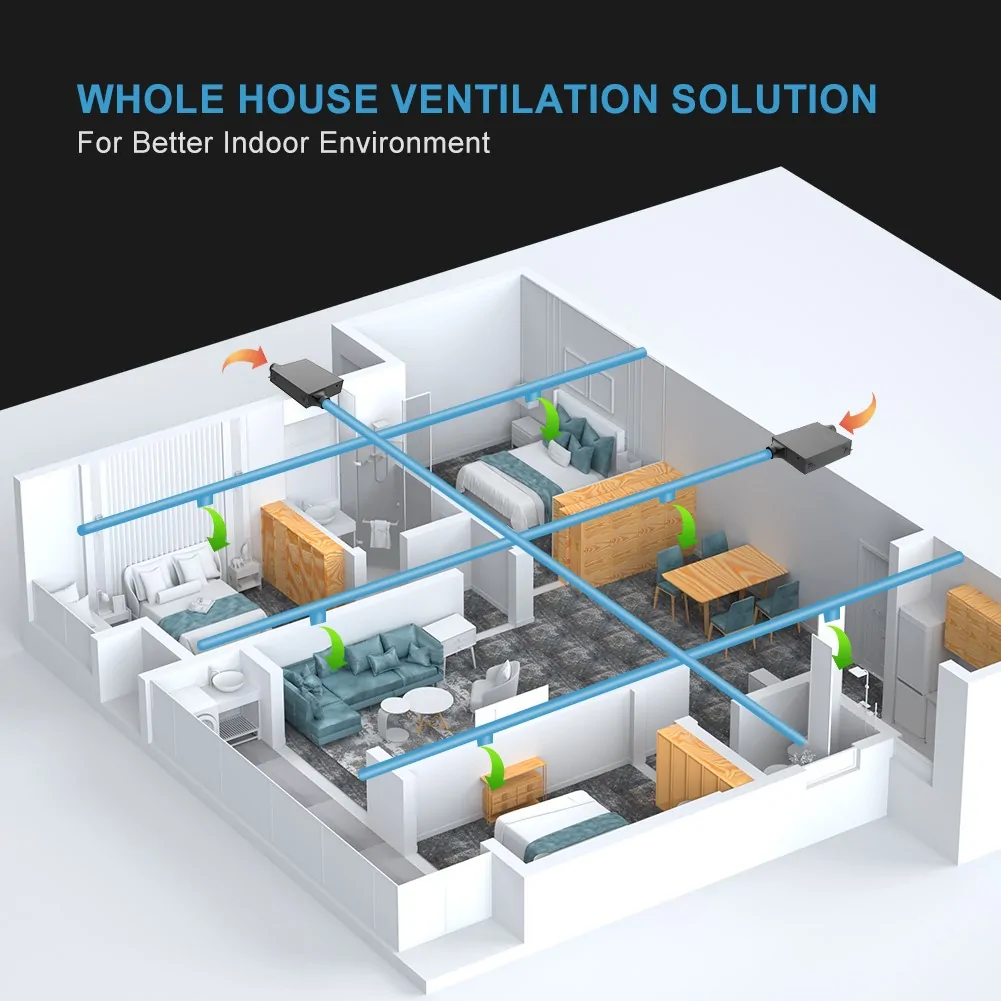
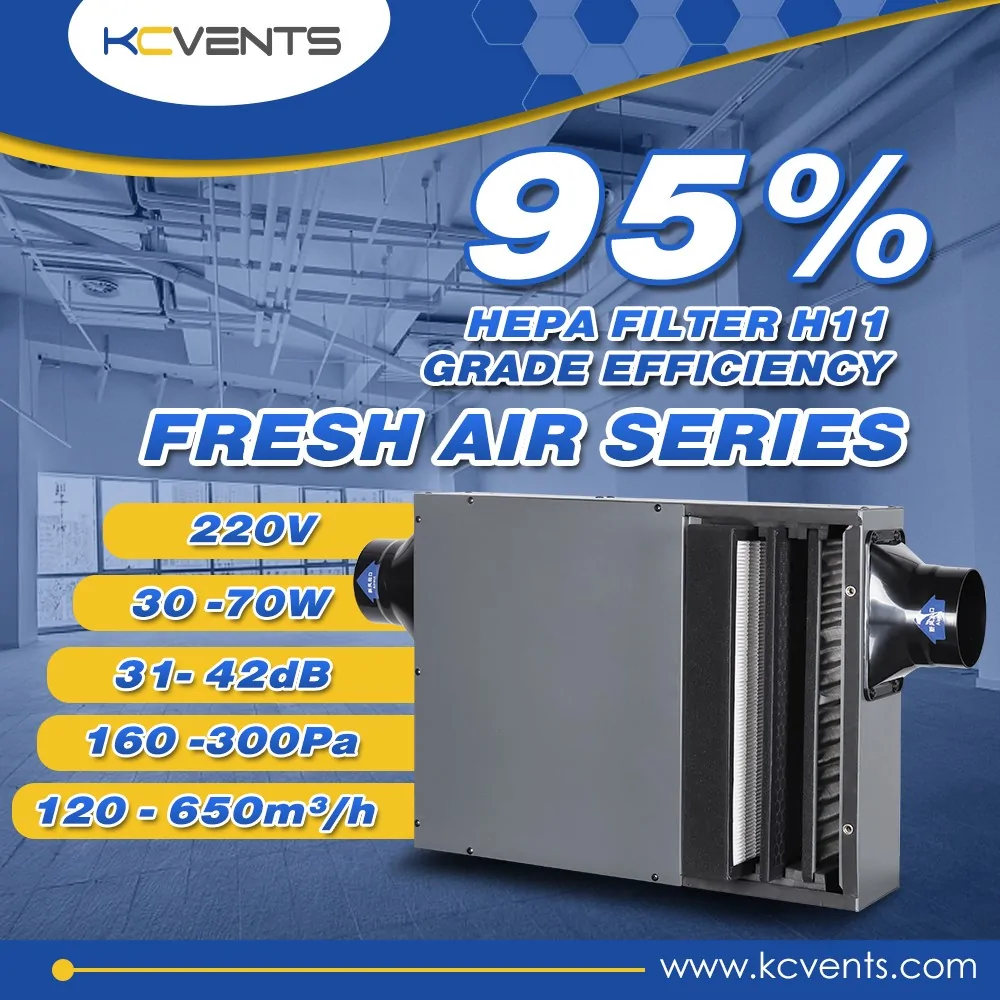
Système équilibré ou système HRV/ERV
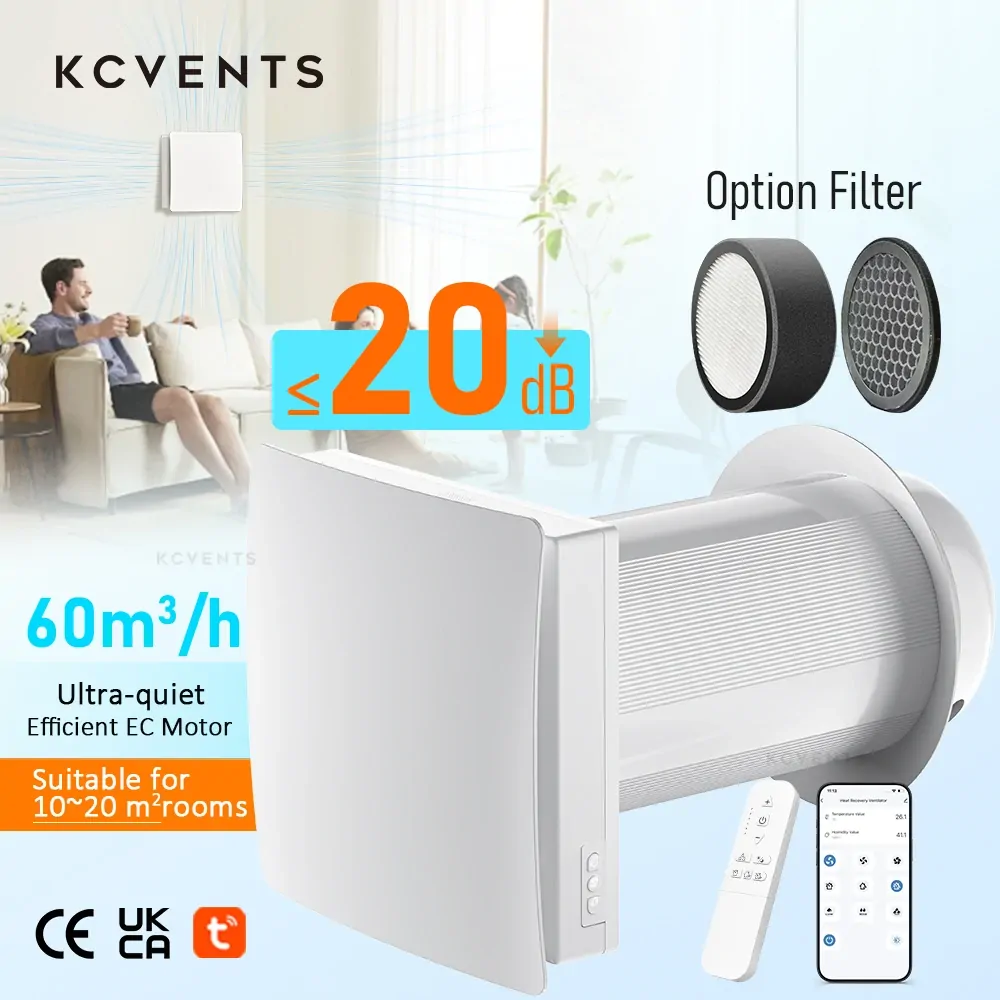
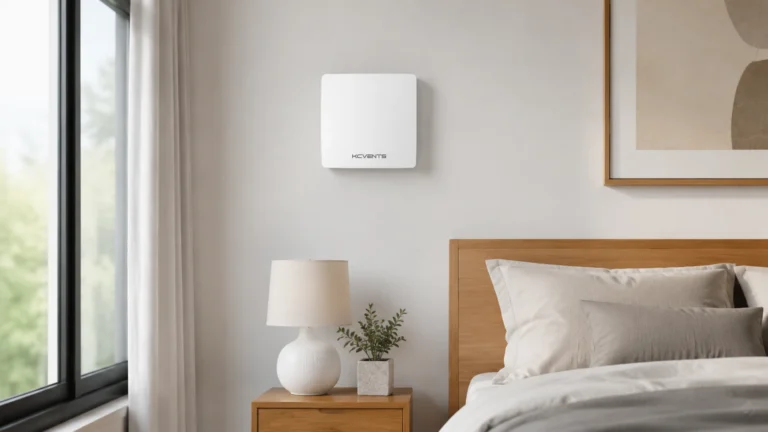
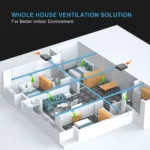
Pour les pièces individuelles, un récupérateur de chaleur pour pièce unique (HRV) (comme le VT501) assure à la fois l'insufflation d'air neuf et l'extraction d'air vicié, maintenant ainsi l'équilibre aéraulique de la pièce sans déperdition d'énergie. Pour l'ensemble du logement, un système équilibré ou une unité de récupération d'énergie (ERV) constitue la solution la plus complète.
Ventilateur de ventilation ou purificateur d'air
Un ventilateur de ventilation renouvelle l'air intérieur avec l'air extérieur — il dilue les polluants et élimine l'humidité. Un purificateur d'air filtre l'air déjà présent dans la pièce — il capture les particules mais n'introduit pas d'air neuf et n'élimine pas le CO₂.
Pour obtenir un air intérieur véritablement équilibré, vous avez besoin de ventilation (apport d'air neuf, évacuation de l'air vicié). Un purificateur d'air peut être un complément utile pour la filtration des particules, mais il ne remplace pas la ventilation.
Foire aux questions
Q : Ai-je besoin d'un ventilateur d'extraction dans chaque pièce ? R : Pas nécessairement. Donnez la priorité aux pièces humides (salle de bains, cuisine, buanderie) et aux pièces occupées (chambres). Un système pour l'ensemble de l'habitation dessert toutes les pièces via des conduits ou des unités décentralisées.
Q : Comment savoir si mon logement a besoin de davantage de ventilation ? R : Les signes révélateurs incluent la condensation sur les fenêtres, les odeurs de moisi, les miroirs embués qui mettent du temps à s'éclaircir et les pièces à l'air confiné. Un moniteur de CO₂ ou un hygromètre permet de le confirmer.
Q : Quelle est la différence entre la ventilation par extraction et la ventilation par insufflation ? R : Les ventilateurs d'extraction évacuent l'air vicié ; les ventilateurs de soufflage insufflent de l'air neuf filtré. Les systèmes équilibrés assurent les deux fonctions. Consultez notre guide sur le fonctionnement de la ventilation.
Q : Un ventilateur de ventilation peut-il réduire la moisissure ? R : Oui. En évacuant l'air humide des salles de bains et des cuisines, la ventilation élimine l'une des trois conditions nécessaires au développement des moisissures. Consultez notre guide de prévention des moisissures.
Q : Un ventilateur de ventilation gaspille-t-il de l'énergie ? R : Un simple extracteur d'air évacue la chaleur en même temps que l'air extrait. Un système de ventilation à récupération d'énergie (HRV/ERV) récupère cette chaleur, réduisant ainsi considérablement les coûts de ventilation — consultez notre guide HRV vs ERV.
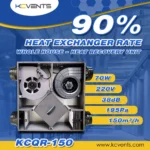
Besoin d'aide pour équilibrer votre air intérieur ? KCvents fabrique des ventilateurs de ventilation, des unités HRV pièce par pièce et des centrales de récupération d'énergie pour l'ensemble du bâtiment, destinés aux projets de vente en gros, OEM et marque blanche. Request a quote avec vos pièces, vos problèmes d'humidité et vos besoins en débit d'air.
Mises à jour de la newsletter
Saisissez votre adresse e-mail ci-dessous et abonnez-vous à notre newsletter