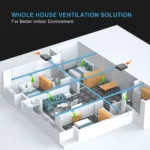
Ventilation in Sustainable Building Design: Natural vs Mechanical
A ventilação é uma parte fundamental do projeto de edifícios sustentáveis: controla a qualidade do ar interior e o conforto dos ocupantes, ao mesmo tempo que afeta diretamente o consumo de energia, razão pela qual as normas de construção sustentável a tratam como uma decisão de projeto e não como uma reflexão tardia. Este guia explica as opções de ventilação natural e mecânica, como afetam o consumo de energia e como combiná-las num projeto de edifício duradouro.
Por Que a Ventilação É uma Decisão de Sustentabilidade
O consumo de energia de um edifício é dominado pelo aquecimento, arrefecimento e pelos ventiladores e sistemas que tratam o ar. De acordo com a Comissão Europeia, cerca de 40% da energia consumida na UE é utilizada em edifícios, e cerca de 80% da energia utilizada nas habitações da UE destina-se a aquecimento, arrefecimento e água quente sanitária. Fonte: Comissão Europeia, Diretiva de Desempenho Energético dos Edifícios. A ventilação situa-se nesta interseção: deve fornecer ar novo, mas não deve desperdiçar a energia utilizada para aquecer ou arrefecer esse ar.
De acordo com a U.S. EPA, as pessoas passam cerca de 90% do seu tempo em ambientes fechados, e as concentrações de alguns poluentes internos podem ser de duas a cinco vezes maiores que os níveis externos. Fonte: U.S. EPA. O projeto sustentável tem, portanto, dois objetivos em simultâneo: manter os poluentes baixos e manter o consumo de energia baixo.
Ventilação Natural
A ventilação natural utiliza o vento e as diferenças de temperatura para mover o ar através de um edifício, sem ventiladores.
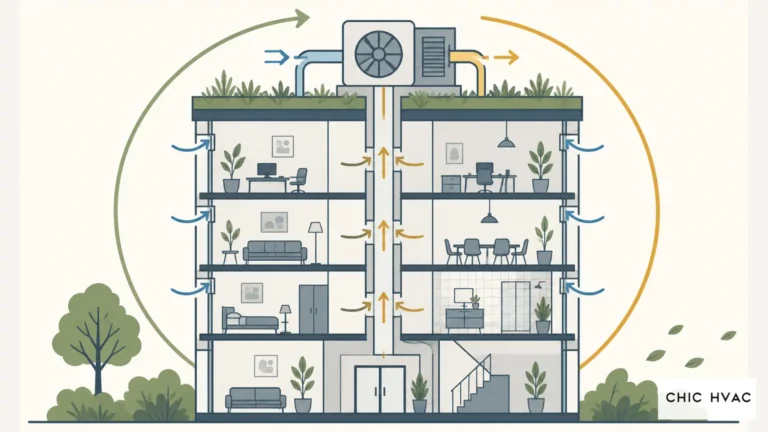
Como funciona: as aberturas (janelas, grelhas, venezianas) são posicionadas de modo que os ventos predominantes e o efeito de chaminé puxem o ar fresco para dentro e expulsem o ar viciado.
Pontos fortes
Baixo consumo de energia operacional (sem ventiladores em funcionamento).
Ar exterior fresco sem peças mecânicas.
Simples e muitas vezes agradável em clima ameno.
Limites
Os resultados dependem do clima, do vento e da qualidade do ar exterior — a ventilação é imprevisível.
Introduz ar não filtrado (pólen, poeira, PM2.5) e ruído exterior.
Difícil de controlar em climas quentes, húmidos, chuvosos ou muito frios.
Sem recuperação de calor — no inverno, abrir as janelas simplesmente deita calor fora.
Ventilação Mecânica
A ventilação mecânica utiliza ventiladores para insuflar, extrair ou equilibrar o fluxo de ar, independentemente do clima.
Apenas extração: os ventiladores extraem o ar viciado; o ar novo entra por infiltrações. Económico, mas descontrolado.
Apenas insuflação: os ventiladores introduzem ar novo filtrado; o ar viciado sai por infiltrações.
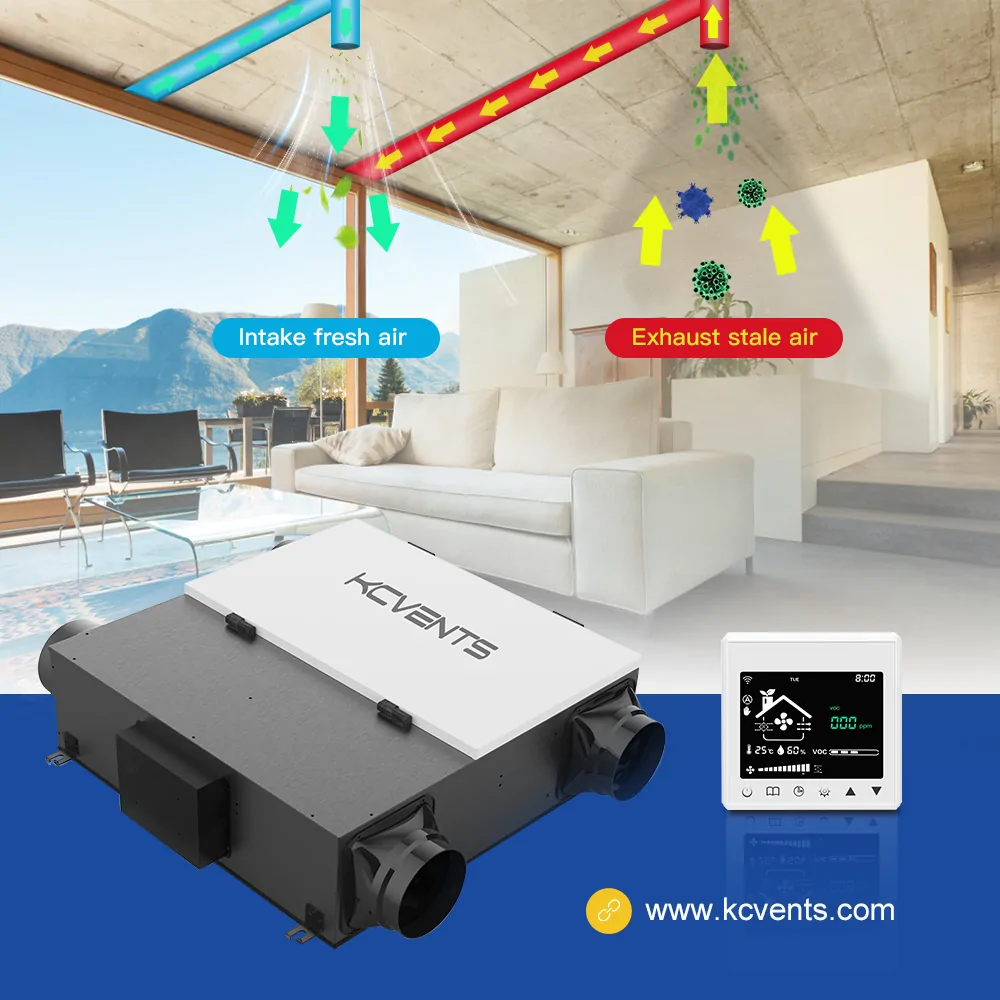
Equilibrada: ventiladores de insuflação e extração combinados. Caudal de ar controlado de entrada e saída.
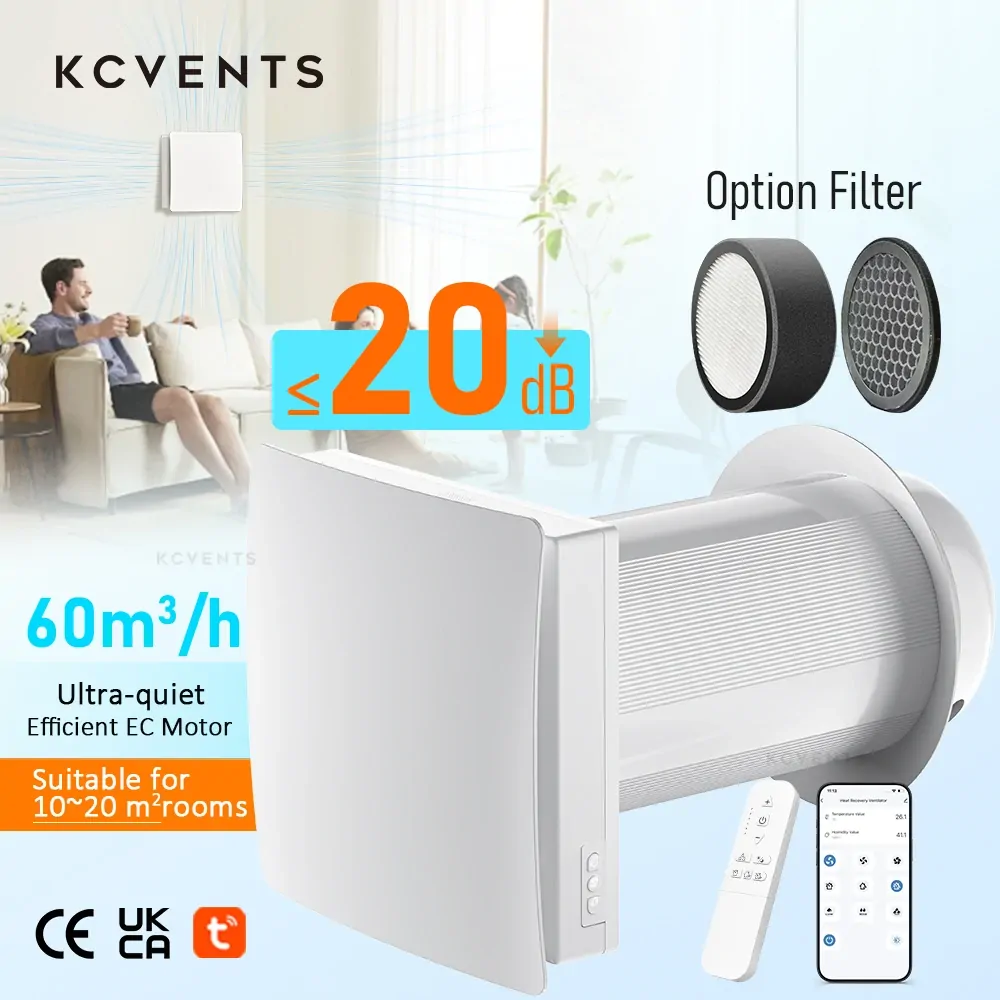
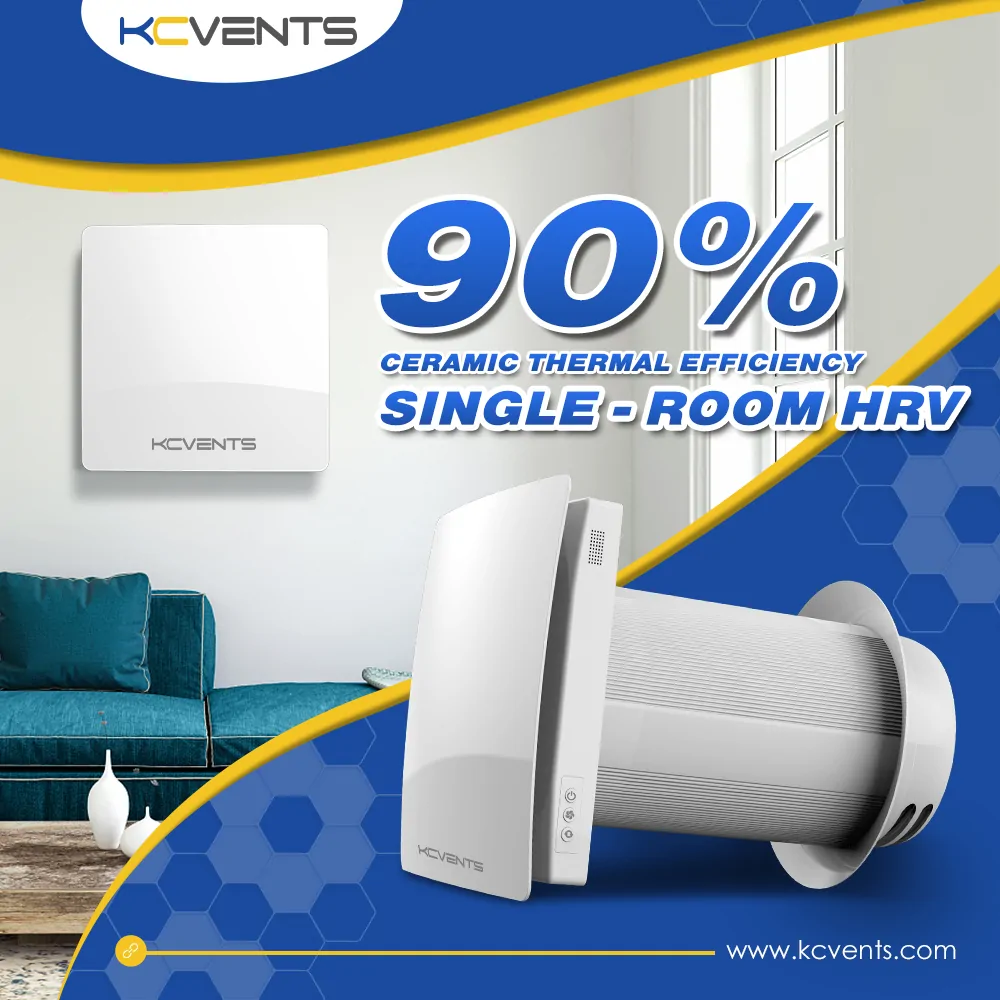
Equilibrada com recuperação de calor (HRV/ERV): adiciona um núcleo de permuta de calor que recupera calor (e, no caso do ERV, humidade) do ar de extração. No inverno, o ar frio de entrada é pré-aquecido; no verão, o ar quente de entrada é pré-arrefecido.
A recuperação de calor é o que torna a ventilação sustentável em termos energéticos. Um sistema de recuperação de calor normalmente recupera entre 60% e 95% do calor do ar de extração, de acordo com referências técnicas da indústria; a norma Passive House exige pelo menos 75% de eficiência de recuperação de calor sensível. O custo do equipamento é mais elevado, mas a energia operacional é muito menor do que ventilar ar não condicionado.
Combinando Ventilação Natural e Mecânica
Os projetos mais duradouros utilizam ambos:
Estações frescas e amenas e arrefecimento noturno → ventilação natural através de janelas operáveis, com o sistema mecânico em nível baixo ou desligado.
Invernos frios, verões quentes e úmidos e dias de alta poluição → ventilação mecânica com recuperação de calor e filtragem, com as janelas fechadas.
Controle em modo misto → o sistema de automação predial alterna entre ventilação natural e mecânica com base nas condições externas, no CO₂ e na temperatura.
Essa abordagem híbrida mantém os benefícios de baixo consumo de energia da ventilação natural onde ela funciona e a confiabilidade da ventilação mecânica onde a ventilação natural não é suficiente.
Normas de Ventilação e Energia
Diversas normas definem a quantidade de ventilação que uma edificação deve fornecer:
ASHRAE 62.1 (comercial/institucional) and 2 (residencial) estabelecem taxas de ventilação de ar externo para garantir uma qualidade do ar interno aceitável.
Casa Passiva / Passivehaus exige recuperação de calor de alta eficiência em edifícios herméticos, pois a ventilação mecânica com recuperação de calor é essencial para o seu modelo de consumo de energia ultrabaixo.
Regulamento europeu de Ecodesign (ErP) estabelece requisitos de eficiência para unidades de ventilação comercializadas na UE.
Para o dimensionamento residencial, a ASHRAE Standard 62.2 especifica uma ventilação mecânica contínua de 7.5 cfm por pessoa mais 3 cfm por 100 square feet de área útil. Estas normas fornecem ao projetista uma base sólida para selecionar o caudal de ar e a recuperação de calor.
Frequently Asked Questions
P: A ventilação natural é melhor do que a ventilação mecânica? R: Não universalmente. A ventilação natural é económica em climas amenos, mas imprevisível, não filtrada e resulta em desperdício de energia térmica em estações extremas. A ventilação mecânica com recuperação de calor é fiável e eficiente, embora tenha um custo mais elevado. A maioria dos edifícios beneficia da combinação de ambas.
P: Como é que a recuperação de calor torna a ventilação sustentável? R: O permutador de recuperação de calor transfere calor do ar de extração para o ar novo de admissão, permitindo que este chegue pré-climatizado. Desta forma, o edifício obtém ar fresco sem desperdiçar a sua energia de aquecimento ou arrefecimento para o exterior.
P: As normas de construção sustentável exigem ventilação mecânica? R: Edifícios estanques e de elevado desempenho geralmente requerem ventilação mecânica, uma vez que as infiltrações naturais são demasiado reduzidas. A norma Passive House exige especificamente ventilação mecânica equilibrada com recuperação de calor.
P: A ventilação mecânica pode reduzir as faturas de energia? R: Em comparação com a abertura de janelas ou ventilação apenas por extração em condições climatéricas extremas, a ventilação com recuperação de calor reduz as perdas energéticas associadas à renovação do ar. A poupança exata depende do clima, da eficiência da unidade e do tempo de funcionamento.
P: Qual é o dimensionamento do sistema de ventilação necessário para um edifício? R: Depende da taxa de ocupação, da área útil e do tipo de utilização. As normas ASHRAE 62.1/62.2 fornecem a base de cálculo; o projetista dimensiona o sistema a partir do caudal de ar necessário na pressão estática de funcionamento da rede.
A projetar um sistema de ventilação sustentável? A KCvents fabrica unidades de recuperação de calor e de energia, ventiladores de conduta em linha e sistemas de ar novo para projetos comerciais e residenciais. Solicite um orçamento com os seus requisitos de caudal de ar e clima.
Atualizações da newsletter
Enter your email address below and subscribe to our newsletter