Stay Updated with KCVENTS
Ventilation & HVAC Solutions

Subscribe to our newsletter for the latest airflow engineering insights, energy-efficient ERV/HRV system updates, and eco-friendly HVAC solutions.

Be the first to receive exclusive technical guides, custom OEM/ODM capabilities, and global exhibition news directly from KCVENTS.

The Commercial Ventilation Playbook: HRV, ERV, and Exhaust — What to Choose and Why

A decision framework for light commercial spaces — cafés, clinics, offices, and classrooms. Covers HRV vs ERV selection, climate zones, sizing calculations, and KCvents product mapping.

In This Guide

Why Ventilation Changed

Thirty years ago, ventilating a commercial building was not something anyone spent much time thinking about. Buildings leaked. Air moved through window frames, door gaps, and unsealed penetrations at a rate that would horrify a modern energy auditor — but it moved. Fresh air got in. Stale air got out. The HVAC system’s job was temperature control, not air exchange.

That changed when energy codes got serious. Buildings became tighter — by design. Continuous air barriers, high-performance glazing, and sealed envelopes became mandatory in most jurisdictions. A modern commercial building can be 10 to 20 times tighter than its 1980s equivalent. The upside: dramatically lower heating and cooling loads. The downside: without intentional mechanical ventilation, indoor air quality collapses within hours of occupancy.

core judgment: A sealed building without mechanical ventilation is not energy-efficient — it’s a health hazard. The two must be designed together.

The physics is straightforward. A dozen people in a meeting room exhale roughly 5 liters of CO₂ per minute. Volatile organic compounds off-gas from carpet, furniture, and cleaning products. Office equipment generates ozone. Cooking in a café produces particulate matter and moisture. Without deliberate air exchange, these pollutants accumulate. The result is what researchers in the 1980s termed “sick building syndrome” — headaches, fatigue, respiratory irritation, and measurably degraded cognitive performance. A 2015 Harvard study found that occupants in well-ventilated spaces performed 61% better on cognitive function tests compared to those in conventional buildings.

Enter heat recovery ventilation (HRV) and energy recovery ventilation (ERV). These systems solve the fundamental conflict at the heart of modern building design: you need to bring in outside air constantly, but you cannot afford to throw away the energy you spent conditioning the indoor air. An HRV captures 70–90% of the heat from outgoing exhaust air and transfers it to incoming fresh air. An ERV does the same for both heat and moisture. The energy penalty of ventilation drops from “prohibitive” to “negligible.”

From Leaky to Sealed: A Timeline of Ventilation Thinking

1980s: Leaky Buildings2000s: The Seal-UpToday: Recovery Era
Natural infiltration handled air exchange. Energy codes were minimal. No dedicated ventilation outside kitchens and bathrooms.Energy codes tightened. Buildings got 10–20× tighter. Indoor air quality problems surfaced. Sick building syndrome entered the vocabulary.HRV/ERV mandatory in most codes for commercial. Continuous ventilation with 70–90% heat recovery. IAQ and efficiency no longer trade-offs.

For commercial spaces, the stakes are higher than residential. Occupant density is greater. Operating hours are longer. Regulatory compliance is mandatory, not optional — ASHRAE 62.1 specifies minimum ventilation rates per person and per square foot for every commercial occupancy type, from classrooms to clinics to cafés. And the financial calculus is different: a well-ventilated office has measurably fewer sick days, higher productivity, and lower tenant turnover. A poorly ventilated restaurant loses customers who don’t consciously notice the stuffiness but don’t come back either.

The question is no longer whether to ventilate. It’s which system, how much, and how to match equipment to the space. The following sections build the framework to answer all three.

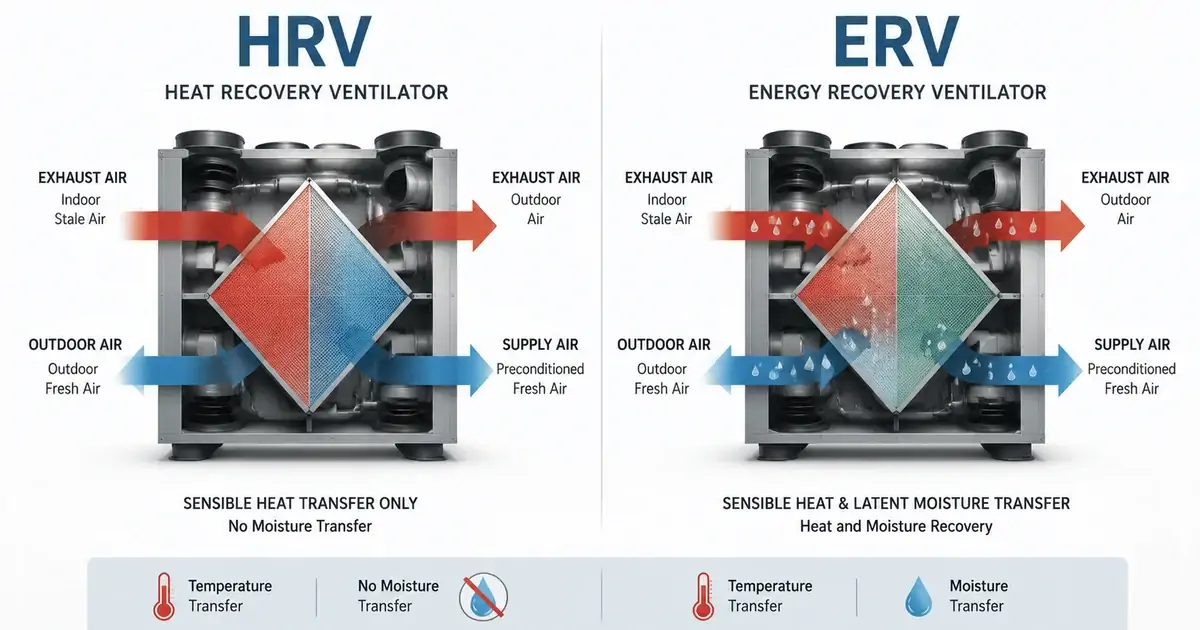
HRV vs ERV airflow comparison diagram for commercial ventilation
HRV transfers heat only; ERV transfers heat and moisture. The right choice depends mainly on climate humidity.

HRV vs ERV: The Real Difference

At first glance, HRVs and ERVs look identical — two fans, a heat exchanger core, and a box. But the difference in that core determines which system belongs in which building.

How an HRV Works

A Heat Recovery Ventilator (HRV) transfers heat only between exhaust and intake air streams. Two separate air paths flow through a core — typically aluminum or plastic plates — and thermal energy passes through the core material. The air streams never mix.

In practical terms: on a winter day when outdoor air is 0°C and indoor air is 20°C, an HRV with 85% efficiency pre-heats the incoming air to about 17°C using only the heat recovered from exhaust. Your heating system only needs to raise the temperature 3 more degrees.

How an ERV Works

An Energy Recovery Ventilator (ERV) transfers both heat and moisture. The core allows water vapor to diffuse across a membrane. In winter, it retains indoor humidity — preventing the excessively dry air that HRVs can create. In summer, it rejects outdoor humidity — preventing the muggy air from being pumped into air-conditioned spaces.

The Decision Rule

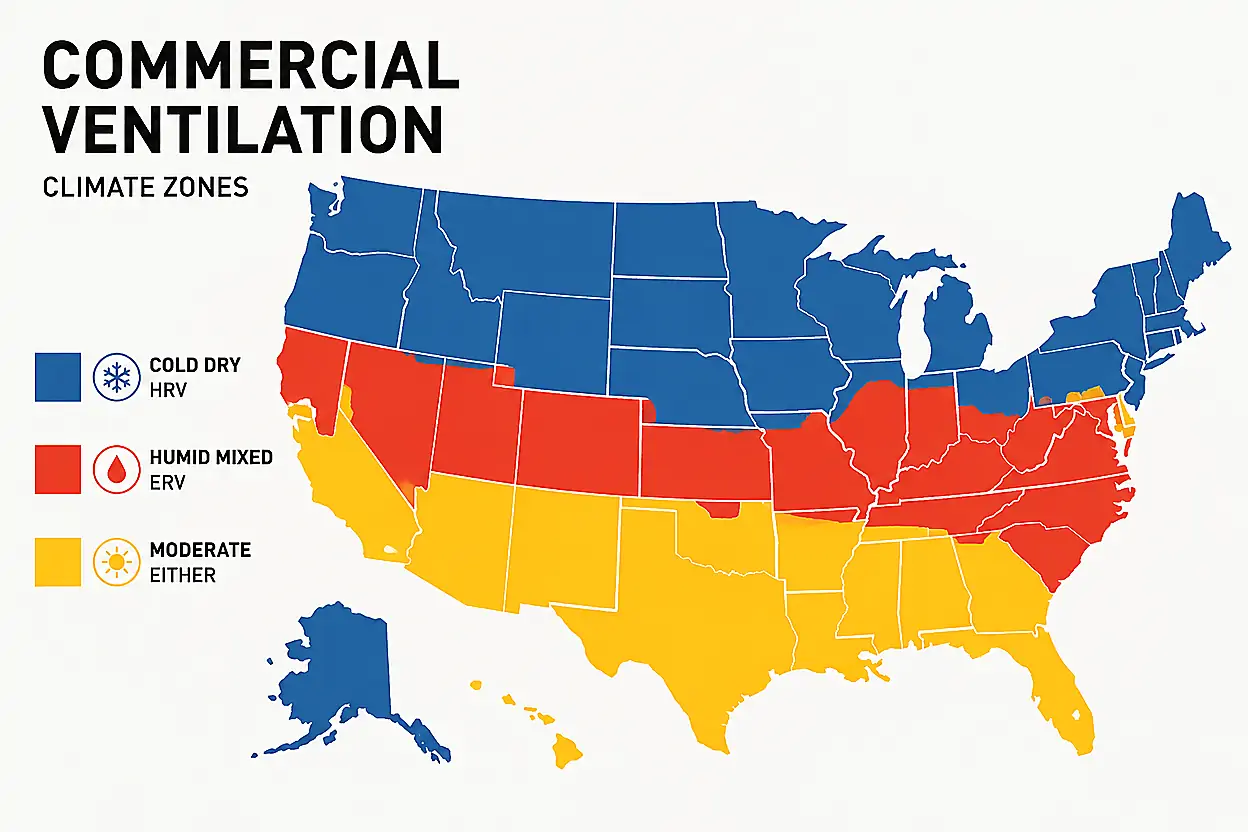
  • HRV — Best for cold, dry climates where humidity isn’t a concern (Canada, northern US, high-altitude regions)
  • ERV — Best for humid or mixed climates where moisture management matters (US South, coastal regions, Midwest summers)
  • Either works — Moderate climates like the Pacific Northwest. ERV offers more flexibility year-round.
Climate zone decision map placeholder
Climate is the fastest filter: cold/dry regions usually favor HRV; humid and mixed climates usually favor ERV.

Climate Matters: Temperature, Humidity, and System Choice

Climate is the single most important factor in choosing between HRV and ERV. An HRV in Miami would bring in bone-dry winter air (which sounds fine) but also humid summer air (which the AC then has to dehumidify — an expensive double-handling of moisture). An ERV in Winnipeg would transfer indoor humidity to the exhaust in winter, potentially causing frost buildup in the core during extreme cold snaps.

เขตภูมิอากาศระบบที่แนะนำเหตุผล
หนาวและแห้ง (โซน 5–7)HRVการกู้คืนความชื้นให้ประโยชน์น้อย แกนแลกเปลี่ยนความร้อน HRV แบบทนทานต่อน้ำค้างแข็งสามารถรับมือกับสภาพอากาศหนาวจัดได้ดีกว่า.
ผสม-ชื้น (โซน 3–4)ERVการระบายความชื้นทิ้งในฤดูร้อนช่วยลดภาระการทำงานของ AC การกักเก็บความชื้นในฤดูหนาวช่วยรักษาความสบาย.
ร้อนชื้น (โซน 1–2)ERVสำคัญอย่างยิ่งสำหรับการลดความชื้นในฤดูร้อน หากไม่มี ERV อากาศภายนอกจะกลายเป็นภาระหนักต่อ AC.
ร้อน-แห้ง (โซน 2B–3B)HRVไม่มีความชื้นที่ต้องจัดการ บำรุงรักษาง่ายกว่าในสภาวะที่มีฝุ่นมาก.
แถบชายฝั่งทะเล (โซน 4C)ใช้ได้ทั้งสองระบบ (แนะนำ ERV)สภาพอากาศไม่รุนแรงตลอดทั้งปีแต่มีความชื้นชายฝั่ง ERV จึงให้ความยืดหยุ่นได้ดีกว่า.
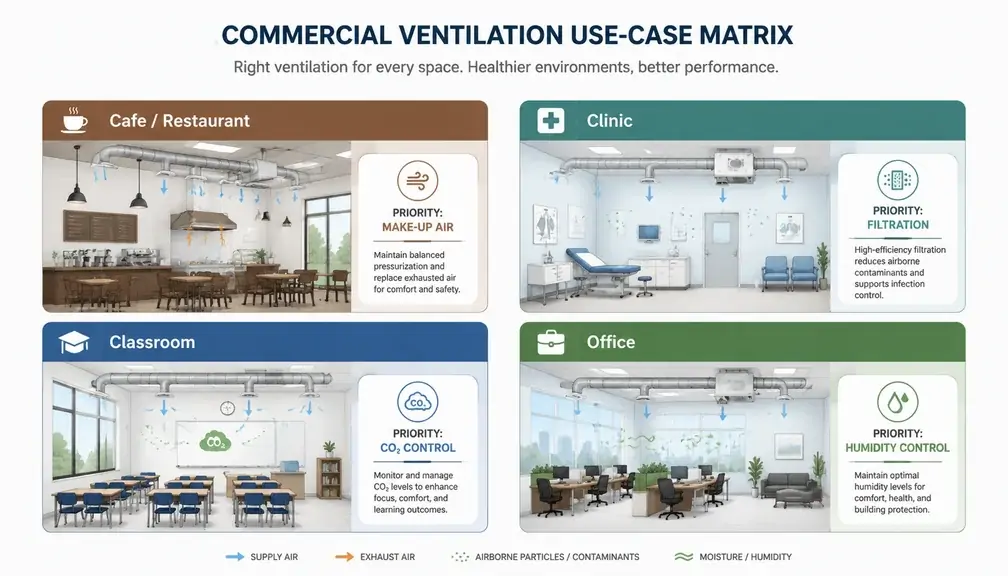
Four commercial ventilation use cases: cafe clinic classroom and office
พื้นที่เชิงพาณิชย์แต่ละประเภทสร้างภาระการระบายอากาศที่แตกต่างกัน: ความชื้นจากการปรุงอาหาร การกรองอากาศทางการแพทย์ ความหนาแน่นของคนในห้องเรียน และระดับ CO₂ สูงสุดในสำนักงาน.

Commercial Use Cases: What Your Space Actually Needs

คาเฟ่และร้านอาหาร

ฮูดดูดควันในครัวจะดึงอากาศปริมาณมหาศาลออกจากอาคาร หากไม่มีการเติมอากาศชดเชย (make-up air) อาคารจะเกิดแรงดันลบ — ส่งผลให้เกิดการไหลย้อนกลับของก๊าซจากการเผาไหม้ และดูดอากาศที่ไม่ได้ผ่านการกรองเข้ามาตามรอยแยกต่างๆ ระบบ HRV หรือ ERV ที่มีความสมดุลจะนำอากาศบริสุทธิ์ที่ผ่านการปรับสภาพเบื้องต้นเข้ามาทดแทนส่วนที่ฮูดดูดออกไป ความต้องการเฉพาะ: การกู้คืนความร้อนจากลมระบายของครัวในฤดูหนาว (ข้อได้เปรียบของ HRV) การจัดการความชื้นในฤดูร้อน (ข้อได้เปรียบของ ERV) แนะนำให้ใช้ระบบกรองคาร์บอนสำหรับพื้นที่รับประทานอาหารส่วนหน้า.

คลินิกและสถานพยาบาล

คุณภาพอากาศภายในอาคารเป็นสิ่งที่ไม่อาจประนีประนอมได้ ห้องพักคอยมีผู้ใช้งานหนาแน่นและหลากหลาย ห้องตรวจรักษาต้องการการแลกเปลี่ยนอากาศอย่างต่อเนื่อง โดยทั่วไปมักแนะนำ ERV: การควบคุมความชื้นช่วยป้องกันการเกิดเชื้อราและรักษาความสบายแม้จำนวนผู้ป่วยจะเปลี่ยนแปลงไป การติดตั้งระบบกรอง HEPA หรือ MERV ระดับสูงในกระแสลมจ่าย (supply air) ถือเป็นสิ่งจำเป็น พร้อมทั้งต้องการอัตราการระบายอากาศที่สูงกว่าพื้นที่เชิงพาณิชย์ทั่วไป — ซึ่งมักอยู่ที่ 12–15 CFM ต่อคน.

ห้องเรียนและสถานรับเลี้ยงเด็ก

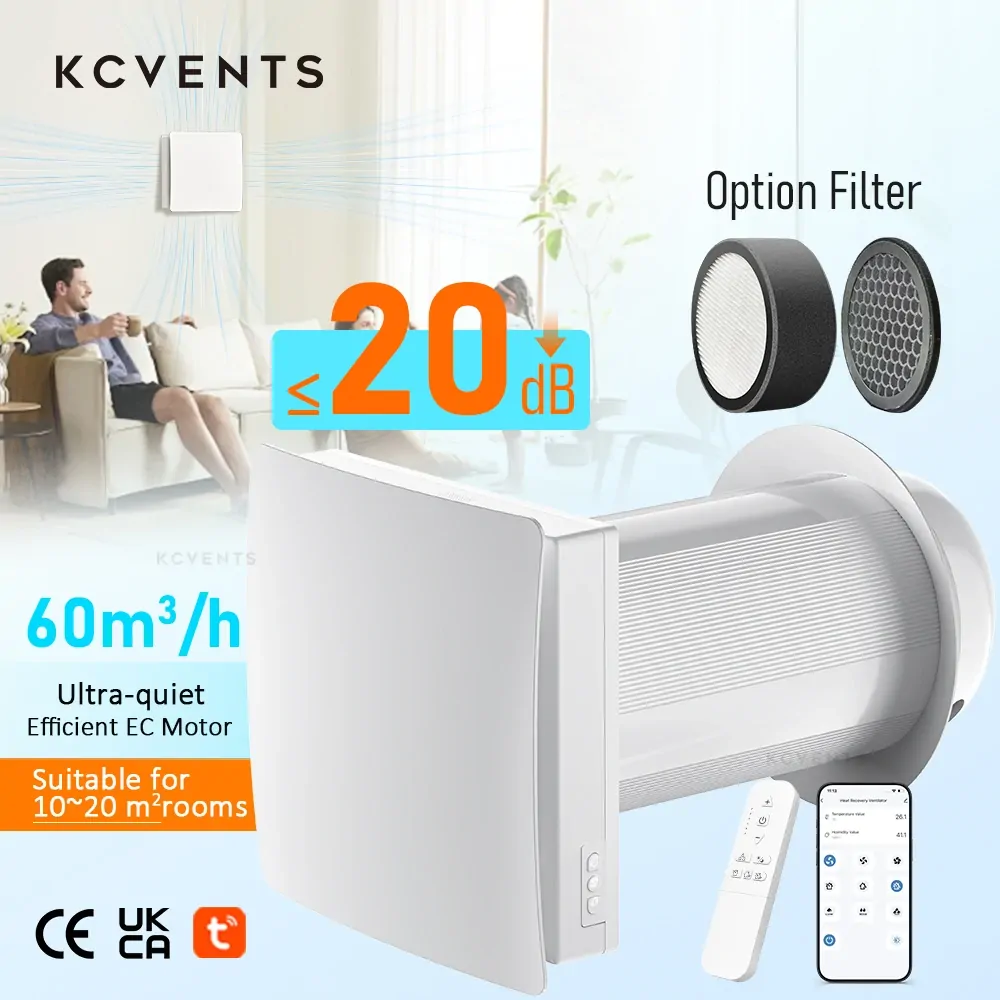
เด็กสูดอากาศต่อน้ำหนักตัวหนึ่งปอนด์มากกว่าผู้ใหญ่ และมีความเปราะบางต่อสิ่งปนเปื้อนในอากาศมากกว่า มาตรฐาน ASHRAE 62.1 กำหนดอัตรา 10 CFM ต่อคนสำหรับห้องเรียน — สูงกว่าอัตราของสำนักงานทั่วไป ระบบ HRV ทำงานได้ดีในสภาพอากาศแถบหนาว ส่วน ERV เหมาะสำหรับพื้นที่ชื้น เสียงรบกวนเป็นปัจจัยสำคัญที่ต้องคำนึงถึง: ตัวเครื่องต้องทำงานที่ความเร็วพัดลมต่ำระหว่างชั่วโมงเรียน เครื่องระบายอากาศแบบไร้ท่อสำหรับห้องเดี่ยวอย่าง VT501 สามารถรองรับห้องเรียนแต่ละห้องได้โดยไม่ต้องเสียค่าใช้จ่ายในการเดินระบบท่อลมเต็มรูปแบบ.

สำนักงานและโคเวิร์กกิ้งสเปซ

มีการใช้งานเป็นระยะๆ แต่หนาแน่น ระดับ CO₂ พุ่งสูงขึ้นอย่างรวดเร็วในห้องประชุม ระบบต่อท่อลมพร้อมการระบายอากาศตามความต้องการ (DCV) ที่ควบคุมด้วยเซนเซอร์ CO₂ จะช่วยเร่งอัตราลมระหว่างการประชุมและปรับลดลงเมื่อไม่มีการใช้งาน — ช่วยประหยัดพลังงานควบคู่ไปกับการรักษาประสิทธิภาพการรับรู้และการทำงานของสมองขณะใช้งานห้อง สามารถเลือกใช้ได้ทั้ง HRV หรือ ERV ขึ้นอยู่กับสภาพภูมิอากาศ ความคุ้มค่าทางการเงินมีความชัดเจน: ผลการศึกษาจาก Harvard ในปี 2015 ชี้ว่าสำนักงานที่มีการระบายอากาศที่ดีสัมพันธ์กับคะแนนด้านการรับรู้ที่สูงขึ้น 61%.

ร้านค้าปลีกและพื้นที่เชิงพาณิชย์ขนาดเล็ก

การหมุนเวียนของลูกค้าทำให้มีการใช้งานเป็นระยะๆ เป้าหมายคือการระบายอากาศพื้นหลังอย่างสม่ำเสมอ — เพื่อให้อากาศสดชื่นโดยไม่มีลมปะทะตัวหรือเสียงรบกวนที่สังเกตได้ เครื่องแบบไร้ท่อหรือแบบติดเพดานอย่างซีรีส์ KCQR ตอบโจทย์ได้เป็นอย่างดี แนะนำให้ใช้ ERV ในภูมิภาคที่มีความชื้นเพื่อจัดการกับภาระความชื้นภายนอกที่เข้ามาจากการเปิดประตูบ่อยครั้ง.

Sizing: How Much Airflow Does Your Space Need?

มาตรฐาน ASHRAE 62.1 กำหนดสูตรพื้นฐานสำหรับการคำนวณอัตราการระบายอากาศดังนี้: อัตราการระบายอากาศ = (CFM ต่อคน × จำนวนผู้ใช้งาน) + (CFM ต่อตารางฟุต × พื้นที่ใช้สอย) สำหรับพื้นที่เชิงพาณิชย์ขนาดเล็กส่วนใหญ่ อัตราการระบายอากาศตามจำนวนคนจะเป็นสัดส่วนหลักในการคำนวณ.

ประเภทพื้นที่CFM/คนCFM/ตร.ฟุตตัวอย่าง: 1,000 ตารางฟุต, 20 คน
สำนักงาน50.06160 CFM
ห้องเรียน100.12320 CFM
คาเฟ่ / ร้านอาหาร7.50.18330 CFM
ร้านค้าปลีก7.50.12270 CFM
ห้องพักคอยคลินิก7.50.12270 CFM
ห้องตรวจคลินิก100.18380 CFM

เกณฑ์เบื้องต้น: เลือกขนาดเครื่องให้มีพิกัดความจุสูงกว่าค่าขั้นต่ำที่คำนวณได้ประมาณ 20–30% วิธีนี้จะช่วยรองรับปริมาณการใช้งานสูงสุดได้เต็มประสิทธิภาพ และช่วยให้เครื่องทำงานที่ความเร็วรอบต่ำลง ซึ่งเงียบกว่าระหว่างการทำงานตามปกติ เครื่องที่ทำงานที่ 60% ของความเร็วสูงสุดจะมีประสิทธิภาพเชิงพลังงานมากกว่าและมีอายุการใช้งานยาวนานกว่าเครื่องที่ทำงานเต็มพิกัดตลอดเวลา.

KCvents Product Mapping: Which Product for Which Space

เมื่อทราบเขตภูมิอากาศ รูปแบบการใช้งาน และเป้าหมายปริมาณลมระบายอากาศแล้ว ขั้นตอนสุดท้ายคือการจับคู่ผลิตภัณฑ์ที่เหมาะสม KCvents มีอุปกรณ์ระบายอากาศหลากหลายรุ่นที่ครอบคลุมตั้งแต่ระดับห้องเดี่ยวไปจนถึงระบบอาคารพาณิชย์ทั้งหลัง.

โซลูชันสำหรับห้องเดี่ยว

ผลิตภัณฑ์ประเภทเหมาะที่สุดสำหรับสเปกสำคัญ
VT501HRV สำหรับห้องเดี่ยวห้องเรียนแยกส่วน, สำนักงานขนาดเล็ก, ห้องตรวจ ขนาดพื้นที่ไม่เกิน 500 ตารางฟุตการนำความร้อนกลับมาใช้ใหม่ 90%, ควบคุมผ่าน WiFi, ติดตั้งแบบเจาะผนังไม่ง้อท่อลม
VT502พัดลม HEPA แบบติดผนังระบบกรองอากาศเสริมสำหรับคลินิก ห้องรอตรวจ และพื้นที่ที่มีฝุ่นสูงระบบกรอง HEPA, ติดตั้งแบบติดผนัง, ทำงานเงียบ

ระบบต่อท่อลมสำหรับอาคารทั้งหลัง

ผลิตภัณฑ์ประเภทเหมาะที่สุดสำหรับสเปกสำคัญ
ซีรีส์ HRVHRV แบบต่อท่อลมระบบระบายอากาศสำหรับอาคารทั้งหลังในเชิงพาณิชย์ขนาดเล็ก — สำนักงาน ร้านค้า ศูนย์ดูแลเด็กตัวเลือกกำลังการทำงานหลากหลาย, กระจายลมผ่านท่อ, ปริมาณลมสมดุล
ซีรีส์ KCQRERV แบบติดตั้งบนฝ้าเพดานคาเฟ่ คลินิก ห้องประชุม — พื้นที่ที่มีปัญหาเรื่องความชื้นและมีพื้นที่ห้องเครื่องจำกัดแบบฝังฝ้าเพดาน, แกนแลกเปลี่ยนความร้อนและความชื้น (ERV core), ระบบต่อท่อลม

ระบบระบายอากาศออกและเติมอากาศบริสุทธิ์ (Exhaust & Make-Up Air)

ผลิตภัณฑ์ประเภทเหมาะที่สุดสำหรับ
Inline Fans (พัดลมต่อท่อ)พัดลมช่วยดูดส่งลม/พัดลมดูดอากาศในท่อเสริมแรงดูดอากาศในห้องครัว, ระบบระบายอากาศห้องน้ำ, การระบายอากาศบริเวณโถงทางเดิน
EC Shutter Exhaust Fans (พัดลมระบายอากาศพร้อมบานเกล็ด มอเตอร์ EC)พัดลมดูดอากาศแบบติดผนังพัดลมดูดอากาศติดผนังห้องครัว ห้องซักรีด พื้นที่จัดเก็บ มอเตอร์ EC ปรับความเร็วรอบได้และประหยัดพลังงาน

Decision Framework: A Step-by-Step Checklist

ใช้เช็กลิสต์นี้เมื่อระบุสเปกระบบระบายอากาศสำหรับโครงการเชิงพาณิชย์ขนาดเล็กทุกโครงการ.

  1. ยืนยันประเภทการใช้งานอาคาร — สำนักงาน? คาเฟ่? คลินิก? ห้องเรียน? ข้อมูลนี้ใช้กำหนดสมมติฐานจำนวนผู้ใช้งานและข้อกำหนดตามมาตรฐาน.
  2. ตรวจสอบเขตภูมิอากาศในพื้นที่ — หนาวและแห้ง → HRV ชื้น → ERV แบบผสม → แนะนำ ERV.
  3. คำนวณอัตราการระบายอากาศขั้นต่ำ — ใช้สูตรตามมาตรฐาน ASHRAE 62.1: (CFM/คน × จำนวนคน) + (CFM/ตร.ฟุต × พื้นที่).
  4. เพิ่มขนาดเผื่อกำลังการทำงาน — คูณเพิ่ม 1.2–1.3 เท่า เพื่อรองรับช่วงที่มีผู้ใช้งานสูงสุด.
  5. เลือกระบบแบบต่อท่อลมหรือแบบไม่ต่อท่อลม — ห้องเดี่ยวขนาด ≤500 ตร.ฟุต: ไม่ต่อท่อลม (VT501) หลายห้อง / ทั้งอาคาร: ต่อท่อลม (HRV Series, KCQR).
  6. เลือกระดับการกรองอากาศ — มาตรฐาน: MERV 8 สำหรับสถานพยาบาล / พื้นที่คนหนาแน่น: MERV 13 หรือ HEPA.
  7. วางแผนระบบเติมอากาศบริสุทธิ์ (Make-Up Air) สำหรับพัดลมดูดควันห้องครัว — เครื่องดูดควันในห้องครัวต้องมีอากาศทดแทนที่สมดุล จัดการลมเติมเข้าของ HRV/ERV ให้สัมพันธ์กับลมดูดออกของเครื่องดูดควัน.
  8. ตรวจสอบขีดจำกัดระดับเสียง — สำนักงาน/ห้องเรียน: ใช้ความเร็วรอบพัดลมต่ำในช่วงที่มีผู้ใช้งาน เลือกขนาดเครื่องใหญ่ขึ้นเล็กน้อยเพื่อให้ทำงานเงียบลง.
  9. ทดสอบและตรวจสอบการทำงานของระบบ (Test and commission) — ตรวจสอบสมดุลการไหลเวียนของอากาศ (ความไม่สมดุล <10%), ระดับ CO₂ ต่ำกว่า 1,000 ppm ในช่วงที่มีผู้ใช้งานสูงสุด, แรงดันตกคร่อมฟิลเตอร์อยู่ในเกณฑ์ที่กำหนด.

Authoritative References

  • มาตรฐาน ASHRAE 62.1 — อัตราการระบายอากาศขั้นต่ำเพื่อคุณภาพอากาศภายในอาคารที่ยอมรับได้ในอาคารเชิงพาณิชย์.
  • คุณภาพอากาศภายในอาคารของ U.S. EPA — คำแนะนำสาธารณะเกี่ยวกับสารมลพิษภายในอาคาร การระบายอากาศ และสุขภาวะของอาคาร.
  • การระบายอากาศในอาคารของ CDC/NIOSH — แนวทางด้านการระบายอากาศและคุณภาพอากาศภายในอาคาร (IAQ) สำหรับสถานที่ทำงาน.
  • งานวิจัย Harvard COGfx Study — งานวิจัยที่เชื่อมโยงระหว่างการระบายอากาศและคุณภาพสิ่งแวดล้อมภายในอาคารกับประสิทธิภาพการทำงานของสมอง.

สำหรับคำแนะนำเฉพาะโครงการ การให้คำปรึกษา หรือข้อมูลจำเพาะของผลิตภัณฑ์ โปรดติดต่อทีมวิศวกรของ KCvents ทุกพื้นที่เชิงพาณิชย์มีความต้องการเฉพาะตัว — กรอบการทำงานนี้จะช่วยให้คุณเริ่มต้นจากพื้นฐานที่มั่นคง.

Newsletter Updates

Enter your email address below and subscribe to our newsletter

Leave a Reply

อีเมลของคุณจะไม่แสดงให้คนอื่นเห็น ช่องข้อมูลจำเป็นถูกทำเครื่องหมาย *