We use cookies to ensure that we give you the best experience on our website.
Stay Updated with KCVENTS Ventilation & HVAC Solutions
Subscribe to our newsletter for the latest airflow engineering insights, energy-efficient ERV/HRV system updates, and eco-friendly HVAC solutions.
Be the first to receive exclusive technical guides, custom OEM/ODM capabilities, and global exhibition news directly from KCVENTS.
Single-Room HRV in 2026: Why the VT501-Wifi Works for Bedrooms, Apartments and Renovations
Panduan 2026: mengapa single-room heat recovery ventilator seperti KCVENTS VT501-Wifi sangat tepat untuk kamar tidur dan apartemen — 90% heat recovery, di bawah 30 dB, filtrasi HEPA + karbon, kontrol Wi-Fi.
Single-Room HRV in 2026: Why the VT501-Wifi Works for Bedrooms, Apartments and Renovations
Pada tahun 2026, tiga faktor telah secara signifikan mengubah cara rumah diventilasi: harga energi yang lebih tinggi, standar efisiensi bangunan yang lebih ketat, dan kualitas udara luar ruang yang memburuk selama musim kebakaran hutan dan serbuk sari. Rumah-rumah baru dibangun lebih kedap udara dari sebelumnya, menjadikan ventilasi mekanis sebuah kebutuhan mendasar alih-alih sekadar pelengkap — sementara sebagian besar rumah tangga belum memiliki ruang, anggaran, atau izin untuk memasang sistem ducting lengkap.
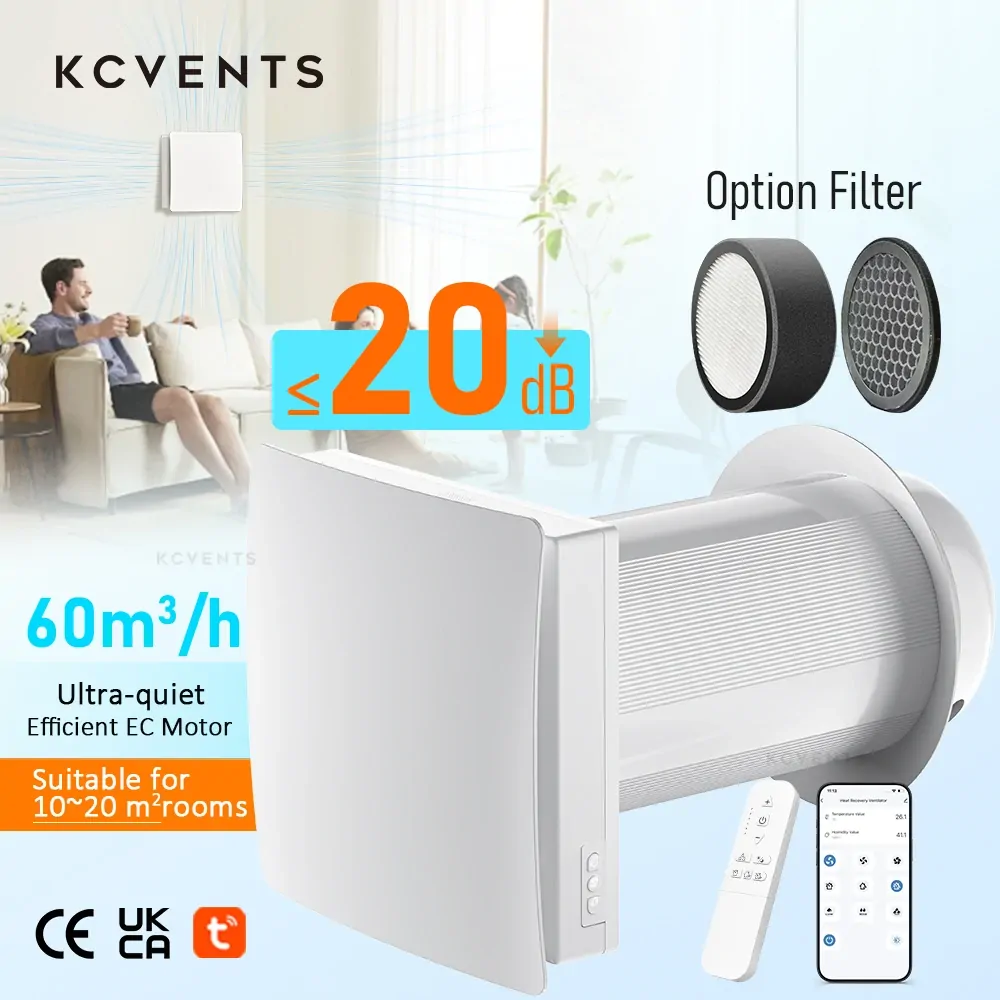
Kesenjangan itulah yang dijawab secara tepat oleh single-room heat recovery ventilators (HRV). KCVENTS VT501-Wifi memulihkan hingga 90% panas dari udara yang dibuang, beroperasi di bawah 30 dB, menyaring udara masuk dengan HEPA dan karbon aktif, serta dipasang hanya melalui satu lubang dinding — tanpa memerlukan ducting sama sekali. Di bawah ini, kami mengulas tren 2026 di balik produk ini, keunggulannya dibandingkan jendela terbuka atau exhaust fan, serta kenyamanan penggunaannya dalam kehidupan sehari-hari.
VT501-Wifi dipasang melalui satu bukaan dinding luar: panel sisi ruangan terhubung ke saluran teleskopik dan kisi-kisi eksterior (outdoor grille), tanpa sistem ducting terpusat.
Tiga Tantangan Ventilasi yang Membentuk Tren 2026
Tagihan energi dan regulasi efisiensi yang semakin ketat
Uni Eropa, Inggris, dan Amerika Utara terus memperketat persyaratan kinerja energi untuk bangunan hingga tahun 2026, dan proyek renovasi kini semakin diwajibkan untuk mencakup peningkatan sistem ventilasi. Sementara itu, biaya energi rumah tangga tetap menjadi salah satu perhatian utama dalam anggaran.
Perhitungannya sederhana: setiap meter kubik udara hangat (atau sejuk) yang Anda buang tanpa pemulihan panas (heat recovery) harus dibayar dua kali — pertama untuk memanaskan atau mendinginkannya, dan kedua untuk mengkondisikan udara penggantinya. Sebuah ventilator pemulihan panas menangkap energi tersebut sebelum terbuang ke luar. Inti keramik VT501-Wifi memiliki nilai efisiensi hingga 90%, dan pada pengaturan Sleep seluruh unit hanya mengonsumsi daya sebesar 5 W — lebih hemat daripada lampu tidur.
Asap, serbuk sari, dan polusi udara luar ruang
Asap kebakaran hutan bukan lagi peristiwa langka — di berbagai wilayah, kondisi ini menjadi kenyataan musiman, terkadang berjarak ribuan kilometer dari titik api. Musim serbuk sari juga dimulai lebih awal dan berlangsung lebih lama. Dalam kedua kondisi tersebut, kebiasaan “membuka jendela untuk udara segar” sering kali justru memperburuk kualitas udara dalam ruangan.
HRV tipe balanced menjaga sirkulasi udara tanpa perlu membuka jendela, karena udara segar (supply air) melewati tahap filtrasi terlebih dahulu. VT501-Wifi dilengkapi dengan set filter ganda — HEPA ditambah karbon aktif — yang menyaring serbuk sari, debu, partikulat, dan berbagai bau dari luar ruangan sebelum masuk ke dalam ruangan. Ini memberikan perlindungan praktis selama periode kabut asap maupun sepanjang musim alergi.
Kamar tidur yang kedap dan tinggi kadar CO₂
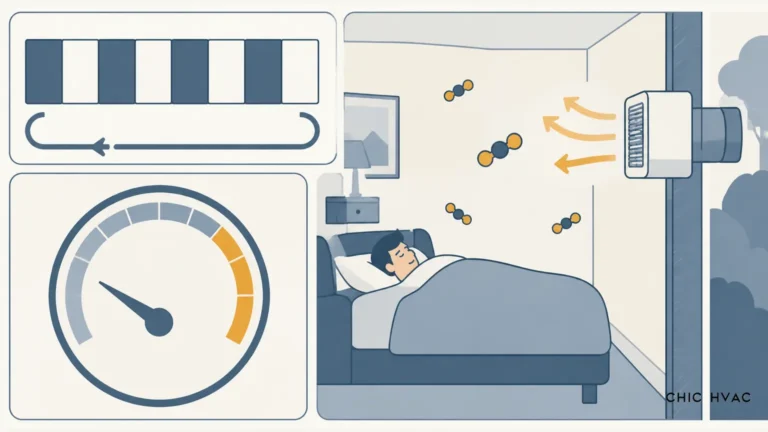
Jendela dan insulasi berkualitas baik mampu menahan panas di dalam ruangan — namun juga memerangkap CO₂, kelembapan, dan polutan. Peningkatan kadar CO₂ di kamar tidur terbukti berhubungan langsung dengan kualitas tidur yang buruk, sakit kepala di pagi hari, dan rasa lesu keesokan harinya. Exhaust fan dapat membuang sebagian CO₂, namun juga ikut membuang energi termal dan menimbulkan kebisingan sepanjang malam; sementara membuka jendela pada musim dingin atau musim panas akan mengorbankan kenyamanan sekaligus meningkatkan tagihan energi.
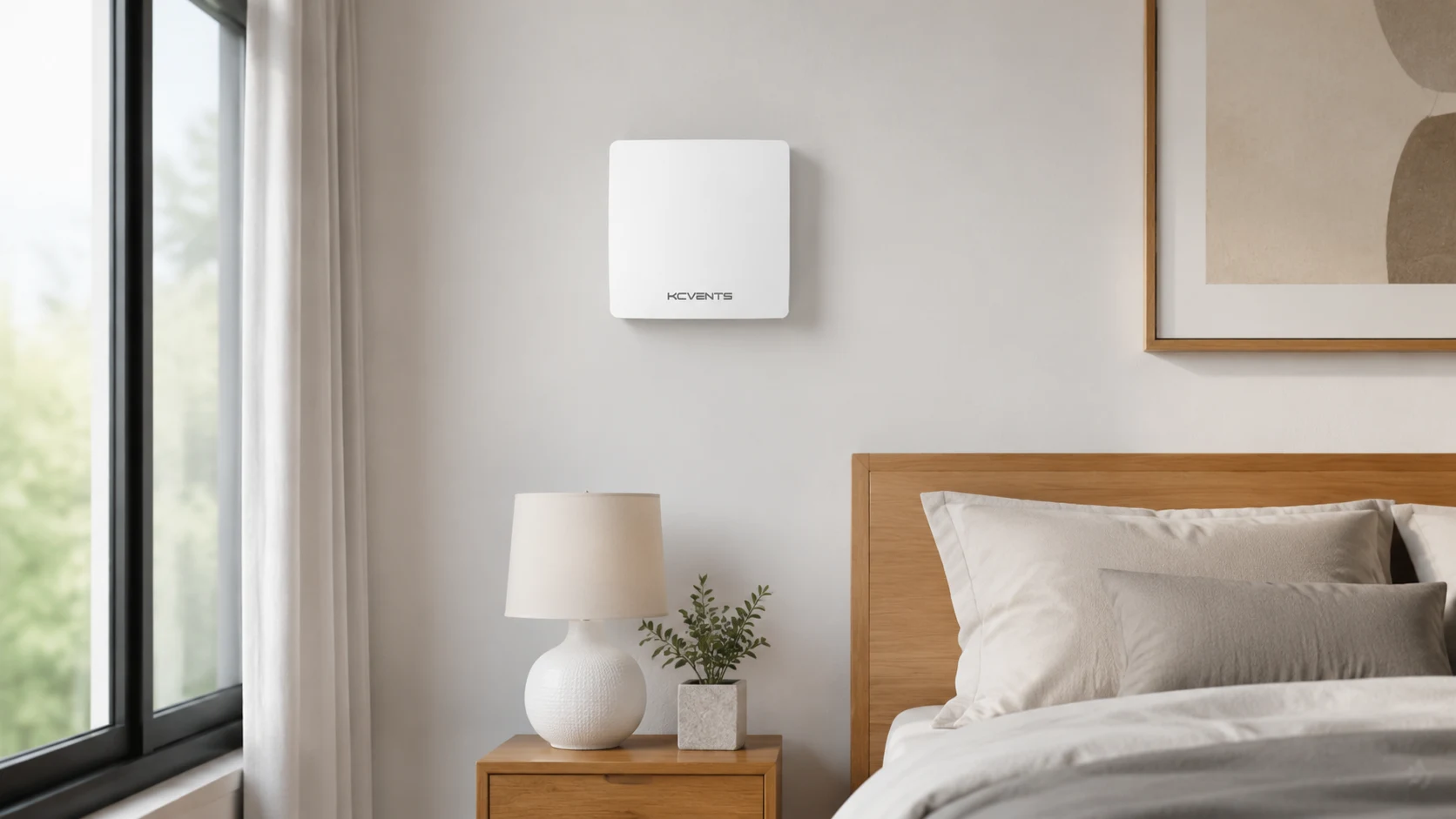
Single-room HRV yang tenang dan seimbang adalah solusi praktis: pertukaran udara segar berkelanjutan dengan kehilangan panas minimal, cukup tenang untuk tidur tepat di sebelahnya.
Mengapa Single-Room HRV Lebih Unggul Dibandingkan Alternatif Lain
Opsi
Keunggulan
Keterbatasan
Jendela terbuka
Gratis, tanpa peralatan
Kehilangan panas, kebisingan, udara luar ruangan tanpa filtrasi (asap, serbuk sari, debu), risiko keamanan & paparan cuaca
Hanya exhaust fan
Sederhana, biaya rendah
Tanpa pemulihan panas, tanpa filtrasi udara pasokan, bising, menimbulkan tekanan negatif dan hembusan udara (draughts)
HRV/ERV sentral dengan ducting
Performa untuk seluruh rumah
Mahal, membutuhkan desain ducting, sulit untuk apartemen, penyewa, dan proyek retrofit
Air purifier portabel
Menyaring udara resirkulasi
Tidak memasukkan udara segar atau membuang CO₂, tanpa pemulihan panas
HRV satu ruangan (VT501-Wifi)
Pemulihan panas hingga 90%, filtrasi HEPA + karbon, di bawah 30 dB, kontrol Wi-Fi, pemasangan satu lubang
Melayani satu ruangan pada satu waktu (dapat diperluas dengan konfigurasi master/slave)
Untuk kamar tidur, ruang kerja di rumah, apartemen, dan proyek renovasi, single-room HRV biasanya merupakan kompromi terbaik antara performa, kebisingan, kemudahan pemasangan, dan biaya.
Sekilas tentang VT501-Wifi
Pemulihan panas hingga 90% — inti keramik memulihkan panas dari udara keluar pada musim pemanasan maupun pendinginan
Senyap, di bawah 30 dB — motor DC brushless dalam housing berperedam suara, dirancang khusus untuk kamar tidur, kamar bayi, dan ruang kerja di rumah
Filtrasi ganda — HEPA dan karbon aktif terhadap serbuk sari, debu, partikulat, dan bau luar ruangan
Kontrol pintar Wi-Fi — aplikasi berbasis Tuya untuk pengaturan mode, jadwal, dan rutinitas otomatisasi
Pemasangan dinding satu lubang — saluran teleskopik menembus dinding eksterior, tanpa memerlukan ducting sentral
Tiga mode pengoperasian — Fresh Air, Exhaust, dan mode Siklus 65 detik
Rentang voltase dan iklim yang luas — 12 VDC atau 100–240 V, 50/60 Hz; beroperasi dari -20°C hingga +50°C
Performance Parameters
Speed
Airflow (m³/h)
Daya Total (W)
Current (A)
Kecepatan Motor (RPM)
Sleep
20
2.5
0.025
630
I
48
3.0
0.030
1,100
II
54
4.5
0.045
1,600
III
60
8.5
0.070
2,200
Bahkan pada kecepatan maksimum, unit ini hanya mengonsumsi 5 W — pengoperasian setiap malam selama setahun penuh hanya memakan biaya listrik yang sangat rendah, sementara panas yang dipulihkan menghemat biaya pemanasan dan pendinginan berkali-kali lipat.
Bagaimana tingkat kebisingan terdengar di malam hari
“Di bawah 30 dB” adalah angka spesifikasi; yang terpenting adalah bagaimana bunyinya di kamar tidur yang hening. Pada instalasi kami di dinding plasterboard standar, Mode Sleep beroperasi pada kisaran 20-an rendah (dB) and Kecepatan I berada di kisaran 20-an menengah — kira-kira seperti suasana perpustakaan yang tenang; Anda hanya mendengarnya jika benar-benar memperhatikannya. Pada kecepatan II suaranya mulai terdengar di ruangan yang sunyi, dan pada kecepatan III (60 m³/h) motor terdengar jelas, menyerupai kipas meja kecil pada kecepatan sedang. Yang terpenting adalah karakternya: dengungan rendah yang lembut, bukan derau nada tinggi yang biasanya mengganggu tidur.
Angka pastinya dapat bergeser beberapa dB tergantung pada ketebalan dinding dan akustik ruangan, jadi jadikan angka ini sebagai perkiraan. Catatan jujur bagi yang mudah terbangun: jalankan unit dalam mode Fresh Air pada pengaturan Sleep atau I sepanjang malam. Mode Siklus 65 detik adalah satu-satunya mode di mana Anda akan menyadari motor berbalik arah setiap sekitar satu menit — cocok untuk penyegaran cepat, bukan untuk saat tidur.
Tiga Mode untuk Pengendalian Sehari-hari
Mode Fresh Air — suplai udara luar ruangan terfiltrasi yang seimbang dan berkelanjutan untuk ventilasi sehari-hari.
Mode Exhaust — pembuangan cepat untuk udara pengap, bau masakan, atau lonjakan kelembapan.
Mode Siklus 65 Detik — bergantian antara pemasukan dan pembuangan udara untuk menyegarkan ruangan dengan cepat saat dibutuhkan, seperti setelah tamu pulang atau sebelum tidur.
Cara kerja siklus 65 detik: inti keramik menyimpan panas. Kipas menarik udara pembuangan melalui inti, menghangatkannya saat udara keluar; kemudian kipas berbalik arah dan menarik udara suplai kembali melalui inti hangat yang sama, yang melakukan pemanasan awal pada udara yang masuk (dan mendinginkannya secara perlahan di musim panas). VT501 berganti arah setiap 65 detik, sehingga unit dinding satu lubang yang ringkas ini memperoleh pemulihan panas nyata tanpa memerlukan inti cross-flow yang besar. Untuk penggunaan sehari-hari, anggap mode Siklus sebagai tombol penyegaran cepat — mode Fresh Air adalah mode yang dibiarkan terus beroperasi.
Kontrol Pintar dengan Aplikasi Tuya/Wi-Fi
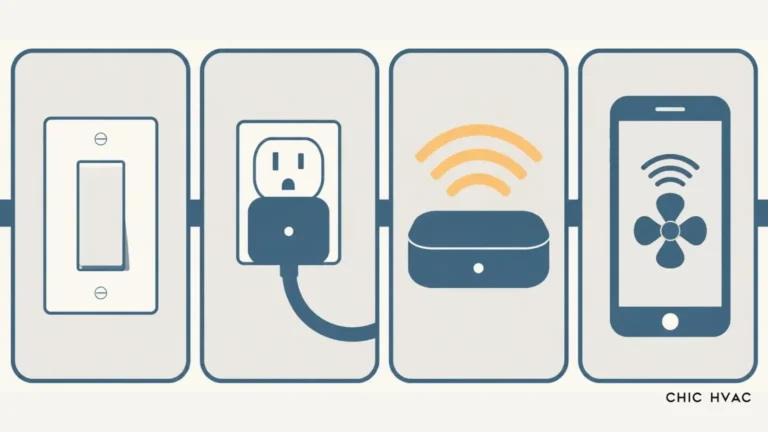
Ventilasi hanya bermanfaat jika benar-benar berjalan, dan HRV yang dilengkapi Wi-Fi menghilangkan kendala pengoperasian manual. Dengan aplikasi berbasis Tuya Anda dapat beralih mode, menyesuaikan kecepatan, dan mengatur jadwal dari ponsel Anda: aktifkan mode Exhaust sebelum memasak, jalankan kecepatan Sleep semalaman, atau tingkatkan Fresh Air sebelum Anda tiba di rumah. Unit ini juga terintegrasi langsung ke dalam rutinitas smart home standar tanpa gateway tambahan.
Satu tips praktis dari pengalaman lapangan: VT501 terhubung melalui Wi-Fi 2.4 GHz, seperti kebanyakan perangkat Tuya. Jika proses pairing terhenti, alihkan ponsel Anda ke pita frekuensi 2.4 GHz (atau nonaktifkan sementara fitur “band steering” / smart connect pada router Anda) dan coba lagi — langkah ini mengatasi sebagian besar kegagalan pairing yang sering kami temui.
Instalasi: Hal yang Perlu Diperiksa Sebelum Anda Mengebor
VT501-Wifi dirancang untuk kemudahan pemasangan retrofit:
Melalui dinding luar dengan satu lubang dan saluran teleskopik
Tanpa ducting terpusat — ideal untuk apartemen, penyewa, dan proyek renovasi
Panjang saluran: 250–500 mm, dapat dipotong sesuai ketebalan dinding Anda (ukuran lubang 160 mm Ø)
Panel penutup sisi ruangan: 242 × 242 mm, dimensi ringkas untuk sebagian besar ruangan
Sebelum mengebor, pastikan empat hal ini — di sinilah sebagian besar masalah pemasangan bermula:
Izin, jika Anda menyewa. Lubang 160 mm merupakan perubahan permanen pada selubung bangunan. Periksa perjanjian sewa Anda dan bicarakan dengan pemilik properti atau pengelola sebelum mengebor. Dalam praktiknya, banyak pemilik menyetujui setelah mengetahui bahwa lubang tersebut dapat ditutup rapat dan ditambal dengan baik jika Anda pindah.
Apa yang ada di dalam dinding. Pastikan tidak ada kabel, pipa, atau tulangan baja di jalur pengeboran. Untuk dinding beton atau bata, kontraktor dengan bor inti (core drill) akan memberikan hasil paling rapi — dan hanya membutuhkan waktu sekitar satu jam.
Ketebalan dinding dan panjang saluran. Ukur dinding sebelum memesan: saluran teleskopik mencakup 250–500 mm, dan dinding berongga atau berinsulasi biasanya membutuhkan rentang yang lebih panjang. Saluran yang terlalu pendek adalah kesalahan pemasangan yang paling umum terjadi.
Sisi luar bangunan. Kisi-kisi luar ruangan harus dipasang dengan sedikit kemiringan ke bawah agar air hujan dapat mengalir turun, dan jauh dari area yang mudah terkena daun, burung, atau hembusan angin kencang langsung. Tutup celah antara saluran dan dinding dengan benar — sealent berfungsi sebagai penahan air.
Pekerjaan ini sangat memungkinkan dilakukan sendiri (DIY) bagi pemilik yang terampil; untuk yang lainnya, teknisi HVAC atau tukang dengan bor inti dapat menyelesaikannya dalam satu atau dua jam — dan hasil akhir yang tertutup rapat dan rapi sangatlah sepadan.
Siapa yang Sebaiknya Memilih VT501-Wifi — dan Batasan Sebenarnya
Kamar tidur dan kamar bayi — udara segar tersaring yang tenang setiap malam, dengan tingkat kebisingan di bawah 30 dB
Apartemen dan proyek renovasi — ventilasi pemulihan panas untuk satu ruangan tanpa perlu memasang sistem saluran sentral
Ruang kerja di rumah dan ruangan kecil — udara lebih segar, tidak pengap, lebih sedikit bau, dan kelembapan lebih seimbang saat Anda bekerja
Siapa pun yang lelah dengan hembusan angin dingin di musim dingin — ventilasi seimbang dengan pemulihan panas hingga 90% alih-alih kehilangan kehangatan melalui jendela yang terbuka
Dan siapa yang sebaiknya mempertimbangkan opsi lain? Satu unit VT501 mencakup sekitar ruangan 15–20 m² (sekitar 160–215 sq ft). Jika Anda memerlukan pertukaran udara untuk seluruh rumah, satu unit saja tidak akan mencukupi — solusi yang realistis adalah menggunakan beberapa unit yang bekerja bersamaan (pengaturan master/slave memungkinkan unit kedua mengikuti unit pertama), atau sistem sentral. Dan jika Anda sama sekali tidak dapat mengebor dinding luar, seluruh kategori produk ini tidak sesuai untuk situasi Anda.
Jawaban Cepat: FAQ VT501-Wifi
Bagaimana cara kerja siklus keramik 65 detik?
Inti keramik berfungsi menyimpan panas. Pada satu bagian siklus, udara pembuangan dialirkan melalui inti keramik dan menghangatkannya saat keluar; kemudian arah kipas berbalik dan udara segar dialirkan kembali melalui inti hangat yang sama, menyerap panas yang tersimpan tersebut — sekaligus sedikit didinginkan di musim panas. VT501 mengubah arah aliran setiap 65 detik, memungkinkan unit kompak satu lubang ini mencapai pemulihan panas hingga 90% tanpa memerlukan inti cross-flow berukuran besar.
Apakah VT501-Wifi cukup tenang bagi orang yang mudah terbangun dari tidur?
Pada malam hari, jalankan mode Fresh Air pada pengaturan Sleep atau I: dalam praktiknya, tingkat kebisingannya berada di kisaran rendah hingga pertengahan 20-an (dB), setara dengan perpustakaan yang tenang — bagi sebagian besar orang, suaranya tidak lagi terasa setelah satu atau dua malam. Karakter suara motor berupa dengungan lembut bernada rendah, bukan desingan melengking. Satu catatan penting: pada mode Cycle 65 detik, Anda akan mendengar putaran motor berbalik arah sekitar setiap menit, sehingga pengguna yang sensitif terhadap suara sebaiknya tidak menjalankan mode tersebut sepanjang malam.
Apakah dua unit VT501 dapat bekerja bersama untuk ventilasi push-pull?
Ya, hingga batas tertentu: VT501 mendukung konfigurasi master/slave, di mana unit kedua mengikuti mode unit pertama sehingga dua ruangan dapat diventilasi dalam skema push-pull (misalnya, kamar tidur dan ruang keluarga). Hal inilah yang membuat single-room HRV dapat diperluas melampaui satu ruangan. Detail perkabelan dan konfigurasi bergantung pada sistem yang dipasang, jadi pastikan spesifikasinya dengan dealer Anda atau dengan KCVENTS sebelum memesan beberapa unit.
Berapa ukuran lubang yang dibutuhkan — dan bisakah dipasang di apartemen sewaan?
Bukaan dinding berukuran Ø 160 mm dan saluran teleskopik mencakup ketebalan dinding 250–500 mm; panel sisi ruangan berukuran 242 × 242 mm. Di properti sewaan, langkah praktisnya adalah: minta izin terlebih dahulu. Lubang 160 mm merupakan modifikasi permanen, jadi periksa perjanjian sewa Anda dan dapatkan persetujuan tertulis dari pemilik properti — banyak yang menyetujui setelah pemasangan dijelaskan dan lubang dapat ditambal kembali saat Anda pindah.
Mengapa unit tidak dapat terhubung ke Wi-Fi saya?
VT501 terhubung melalui Wi-Fi 2,4 GHz, yang merupakan standar untuk perangkat berbasis Tuya. Jika router Anda memancarkan jaringan gabungan 5 GHz / 2,4 GHz, ponsel dan unit dapat berada pada pita frekuensi yang berbeda. Solusi: hubungkan ponsel Anda ke jaringan 2,4 GHz selama proses pemasangan (pairing), atau nonaktifkan sementara pengaturan band steering (smart connect) pada router, lalu lakukan pairing kembali.
Berapa luas ruangan yang sebenarnya dapat dicakup oleh satu unit?
Secara realistis, satu unit VT501-Wifi cocok untuk ruangan berukuran 15–20 m² — tipikal kamar tidur, kamar anak, atau ruang kerja di rumah. Unit ini bukan solusi menyeluruh untuk satu rumah atau seluruh apartemen jika digunakan sendirian; untuk beberapa ruangan, pertimbangkan pengaturan master/slave agar unit saling tersinkronisasi, atau gunakan central ducted system.
Bagaimana dengan kondensasi atau pembekuan (frost) pada musim dingin yang ekstrem?
VT501 dirancang untuk beroperasi pada rentang -20°C hingga +50°C. Dalam praktiknya, saat cuaca sangat dingin, disarankan untuk menjaga unit tetap beroperasi secara terus-menerus pada kecepatan rendah agar inti keramik tetap hangat, serta menggunakan mode Cycle 65 detik saat Anda membutuhkan dorongan ventilasi ekstra — pembalikan arah aliran udara secara berkala juga memberi kesempatan bagi inti keramik untuk mencairkan embun beku (frost). Praktik standar untuk HRV berinti keramik: penggunaan rutin secara berkala jauh lebih efektif daripada membiarkannya tidak aktif dalam waktu lama.
Pilih Ventilasi yang Senyap dan Efisien di Tahun 2026
Di tengah tingginya harga energi, musim asap serta serbuk sari, dan studi kualitas tidur yang menekankan pentingnya udara segar di kamar, single-room HRV telah beralih dari produk khusus menjadi solusi utama di tahun 2026. VT501-Wifi mencakup tiga kebutuhan utama untuk kamar tidur atau apartemen: pemulihan panas nyata (hingga 90%), pengoperasian yang benar-benar hening (terukur di bawah 30 dB), dan filtrasi yang mencegah polusi luar ruangan masuk — semuanya melalui pemasangan lubang tunggal (single-hole) yang bekerja tanpa saluran udara sentral. Untuk ruangan tunggal, ini adalah solusi praktis dan tepat; untuk ruangan yang lebih besar, skalakan dengan unit master/slave atau sistem ber-duct (ducted system).
Ingin mempelajari lebih lanjut? Baca halaman produk VT501-Wifi, , FAQ seri VT501, atau hubungi KCVENTS untuk dukungan OEM/ODM. Setiap batch diuji di pabrik sebelum pengiriman (memenuhi standar CE, RoHS, dan ISO9001), serta desain airflow kustom dan integrasi smart-control tersedia untuk proyek B2B.
Pembaruan Buletin
Masukkan alamat email Anda di bawah ini dan berlangganan buletin kami