Nós usamos cookies para garantir que você tenha a melhor experiência em nosso site.
Stay Updated with KCVENTS Ventilation & HVAC Solutions
Subscribe to our newsletter for the latest airflow engineering insights, energy-efficient ERV/HRV system updates, and eco-friendly HVAC solutions.
Be the first to receive exclusive technical guides, custom OEM/ODM capabilities, and global exhibition news directly from KCVENTS.
Single-Room HRV in 2026: Why the VT501-Wifi Works for Bedrooms, Apartments and Renovations
Guia 2026: por que um recuperador de calor de ambiente único como o KCVENTS VT501-Wifi pertence a quartos e apartamentos — recuperação de calor de 90%, abaixo de 30 dB, filtragem HEPA + carvão, controlo via Wi-Fi.
Single-Room HRV in 2026: Why the VT501-Wifi Works for Bedrooms, Apartments and Renovations
Até 2026, três fatores mudaram silenciosamente a forma como as habitações são ventiladas: preços de energia mais elevados, normas mais rigorosas de eficiência energética em edifícios, e pior qualidade do ar exterior durante as épocas de incêndios e de pólen. As novas habitações são construídas de forma mais estanque do que nunca, tornando a ventilação mecânica uma necessidade e não apenas um extra — enquanto a maioria das habitações ainda não dispõe de espaço, orçamento ou autorização para um sistema completo por condutas.
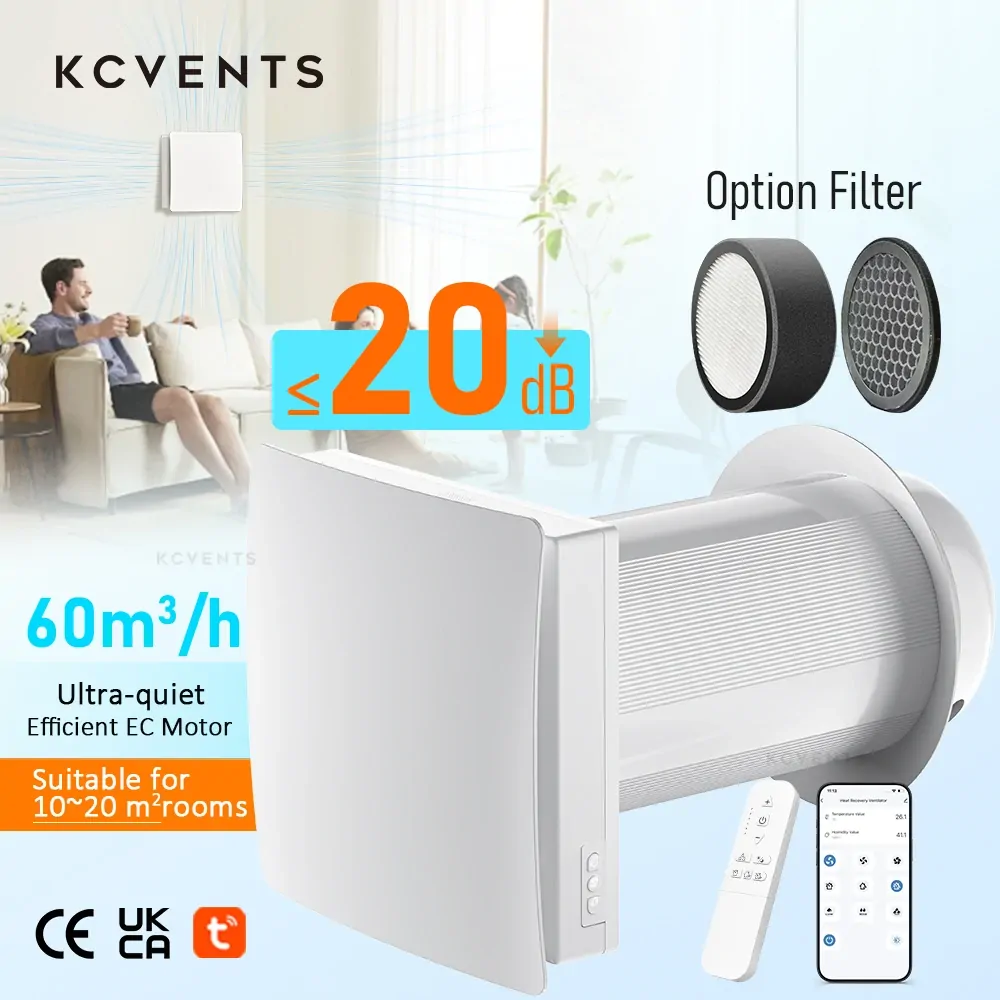
É exatamente essa lacuna que os recuperadores de calor de ambiente único (HRVs) preenchem. O KCVENTS VT501-Wifi recupera até 90% do calor do ar de exaustão, funciona abaixo de 30 dB, filtra o ar de admissão com HEPA e carvão ativado, e é instalado através de uma única abertura na parede — sem qualquer rede de condutas. Abaixo, analisamos as tendências de 2026 por trás do produto, onde ele supera uma janela aberta ou um exaustor, e como é viver com ele no dia a dia.
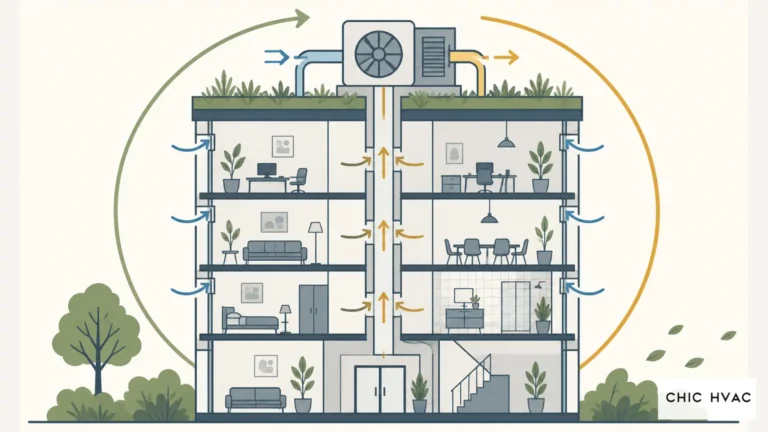
O VT501-Wifi é instalado através de uma única abertura na parede exterior: o painel interior liga-se a uma conduta telescópica e a uma grelha exterior, sem condutas centrais.
Três Desafios de Ventilação que Moldam 2026
Faturas de energia e normas de eficiência mais rigorosas
A UE, o Reino Unido e a América do Norte estão a endurecer os requisitos de desempenho energético para edifícios até 2026, e as obras de renovação têm de incluir, cada vez mais, uma atualização da ventilação. Enquanto isso, os preços da energia doméstica continuam no topo das preocupações orçamentais de todos.
A conta é simples: cada metro cúbico de ar quente (ou frio) que exaure sem recuperação de calor é pago duas vezes — uma vez para aquecê-lo ou arrefecê-lo e outra para substituí-lo. Um recuperador de calor captura essa energia antes que ela saia. O núcleo cerâmico do VT501-Wifi tem uma classificação de eficiência de até 90%, e no modo Sleep toda a unidade consome apenas 5 W — menos do que uma luz de presença.
Fumo, pólen e poluição exterior
O fumo dos incêndios florestais já não é um evento raro — em muitas regiões é uma realidade sazonal, por vezes a milhares de quilómetros do próprio fogo. As épocas de pólen começam mais cedo e duram mais tempo. Em ambos os casos, o instinto de “abrir uma janela para apanhar ar fresco” muitas vezes piora o ar interior, em vez de o melhorar.
Um HRV balanceado mantém o ar em circulação sem abrir nada, pois o ar de insuflação passa primeiro pela filtragem. O VT501-Wifi inclui um conjunto de filtro duplo — HEPA mais carvão ativado — que elimina pólen, poeiras, partículas e muitos odores exteriores antes de chegarem à divisão. Trata-se de uma proteção prática tanto durante episódios de fumo como durante a época das alergias.
Quartos estanques e com acumulação de CO₂
Boas janelas e isolamento retêm o calor — e também retêm CO₂, humidade e poluentes. Níveis elevados de CO₂ no quarto estão frequentemente associados a um sono de pior qualidade, dores de cabeça matinais e lentidão no dia seguinte. Os exaustores removem parte dele, mas retiram o calor e zumbem a noite toda; uma janela aberta no inverno ou no verão prejudica tanto o conforto como as faturas de energia.
Um HRV de divisão única, silencioso e equilibrado, é a solução prática: renovação contínua de ar fresco com perda mínima de calor, silencioso o suficiente para dormir logo ao lado.
Por que o HRV de divisão única supera as alternativas
Opção
Pontos fortes
Limitações
Janela aberta
Gratuito, sem equipamentos
Perda de calor, ruído, ar exterior não filtrado (fumo, pólen, poeira), exposição à segurança e às intempéries
Apenas exaustor
Simples, baixo custo
Sem recuperação de calor, sem filtragem do ar de insuflação, ruidoso, cria pressão negativa e correntes de ar
HRV/ERV centralizado com condutas
Desempenho para toda a casa
Dispendioso, requer dimensionamento de condutas, difícil para apartamentos, arrendatários e remodelações
Purificador de ar portátil
Filtra o ar recirculado
Não introduz ar fresco nem remove CO₂, sem recuperação de calor
HRV de divisão única (VT501-Wifi)
Recuperação de calor de até 90%, filtragem HEPA + carvão ativado, abaixo de 30 dB, controlo Wi-Fi, instalação com furo único
Atende a uma divisão de cada vez (expansível com configuração mestre/escravo)
Para quartos, escritórios domésticos, apartamentos e projetos de renovação, o HRV de divisão única é geralmente o melhor compromisso entre desempenho, ruído, esforço de instalação e custo.
VT501-Wifi em resumo
Recuperação de calor de até 90% — o núcleo cerâmico recupera calor do ar de exaustão tanto nas estações de aquecimento como de arrefecimento
Silencioso, classificado abaixo de 30 dB — motor DC sem escovas (brushless) numa estrutura com isolamento acústico, concebido especificamente para quartos, berçários e escritórios residenciais
Dupla filtragem — HEPA e carvão ativado contra pólen, poeiras, partículas e odores exteriores
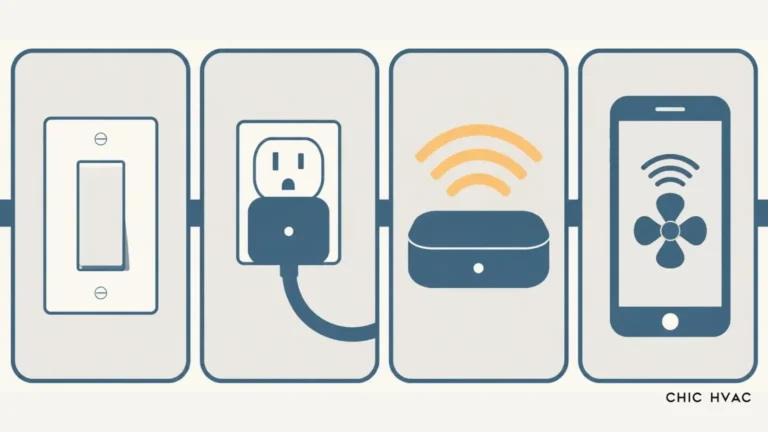
Controlo inteligente por Wi-Fi — aplicação baseada na Tuya para gestão de modos, programações horárias e rotinas de automação
Instalação em parede com furo único — conduta telescópica através de parede exterior, sem necessidade de rede de condutas centralizada
Três modos de funcionamento — Ar Novo, Exaustão e modo Ciclo de 65 segundos
Ampla gama de tensão e funcionamento climático — 12 VDC ou 100–240 V, 50/60 Hz; opera de -20°C a +50°C
Performance Parameters
Speed
Airflow (m³/h)
Potência Total (W)
Corrente (A)
Velocidade do Motor (RPM)
Sleep
20
2.5
0.025
630
I
48
3.0
0.030
1,100
II
54
4.5
0.045
1,600
III
60
8.5
0.070
2,200
Mesmo à velocidade máxima, a unidade consome apenas 5 W — um ano inteiro de funcionamento noturno tem um custo insignificante de eletricidade, enquanto o calor recuperado proporciona poupanças muito superiores nas faturas de aquecimento e arrefecimento.
A que correspondem realmente os níveis de ruído durante a noite
“Abaixo de 30 dB” é um dado técnico; o que realmente importa é a perceção sonora num quarto silencioso. Nas nossas próprias instalações numa parede convencional de gesso cartonado, o modo Sleep situa-se na faixa baixa dos 20 (dB) and a velocidade I situa-se a meio dos 20 — equivalente a uma biblioteca silenciosa; mal se nota a menos que se preste atenção. Na velocidade II torna-se percetível numa divisão em silêncio, e na velocidade III (60 m³/h) o motor é claramente audível, assemelhando-se a um pequeno ventilador de mesa na velocidade média. O fator determinante é o timbre: trata-se de um zumbido suave e de baixa frequência, em vez de um ruído agudo, evitando qualquer perturbação do sono.
Os valores exatos podem variar alguns dB em função da espessura da parede e da acústica do espaço, devendo ser considerados como valores de referência. Uma recomendação para utilizadores com sono leve: configure a unidade em modo Ar Novo nas velocidades Sleep ou I durante a noite. O modo Ciclo de 65 segundos é o único em que a inversão periódica do motor a cada minuto se faz notar — ideal para uma renovação rápida do ar, não sendo recomendado durante o sono.
Três Modos para Controlo Diário
Modo Ar Novo — insuflação contínua e equilibrada de ar exterior filtrado para ventilação permanente.
Modo Exaustão — extração rápida de ar viciado, odores de confeção ou picos de humidade.
Modo Ciclo de 65 segundos — alterna entre admissão e exaustão para renovar o ar da divisão rapidamente sempre que necessário, como após a saída de visitas ou antes de dormir.
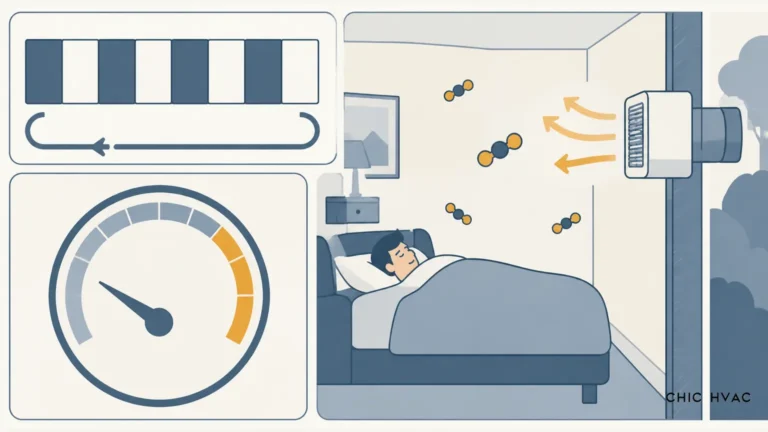
Como funciona o ciclo de 65 segundos: o núcleo cerâmico armazena energia térmica. O ventilador extrai o ar interior através do núcleo, aquecendo-o à medida que o ar é expelido; de seguida, inverte o sentido de rotação e insufla ar novo através desse mesmo núcleo quente, pré-aquecendo o ar de admissão (e pré-arrefecendo-o suavemente no verão). O VT501 inverte o sentido a cada 65 segundos, garantindo uma recuperação de calor real numa unidade compacta de furo único, sem a necessidade de um permutador de fluxos cruzados volumoso. Para uso diário, o modo Ciclo funciona como uma renovação intensiva — sendo o modo Ar Novo o indicado para operação contínua.
Controlo Inteligente via Aplicação Tuya/Wi-Fi
A ventilação só é eficaz se estiver em funcionamento contínuo, e um HRV com conetividade Wi-Fi simplifica totalmente a gestão operacional. Com a aplicação baseada na Tuya é possível alternar modos, ajustar a velocidade e definir programações a partir do telemóvel: inicie o modo Exhaust antes de cozinhar, utilize a velocidade Sleep durante a noite ou aumente o caudal de Fresh Air antes de chegar a casa. Também se integra facilmente em rotinas comuns de smart-home sem gateways adicionais.
Uma dica prática da experiência de campo: o VT501 liga-se através de Wi-Fi de 2,4 GHz, como a maioria dos dispositivos Tuya. Se o emparelhamento estagnar, mude o telemóvel para a banda de 2,4 GHz (ou desative temporariamente a funcionalidade “band steering” / smart connect do router) e tente novamente — isso resolve a grande maioria das falhas de emparelhamento reportadas.
Instalação: O Que Verificar Antes de Furar
O VT501-Wifi foi concebido para uma instalação simples em projetos de reabilitação (retrofit):
Através de uma parede exterior com um único furo e um duto telescópico
No central ductwork — ideal para apartamentos, inquilinos e projetos de reforma
Comprimento do duto: 250–500 mm, cortável de acordo com a espessura da sua parede (diâmetro do furo de 160 mm Ø)
Painel de cobertura interior: 242 × 242 mm, dimensões compactas para a maioria dos ambientes
Antes de furar, verifique estes quatro pontos — é onde começa a maioria dos problemas de instalação:
Autorização, se você for inquilino. Um furo de 160 mm é uma alteração permanente na envolvente do edifício. Verifique o seu contrato de locação e fale com o proprietário ou administrador do imóvel antes de furar. Na prática, muitos proprietários aprovam quando veem que o furo pode ser devidamente vedado e reparado caso você se mude.
O que há dentro da parede. Confirme se não há cabos, tubulações ou vergalhões no trajeto da furação. Para paredes de concreto ou tijolo, um profissional com perfuratriz fará o trabalho mais limpo — e leva cerca de uma hora.
Espessura da parede e comprimento do duto. Meça a parede antes de fazer o pedido: o duto telescópico cobre 250–500 mm, e paredes com câmara de ar ou isolamento térmico geralmente ficam na faixa superior. Um duto curto demais é o erro de instalação mais comum.
A face externa. A grelha externa deve ser montada com uma ligeira inclinação para baixo para escoar a água da chuva, e afastada de locais onde folhas, pássaros ou fortes correntes de vento possam atingi-la. Vede adequadamente a folga entre o duto e a parede — o selante é responsável pela impermeabilização.
O trabalho é perfeitamente viável no estilo faça você mesmo para proprietários habilidosos; para os demais, um técnico de AVAC ou instalador com perfuratriz conclui a instalação em uma ou duas horas — e o resultado final vedado e com acabamento perfeito vale a pena.
Quem deve escolher o VT501-Wifi — e os seus limites reais
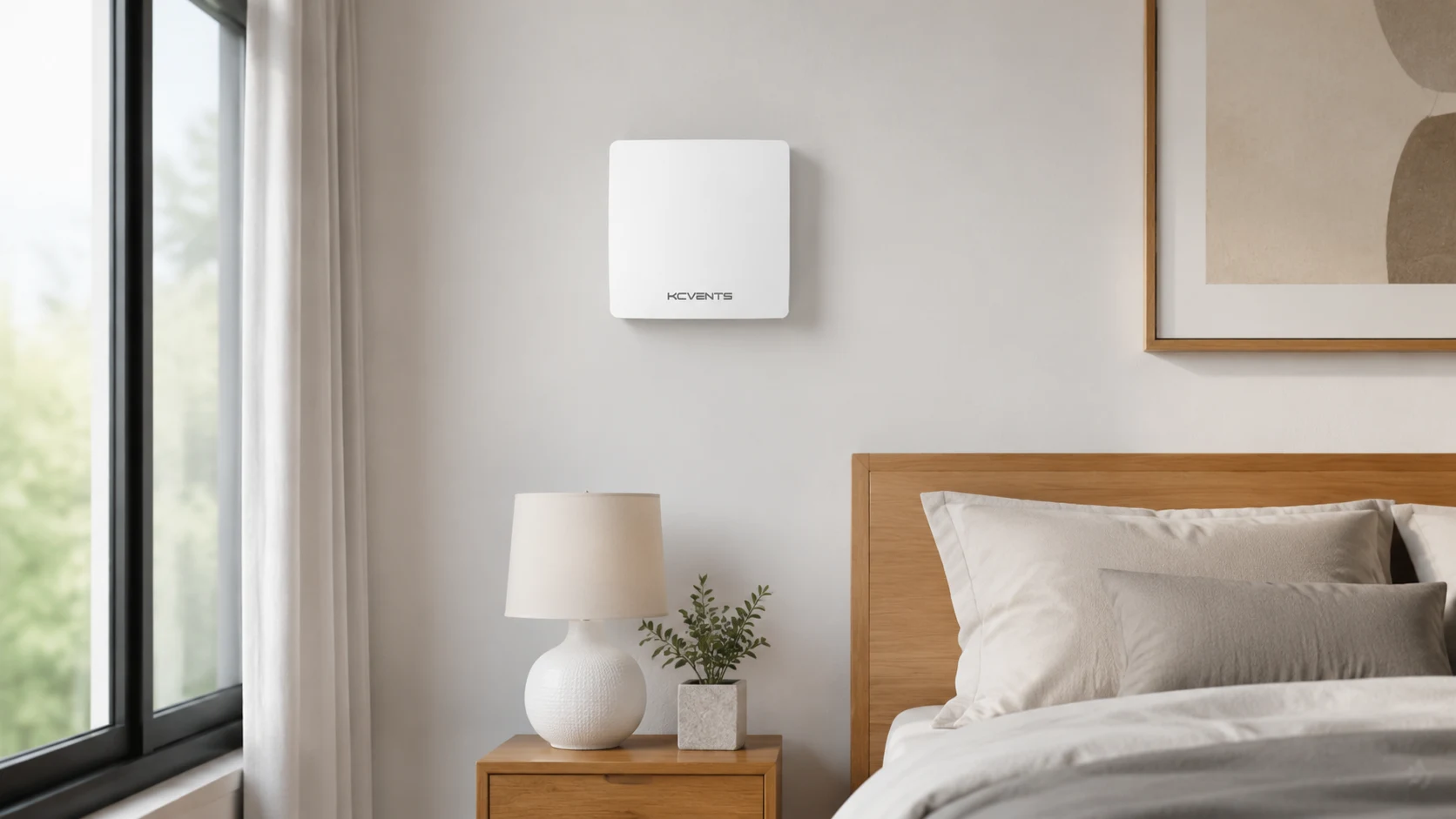
Quartos e berçários — ar fresco, filtrado e silencioso todas as noites, classificado abaixo de 30 dB
Apartamentos e reformas — ventilação com recuperação de calor para um ambiente sem a instalação de um sistema central de dutos
Home offices e salas pequenas — ar mais fresco, menos sensação de ambiente abafado, menos odores e umidade equilibrada enquanto trabalha
Quem deseja evitar as correntes de ar frio no inverno — ventilação balanceada com até 90% de recuperação de calor em vez de perder aquecimento por uma janela aberta
E quem provavelmente deve optar por outra solução? Uma unidade VT501 atende aproximadamente um ambiente de 15–20 m² (cerca de 160–215 sq ft). Se precisar de renovação de ar para a casa toda, uma única unidade não será suficiente — o caminho realista é usar várias unidades trabalhando em conjunto (a configuração mestre/escravo permite que uma segunda unidade siga a primeira) ou um sistema central. E se não for possível furar uma parede externa, esta categoria de produto não será adequada à sua situação.
Respostas Rápidas: Perguntas Frequentes sobre o VT501-Wifi
Como funciona o ciclo cerâmico de 65 segundos?
O núcleo cerâmico armazena calor. Durante um período de cada ciclo, o ar de exaustão é puxado através do núcleo e o aquece em sua saída; em seguida, o ventilador inverte a rotação e o ar de insuflamento é puxado de volta através do mesmo núcleo aquecido, absorvendo esse calor armazenado — e sendo suavemente pré-resfriado no verão. O VT501 inverte o sentido a cada 65 segundos, que é como uma unidade compacta de furo único atinge até 90% de recuperação de calor sem um grande núcleo de fluxo cruzado.
O VT501-Wifi é silencioso o suficiente para quem tem sono leve?
À noite, utilize o modo Fresh Air no nível Sleep ou I: na prática, o nível sonoro situa-se na faixa baixa a média dos 20 (dB), comparável a uma biblioteca silenciosa — para a maioria das pessoas, torna-se impercetível em uma ou duas noites. O ruído do motor é um zumbido suave e grave, e não um ruído agudo. Uma ressalva importante: no modo Cycle de 65 segundos, ouvirá o motor a inverter a rotação aproximadamente a cada minuto; portanto, pessoas com sono leve não devem utilizar este modo durante a noite.
Duas unidades VT501 podem funcionar em conjunto para ventilação push-pull?
Sim, até certo ponto: o VT501 suporta uma configuração master/slave, na qual uma segunda unidade segue o modo da primeira unidade para que duas divisões possam ser ventiladas num sistema push-pull (por exemplo, um quarto e uma sala de estar). Isto faz parte do que torna a unidade HRV para divisão única expansível para além de uma só divisão. Os detalhes de cablagem e configuração dependem da instalação, pelo que deve confirmar as especificações com o seu distribuidor ou com a KCVENTS antes de encomendar várias unidades.
Qual é o diâmetro da furação necessário — e é possível instalá-lo num apartamento arrendado?
A abertura na parede é de Ø 160 mm e a conduta telescópica cobre uma espessura de parede de 250–500 mm; o painel interior é de 242 × 242 mm. Num imóvel arrendado, a resposta prática é: consulte previamente. Um furo de 160 mm é uma modificação permanente, pelo que deve verificar o seu contrato de arrendamento e obter autorização por escrito do proprietário — muitos aceitam assim que a instalação é explicada e caso a abertura possa ser reparada no momento da desocupação.
Por que motivo não se liga ao meu Wi-Fi?
O VT501 liga-se através de Wi-Fi de 2,4 GHz, que é a norma para dispositivos baseados em Tuya. Se o seu router emitir uma rede combinada de 5 GHz / 2,4 GHz, o telemóvel e a unidade podem ficar em bandas diferentes. Solução: ligue o seu telemóvel à rede de 2,4 GHz durante o emparelhamento ou desative temporariamente a definição de band steering (smart connect) do router e, em seguida, emparelhe novamente.
Qual é a área de cobertura real de uma unidade?
Realisticamente, uma única unidade VT501-Wifi é adequada para uma divisão de 15–20 m² — um quarto típico, quarto de criança ou escritório doméstico. Não é uma solução completa para uma casa ou apartamento por si só; para várias divisões, considere a configuração master/slave para que as unidades funcionem em conjunto, ou um sistema central por condutas.
E quanto à condensação ou formação de gelo em invernos rigorosos?
O VT501 está classificado para operar de -20°C a +50°C. Na prática, durante períodos de frio intenso, ajuda manter a unidade em funcionamento contínuo a baixa velocidade para que o núcleo cerâmico se mantenha aquecido, e utilizar o modo Cycle de 65 segundos quando necessitar de maior caudal — a inversão periódica também permite que o núcleo liberte o gelo. Prática padrão para unidades HRV de núcleo cerâmico: uma utilização regular moderada é superior a longos períodos de inatividade.
Escolha uma Ventilação Silenciosa e Eficiente em 2026
Entre os preços da energia, as épocas de fumo e pólen e a ciência do sono associada a quartos com ar renovado, a HRV para divisão única passou de nicho a tendência dominante em 2026. O VT501-Wifi oferece os três fatores de que um quarto ou apartamento necessita: recuperação de calor real (até 90%), funcionamento genuinamente silencioso (nominal inferior a 30 dB) e filtragem que impede a entrada de poluição exterior — tudo através de uma instalação de furo único que funciona sem condutas centrais. Para uma divisão individual, é a resposta prática e fiável; para espaços maiores, dimensione com unidades mestre/escravo ou um sistema por condutas.
Quer saber mais? Leia a página do produto VT501-Wifi, as FAQs da série VT501, ou contacte a KCVENTS para suporte OEM/ODM. Cada lote é testado em fábrica antes do envio (em conformidade com CE, RoHS e ISO9001), estando disponíveis o desenvolvimento de caudal de ar personalizado e a integração de controlo inteligente para projetos B2B.
Atualizações da newsletter
Enter your email address below and subscribe to our newsletter