Nous utilisons des cookies pour nous assurer que nous vous offrons la meilleure expérience possible sur notre site.
Restez informé avec KCVENTS Solutions de ventilation et CVC
Abonnez-vous à notre newsletter pour recevoir les dernières analyses en ingénierie aéraulique, les mises à jour sur les systèmes ERV/HRV écoénergétiques et les solutions CVC écologiques.
Soyez les premiers à recevoir des guides techniques exclusifs, à découvrir nos capacités OEM/ODM sur mesure et les actualités des salons mondiaux directement de KCVENTS.
HRV pour pièce unique en 2026 : pourquoi le VT501-Wifi est idéal pour les chambres, appartements et rénovations
Guide 2026 : pourquoi un récupérateur de chaleur pièce par pièce comme le KCVENTS VT501-Wifi s'impose dans les chambres et les appartements — 90% de récupération de chaleur, moins de 30 dB, filtration HEPA + charbon, contrôle Wi-Fi.
HRV pour pièce unique en 2026 : pourquoi le VT501-Wifi est idéal pour les chambres, appartements et rénovations
D'ici 2026, trois facteurs ont discrètement transformé la façon dont les logements sont ventilés : la hausse des prix de l'énergie, des réglementations plus strictes sur l'efficacité énergétique des bâtiments, et une détérioration de la qualité de l'air extérieur pendant les saisons des feux de forêt et des pollens. Les nouveaux logements sont plus étanches que jamais, ce qui fait passer la ventilation mécanique du statut d'option appréciable à celui de nécessité absolue — alors que la plupart des ménages ne disposent toujours pas de l'espace, du budget ou des autorisations nécessaires pour installer un système complet avec réseau de gaines.
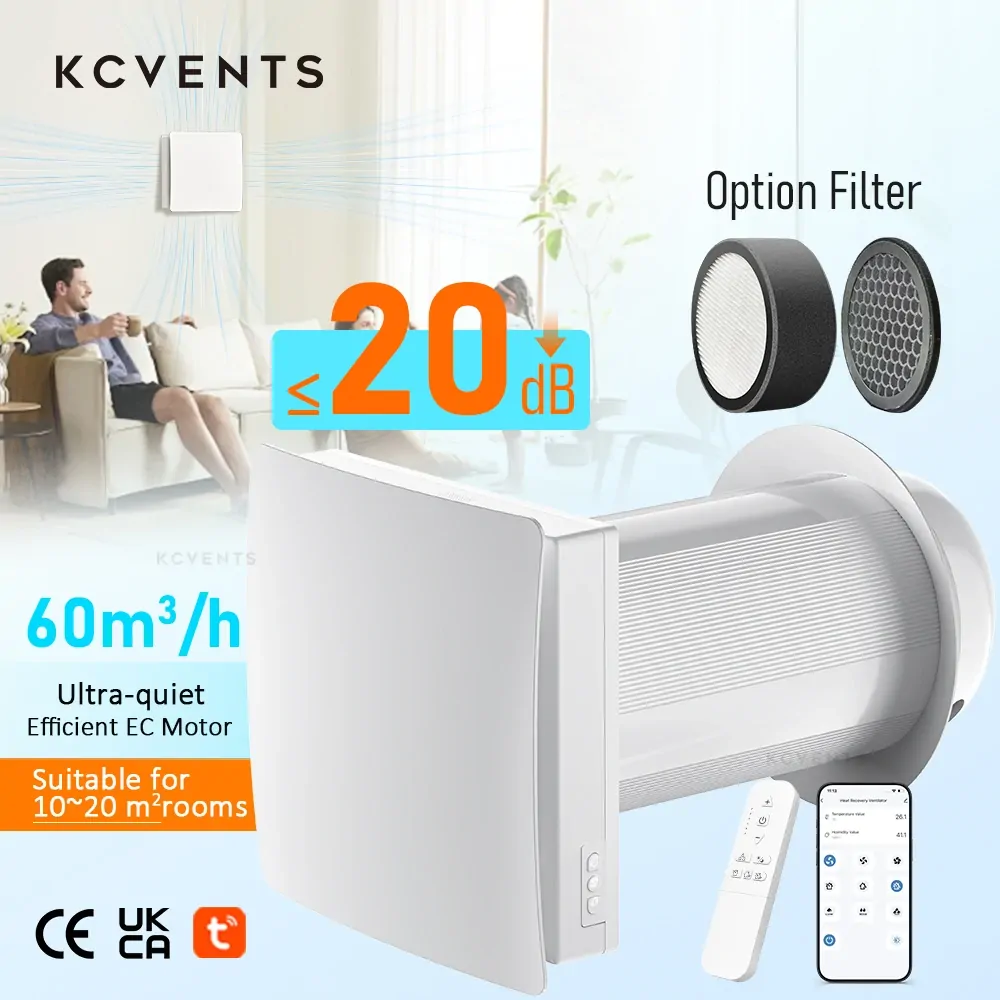
C'est précisément ce vide que comblent les récupérateurs de chaleur (HRV) pièce par pièce. Le KCVENTS VT501-Wifi récupère jusqu'à 90% de la chaleur contenue dans l'air extrait, fonctionne en dessous de 30 dB, filtre l'air neuf entrant avec du HEPA et du charbon actif, et s'installe à travers une simple traversée murale — sans aucun réseau de gaines. Ci-dessous, nous analysons les tendances 2026 à l'origine du produit, les domaines où il surpasse une fenêtre ouverte ou un extracteur d'air, et ce qu'apporte son utilisation concrète au quotidien.
Le VT501-Wifi s'installe à travers une seule réservation dans le mur extérieur : la façade côté pièce se raccorde à un conduit télescopique et à une grille extérieure, sans réseau de gaines centralisé.
Trois défis de ventilation qui façonnent 2026
Factures énergétiques et durcissement des normes d'efficacité
L'UE, le Royaume-Uni et l'Amérique du Nord renforcent tous leurs exigences de performance énergétique des bâtiments d'ici 2026, et les travaux de rénovation doivent de plus en plus inclure une mise à niveau de la ventilation. Dans le même temps, le coût de l'énergie pour les ménages reste au cœur des préoccupations budgétaires.
Le calcul est simple : chaque mètre cube d'air chaud (ou frais) rejeté sans récupération d'énergie est payé deux fois — une première fois pour le chauffer ou le refroidir, et une seconde fois pour le remplacer. Un récupérateur de chaleur récupère cette énergie avant qu'elle ne s'échappe. Le noyau céramique du VT501-Wifi affiche un rendement allant jusqu'à 90%, et en mode Nuit (Sleep), l'ensemble de l'appareil ne consomme que 5 W — moins qu'une veilleuse.
Fumées, pollens et pollution extérieure
La fumée des feux de forêt n'est plus un événement rare — dans de nombreuses régions, c'est une réalité saisonnière, parfois à des milliers de kilomètres du foyer d'incendie. Les saisons des pollens commencent plus tôt et durent plus longtemps. Dans les deux cas, le réflexe d“” ouvrir une fenêtre pour aérer » dégrade souvent l'air intérieur au lieu de l'améliorer.
Un VMC double flux décentralisé équilibré maintient la circulation d'air sans rien ouvrir, car l'air neuf traverse d'abord une filtration. Le VT501-Wifi est livré avec un jeu de double filtre — HEPA et charbon actif — qui retient les pollens, la poussière, les particules fines et de nombreuses odeurs extérieures avant qu'ils n'atteignent la pièce. C'est une protection pratique aussi bien lors des épisodes de fumée que pendant la saison des allergies.
Chambres étanches et saturées en CO₂
Une isolation et des menuiseries performantes retiennent la chaleur — mais emprisonnent aussi le CO₂, l'humidité et les polluants. Un taux élevé de CO₂ dans la chambre est régulièrement lié à un sommeil de moins bonne qualité, à des maux de tête matinaux et à une sensation de fatigue le lendemain. Les extracteurs d'air en évacuent une partie, mais ils aspirent la chaleur et bourdonnent toute la nuit ; ouvrir une fenêtre en hiver ou en été détruit à la fois le confort et le bilan énergétique.
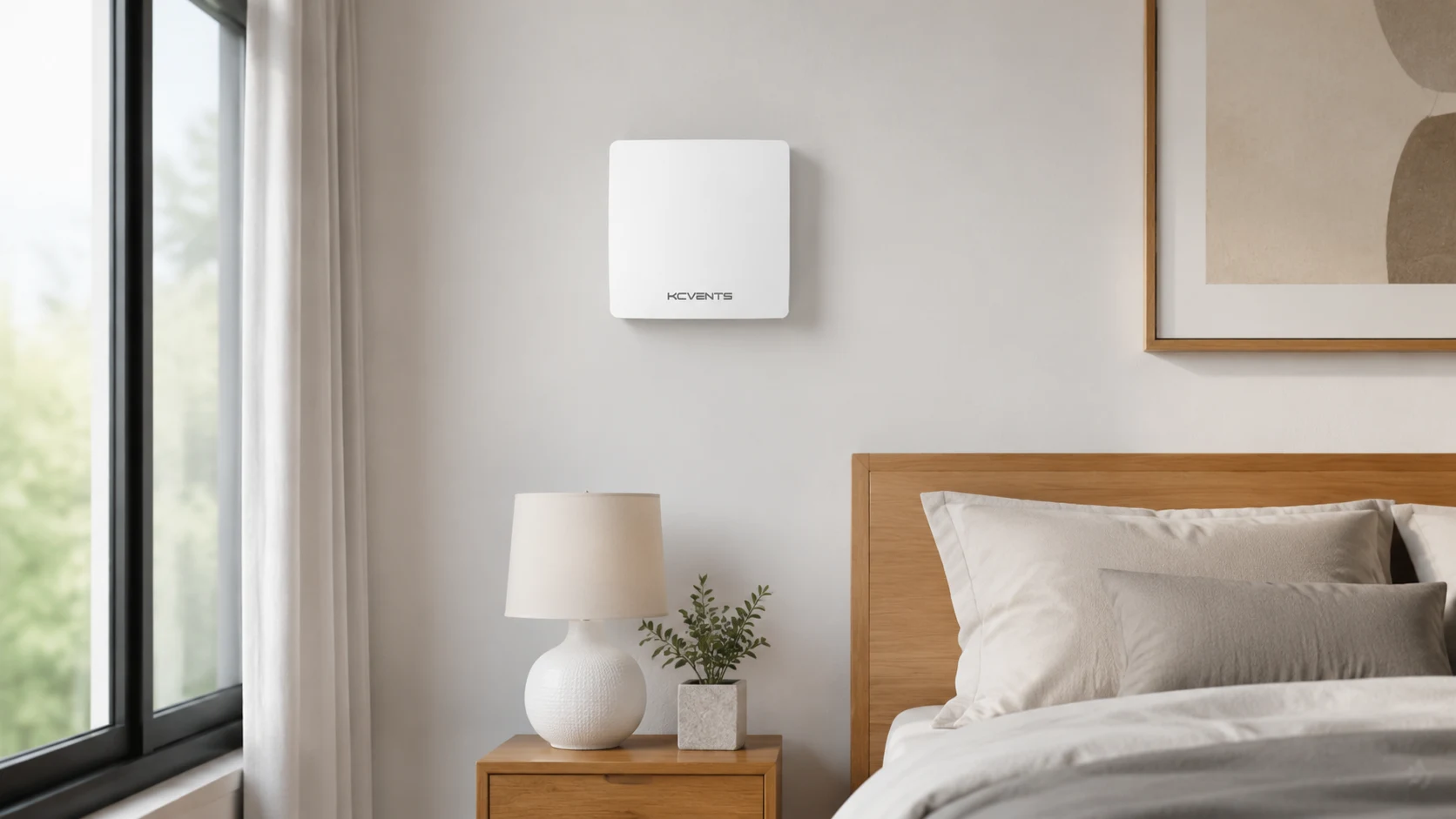
Un VRC pour pièce unique, silencieux et équilibré, constitue la solution pratique : un renouvellement continu de l'air neuf avec des pertes thermiques minimes, suffisamment silencieux pour dormir juste à côté.
Pourquoi le VRC pour pièce unique surpasse les autres solutions
Option
Points forts
Limites
Fenêtre ouverte
Gratuit, aucun équipement requis
Déperditions thermiques, bruit, air extérieur non filtré (fumée, pollen, poussière), vulnérabilité à la sécurité et aux intempéries
Extracteur d'air seul
Simple, économique
Aucune récupération de chaleur, pas de filtration de l'air neuf, bruyant, génère une dépression et des courants d'air
VRC/VRE centralisé avec réseau de gaines
Performance à l'échelle de l'ensemble du logement
Coûteux, nécessite la conception d'un réseau de gaines, complexe pour les appartements, les locataires et les rénovations
Purificateur d'air portable
Filtre l'air recirculé
N'apporte pas d'air neuf et n'élimine pas le CO₂, aucune récupération de chaleur
VRC pour pièce unique (VT501-Wifi)
Récupération de chaleur jusqu'à 90%, filtration HEPA + charbon, moins de 30 dB, contrôle Wi-Fi, installation par simple carottage
Traite une seule pièce à la fois (extensible via une configuration maître/esclave)
Pour les chambres, les bureaux à domicile, les appartements et les projets de rénovation, le VRC pour pièce unique offre généralement le meilleur compromis entre performances, niveau sonore, simplicité d'installation et coût.
Le VT501-Wifi en un coup d'œil
Récupération de chaleur jusqu'à 90% — l'accumulateur céramique récupère la chaleur de l'air extrait, en saison de chauffage comme de refroidissement
Silencieux, certifié inférieur à 30 dB — moteur DC sans balais dans un boîtier insonorisé, spécialement conçu pour les chambres, chambres d'enfants et bureaux à domicile
Double filtration — HEPA et charbon actif contre le pollen, la poussière, les particules fines et les odeurs extérieures
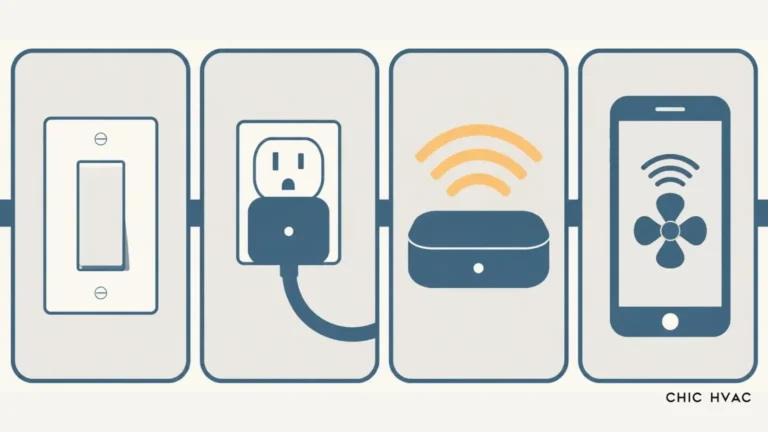
Contrôle intelligent via Wi-Fi — application basée sur Tuya pour les modes, les programmations et les routines d'automatisation
Installation murale à carottage unique — conduit télescopique traversant le mur extérieur, sans réseau de gaines centralisé
Trois modes de fonctionnement — Air neuf, Extraction et mode Cycle de 65 secondes
Large plage de tension et de conditions climatiques — 12 VCC ou 100–240 V, 50/60 Hz ; fonctionne de -20 °C à +50 °C
Performance Parameters
Speed
Airflow (m³/h)
Puissance totale (W)
Current (A)
Vitesse du moteur (tr/min)
Sleep
20
2.5
0.025
630
I
48
3.0
0.030
1,100
II
54
4.5
0.045
1,600
III
60
8.5
0.070
2,200
Même à vitesse maximale, l'appareil ne consomme que 8,5 W — une année entière de fonctionnement nocturne ne coûte que quelques dollars en électricité, tandis que la chaleur récupérée permet d'économiser plusieurs fois ce montant sur les factures de chauffage et de climatisation.
Ce que représentent réellement les niveaux sonores la nuit
“ Moins de 30 dB ” est une valeur de laboratoire ; ce qui importe, c'est le ressenti acoustique dans une chambre silencieuse. Lors de nos installations sur une cloison standard en plaques de plâtre, le mode Nuit se situe au début des 20 dB and la vitesse I se situe au milieu des 20 dB — soit approximativement le calme d'une bibliothèque ; on ne l'entend que si l'on y prête attention. À la vitesse II, le bruit devient perceptible dans une pièce silencieuse, et à la vitesse III (60 m³/h), le moteur est clairement audible, comparable à un petit ventilateur de table à vitesse moyenne. L'élément essentiel réside dans la tonalité : il s'agit d'un ronronnement sourd et discret plutôt que d'un sifflement aigu, principale source de gêne pour le sommeil.
Vos valeurs réelles varieront de quelques dB selon l'épaisseur du mur et l'acoustique de la pièce ; considérez donc ces données comme des ordres de grandeur. Un conseil transparent pour les dormeurs au sommeil léger : faites fonctionner l'appareil en mode Air neuf sur le niveau Nuit ou I pendant la nuit. Le mode Cycle de 65 secondes est le seul où l'inversion du sens de rotation du moteur est perceptible toutes les minutes — idéal pour un renouvellement rapide de l'air, mais déconseillé pour dormir.
Trois modes pour une gestion au quotidien
Mode Air neuf — apport continu et équilibré d'air extérieur filtré pour la ventilation courante.
Mode Extraction — évacuation rapide de l'air vicié, des odeurs de cuisson ou des pointes d'humidité.
Mode Cycle de 65 secondes — alterne insufflation et extraction pour renouveler rapidement l'air de la pièce en cas de besoin, par exemple après le départ d'invités ou avant le coucher.
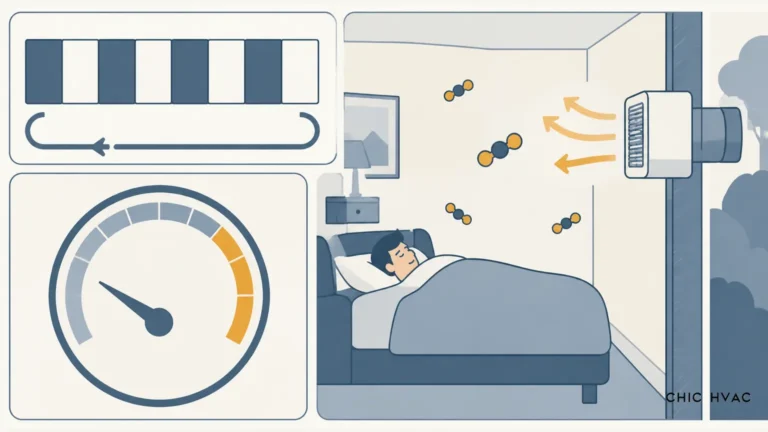
Fonctionnement du cycle de 65 secondes : le noyau céramique accumule l'énergie thermique. Le ventilateur extrait l'air vicié à travers le noyau, réchauffant ce dernier lors du passage de l'air ; il inverse ensuite son flux pour aspirer l'air neuf à travers ce même noyau chaud, ce qui préchauffe l'air entrant (et le pré-rafraîchit en été). Le VT501 inverse son sens toutes les 65 secondes, offrant ainsi une véritable récupération de chaleur dans une unité murale compacte sans nécessiter d'échangeur à flux croisés encombrant. Pour un usage quotidien, utilisez le mode Cycle comme un rafraîchissement express — le mode Air neuf étant celui destiné à fonctionner en continu.
Contrôle intelligent avec l'application Tuya / Wi-Fi
La ventilation n'est efficace que lorsqu'elle fonctionne régulièrement, et un VRC connecté en Wi-Fi supprime la contrainte de réglage manuel. Grâce à l'application basée sur Tuya vous pouvez changer de mode, régler la vitesse et programmer des plages horaires depuis votre smartphone : activez le mode Extraction avant de cuisiner, passez en mode Nuit pour dormir, ou augmentez l'Air Neuf avant de rentrer. Il s'intègre également aux scénarios domotiques courants sans passerelle supplémentaire.
Un conseil pratique issu de l'expérience terrain : le VT501 se connecte en Wi-Fi 2,4 GHz, comme la plupart des appareils Tuya. Si l'appairage se bloque, basculez votre téléphone sur la bande 2,4 GHz (ou désactivez temporairement la fonction “ band steering ” / smart connect de votre routeur) et réessayez — cela résout la grande majorité des problèmes d'appairage rencontrés.
Installation : ce qu'il faut vérifier avant de percer
Le VT501-Wifi est conçu pour une installation idéale en rénovation :
À travers un mur extérieur avec un seul percement et une gaine télescopique
No central ductwork — idéal pour les appartements, les locataires et les projets de rénovation
Longueur de gaine : 250–500 mm, recoupable selon l'épaisseur de votre mur (diamètre de carottage 160 mm Ø)
Façade intérieure : 242 × 242 mm, un encombrement compact pour la plupart des pièces
Avant de percer, vérifiez ces quatre points — ils sont à l'origine de la plupart des problèmes d'installation :
L'autorisation, si vous êtes locataire. Un percement de 160 mm constitue une modification permanente de l'enveloppe du bâtiment. Vérifiez votre bail et consultez votre propriétaire ou gestionnaire immobilier avant de percer. En pratique, de nombreux propriétaires donnent leur accord dès lors qu'ils constatent que le trou peut être correctement étanché et rebouché lors de votre départ.
La composition interne du mur. Assurez-vous de l'absence de câbles, de canalisations ou de fers à béton sur la trajectoire de perçage. Pour les murs en béton ou en brique, un installateur équipé d'une carotteuse réalisera le travail le plus propre — en environ une heure.
L'épaisseur du mur et la longueur de gaine. Mesurez l'épaisseur du mur avant de commander : le conduit télescopique couvre de 250 à 500 mm, et les murs creux ou isolés se situent généralement dans la plage supérieure. Un conduit trop court est l'erreur d'installation la plus fréquente.
La façade extérieure. La grille extérieure doit être installée avec une légère pente vers le bas afin d'évacuer les eaux de pluie battante, et à l'écart des zones exposées aux feuilles, aux oiseaux ou aux courants d'air violents. Réalisez une étanchéité soignée entre le conduit et le mur — le mastic garantit la protection contre les infiltrations.
L'intervention est tout à fait accessible en auto-installation pour un bricoleur averti ; pour les autres, un technicien CVC ou un artisan équipé d'une carotteuse finalisera la pose en une ou deux heures — et la qualité de la finition étanche en vaut largement la peine.
À qui s'adresse le VT501-Wifi — et ses limites réelles
Chambres et chambres d'enfants — un air neuf filtré et silencieux chaque nuit, certifié à moins de 30 dB
Appartements et rénovations — une ventilation avec récupération de chaleur pièce par pièce, sans réseau de gaines centralisé
Bureaux à domicile et petits espaces — un air plus frais, moins de confinement, moins d'odeurs et une hygrométrie régulée pendant votre travail
Idéal contre les courants d'air froid en hiver — une ventilation double flux avec jusqu'à 90 % d'efficacité de récupération de chaleur, évitant les déperditions thermiques d'une fenêtre ouverte
Et dans quels cas l'éviter ? Une unité VT501 couvre environ une pièce de 15–20 m² (environ 160–215 sq ft). Si vous recherchez un renouvellement d'air pour l'ensemble du logement, une seule unité ne suffira pas — la solution adaptée consiste soit à associer plusieurs unités (la configuration maître/esclave permet à une seconde unité de synchroniser son cycle avec la première), soit à installer un système centralisé. Enfin, si aucun percement sur mur extérieur n'est possible, cette catégorie de produit ne conviendra pas à votre configuration.
Réponses rapides : FAQ VT501-Wifi
Comment fonctionne le cycle céramique de 65 secondes ?
L'accumulateur céramique stocke l'énergie thermique. Pendant une phase du cycle, l'air extrait traverse le bloc céramique et lui transfère sa chaleur avant d'être rejeté à l'extérieur ; le ventilateur inverse ensuite son sens de rotation et l'air neuf insufflé traverse ce même bloc chaud, récupérant la chaleur accumulée — ou bénéficiant d'un léger pré-rafraîchissement en été. Le VT501 inverse son flux toutes les 65 secondes, ce qui permet à cet appareil compact à percement unique d'atteindre un rendement de récupération thermique jusqu'à 90 % sans nécessiter d'échangeur à flux croisés volumineux.
Le VT501-Wifi est-il suffisamment silencieux pour le sommeil léger ?
La nuit, activez le mode Air frais en vitesse Veille ou I : en pratique, le niveau sonore se situe autour de 20 à 25 dB, comparable à une bibliothèque calme — pour la plupart des gens, il s'estompe au bout d'une nuit ou deux. La tonalité du moteur est un doux ronronnement grave plutôt qu'un sifflement. Une mise en garde honnête : en mode Cycle de 65 secondes, vous entendrez l'inversion du moteur environ toutes les minutes ; les personnes au sommeil léger devraient donc éviter ce mode la nuit.
Deux unités VT501 peuvent-elles fonctionner ensemble pour une ventilation push-pull (alternée) ?
Oui, dans une certaine mesure : la VT501 prend en charge une configuration maître/esclave, dans laquelle une seconde unité suit le mode de la première afin que deux pièces puissent être ventilées en alternance push-pull (par exemple, une chambre et un salon). C'est ce qui permet à une VMC double flux décentralisée (HRV) d'aller au-delà d'une seule pièce. Les détails de câblage et de configuration dépendant de l'installation, confirmez les spécificités auprès de votre revendeur ou de KCVENTS avant de commander plusieurs unités.
Quel est le diamètre de carottage nécessaire — et puis-je l'installer dans un appartement en location ?
Le percement mural est de Ø 160 mm et le conduit télescopique s'adapte à une épaisseur de mur de 250 à 500 mm ; la façade intérieure mesure 242 × 242 mm. En location, la réponse pratique est : demandez d'abord l'autorisation. Un trou de 160 mm étant une modification permanente, vérifiez votre bail et obtenez l'accord écrit de votre propriétaire — beaucoup acceptent une fois l'installation expliquée et dès lors que le percement peut être rebouché lors du départ.
Pourquoi l'appareil ne se connecte-t-il pas à mon Wi-Fi ?
La VT501 se connecte via le Wi-Fi 2,4 GHz, ce qui est la norme pour les appareils basés sur Tuya. Si votre routeur diffuse un réseau combiné 5 GHz / 2,4 GHz, le téléphone et l'unité peuvent se retrouver sur des bandes différentes. Solution : connectez votre téléphone au réseau 2,4 GHz pendant l'appairage, ou désactivez temporairement l'option d'orientation de bande (band steering / smart connect) de votre routeur, puis recommencez l'appairage.
Quelle surface une unité couvre-t-elle réellement ?
En pratique, une seule VT501-Wifi convient pour une pièce de 15 à 20 m² — une chambre standard, une chambre d'enfant ou un bureau. Elle ne constitue pas à elle seule une solution pour un appartement ou une maison entière ; pour plusieurs pièces, privilégiez une configuration maître/esclave pour synchroniser les unités, ou un système centralisé gainable.
Qu'en est-il de la condensation ou du givre lors des hivers rigoureux ?
La VT501 est certifiée pour fonctionner de -20 °C à +50 °C. En pratique, lors de périodes de grand froid, il est conseillé de laisser l'appareil fonctionner en continu à petite vitesse afin que l'accumulateur céramique reste chaud, et d'utiliser le mode Cycle de 65 secondes en cas de besoin accru — l'inversion périodique permet également à l'échangeur d'évacuer le givre. Règle standard pour les VMC à échangeur céramique : un fonctionnement régulier est toujours préférable à de longues périodes d'arrêt.
Choisissez une ventilation silencieuse et performante en 2026
Face aux prix de l'énergie, aux saisons de fumée et de pollen, et aux données scientifiques démontrant les bienfaits d'un air frais sur le sommeil, la VMC double flux pièce par pièce est passée en 2026 d'un marché de niche à un standard incontournable. Le modèle VT501-Wifi répond parfaitement aux trois exigences fondamentales d'une chambre ou d'un appartement : une réelle récupération de chaleur (jusqu'à 90%), un fonctionnement véritablement silencieux (inférieur à 30 dB) et une filtration qui bloque la pollution extérieure — le tout via une installation à perforation unique sans réseau de gaines centralisé. Pour une pièce individuelle, c'est la solution pragmatique idéale ; pour les volumes plus importants, faites évoluer l'installation avec des unités maître/esclave ou un système gainable.
Vous souhaitez en savoir plus ? Consultez la page produit VT501-Wifi, le FAQ de la série VT501, ou contactez KCVENTS pour une assistance OEM/ODM. Chaque lot est testé en usine avant expédition (conforme CE, RoHS et ISO9001), et l'étude aéraulique sur mesure ainsi que l'intégration de régulations intelligentes sont disponibles pour les projets B2B.
Mises à jour de la newsletter
Saisissez votre adresse e-mail ci-dessous et abonnez-vous à notre newsletter